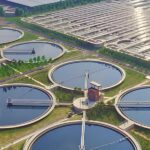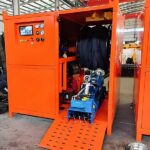
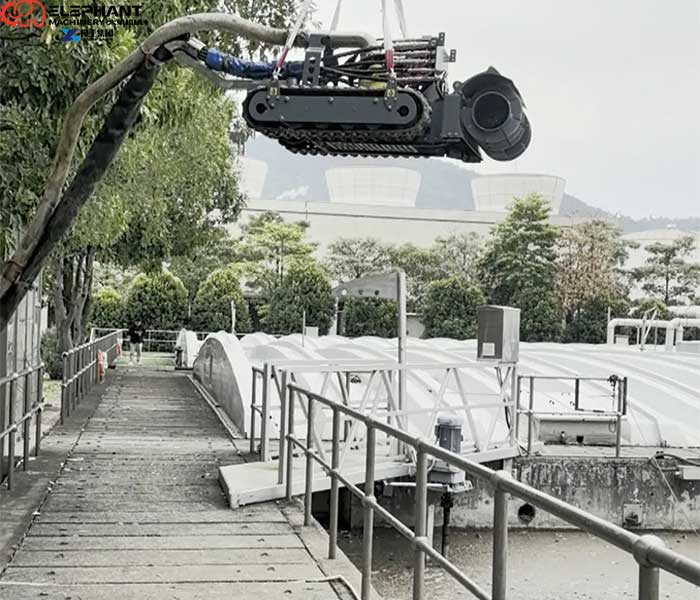
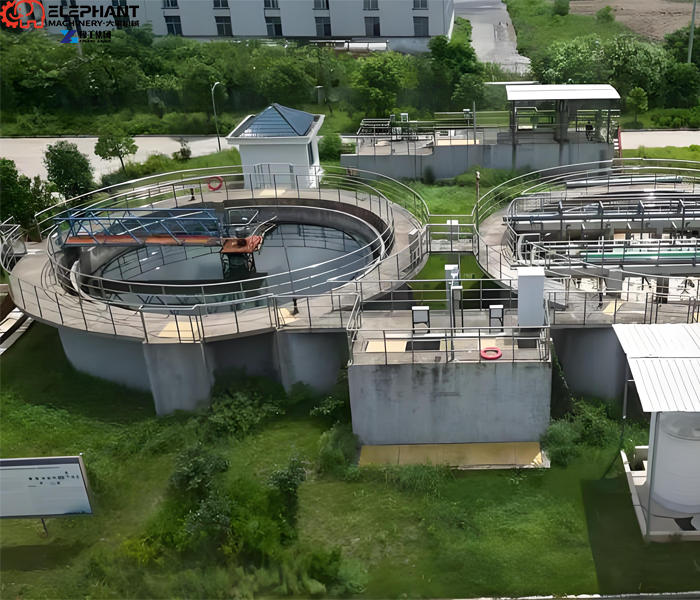
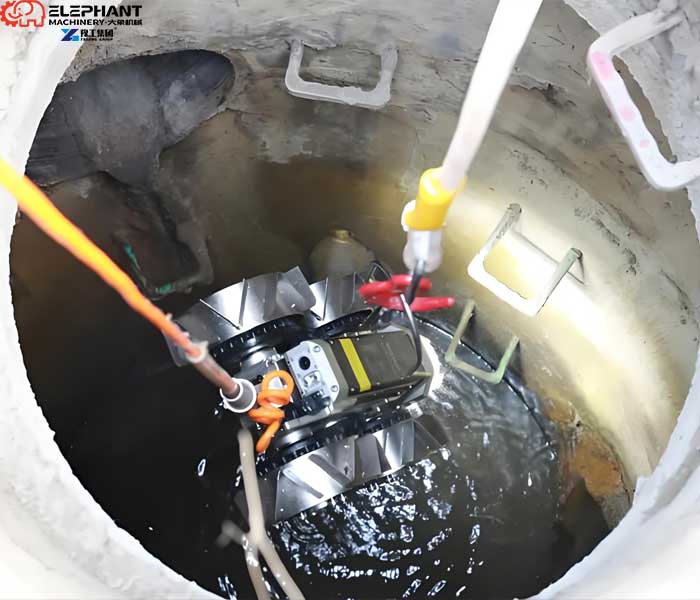
A sewage treatment plant cleaning robot is designed specifically for municipal sewage infrastructure environments, where sediment accumulation, sludge buildup, and confined-space hazards make manual cleaning inefficient and risky.
Unlike general industrial wastewater systems, municipal sewage facilities deal with continuous inflow of domestic wastewater, grit accumulation, and long-term sedimentation in tanks and channels, which require safe and frequent maintenance without interrupting plant operation.
This is where a no-man-entry sludge cleaning robot system becomes essential.
Sewage Treatment Plant Cleaning Robot Parameters
| Parameter | YG450 | YG500 | YG600 | YG700 | YG800 | YG900 | YG1200 |
| Robot Dimensions (mm) | ≤1700 × 450 × 450 | 1500 × 500 × 650 | 1500 × 600 × 650 | 1600 × 700 × 650 | 1600 × 850 × 700 | 1650 × 960 × 750 | 1900 × 1200 × 750 |
| Applicable Manhole / Access | ≥600 mm opening | ≥600 mm opening | ≥600 mm opening | ≥700 mm opening | ≥800 mm opening | ≥900 mm opening | Large culvert / open access |
| Dredging Width (mm) | 450 | 500 | 600 | 700 | 800 | 900 | Suitable for large culverts |
| Travel Speed (m/min) | 3–12 | 3–15 | 3–15 | 3–15 | 3–15 | 3–15 | 3–17 |
| Pump Diameter (inch) | 3 | 3 | 3 | 4 | 4 | 4 | 4 or 6 |
| Pump Flow (m³/h) | 50 | 100 | 100 | 160 | 160 | 200 | 250 |
| Pump Head (m) | 0-30 | 0–30 | 0–30 | 0–25 | 0–25 | 0–25 | 0–30 (Horizontal: 100–150 m) |
| Hydraulic Station Dimensions (mm) | 2000 × 1100 × 1500 (recommended) | 2200 × 1200 × 1700 | 2200 × 1200 × 1700 | 2200 × 1200 × 1700 | 2200 × 1200 × 1700 | 2200 × 1200 × 1700 | 2120 × 1240 × 1200 |
| Main Motor Power (kW) | 11–15 kW | 18 | 18 | 22 | 22 | 22 | 45 kW (50 kW) / Diesel 76 kW (123 kW) |
| Hydraulic System Pressure (MPa) | 0–16 | 0–16 | 0–16 | 0–16 | 0–16 | 0–16 | Custom / high-pressure system |
| Particle Size Capacity (mm) | ≤10–20 mm (soft sludge) | 15 | 15 | 40 | 40 | 50 | 0–40 (customizable) |
| Winch Speed (r/min) | 0–10 | 0–10 | 0–10 | 0–10 | 0–10 | 0–10 | 0–10 |
| Pipe Length (m) | 20–30 optional | 30–50 optional | 30–50 optional | 30–50 optional | 30–50 optional | 30–50 optional | 30 m/pack, high-pressure resistant |
| Control System | Wireless Remote Control | Wireless Remote | Wireless Remote | Wireless Remote | Wireless Remote | Wireless Remote | Wireless Remote |
| Lighting System | Underwater LED ×2 | Underwater LED ×2 | Underwater LED ×2 | Underwater LED ×2 | Underwater LED ×2 | Underwater LED ×2 | Underwater LED ×2 |
Get the Right Model for Your Project
Why Municipal Sewage Plants Need Cleaning Robot Systems?
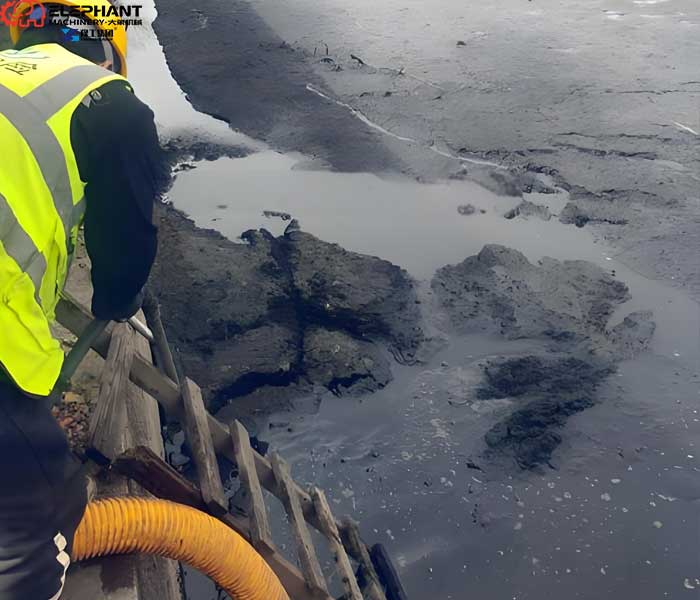
In sewage treatment plants, sludge naturally accumulates in:
- Primary sedimentation tanks
- Secondary clarifiers
- Grit chambers and inlet channels
- Sludge thickening tanks
Over time, this leads to:
- Reduced hydraulic efficiency
- Blocked flow channels
- Increased maintenance shutdown frequency
- High risk for confined-space workers
Traditional cleaning methods often require tank draining, manual entry, or vacuum trucks, which are not suitable for continuous municipal operation.
A sewage treatment plant cleaning robot solves these problems by enabling non-entry underwater sludge removal.
What Makes This System Different from Industrial Wastewater Robots?
While industrial wastewater systems focus on chemical sludge, oil residue, or high-density industrial waste, municipal sewage systems are more focused on:
- Biological sludge
- Grit and sand deposits
- Organic sediment layers
- Large-area tank cleaning efficiency
Therefore, this system is optimized as a:
👉 Municipal sludge removal robot system
Key design differences include:
- Better adaptability for soft sediment layers
- More stable flow-based pumping instead of heavy industrial cutting
- Higher emphasis on safety and continuous operation
- Easier deployment in standard sewage tank access structures


Core Working Principle of Sewage Treatment Plant Cleaning Robot
The sewage treatment plant cleaning robot operates through a closed-loop cleaning process:
- Remote deployment into sewage tanks or basins
- Crawler mobility for stable underwater movement
- Sediment loosening and sludge mixing
- High-capacity pumping and discharge
- Continuous sludge removal without shutdown
This allows the system to perform sedimentation tank dredging and sludge extraction simultaneously.
Key Technical Features of Sewage Tank Cleaning Robot
1. No-Man-Entry Safety System
The robot is operated remotely with real-time video feedback, eliminating the need for workers to enter hazardous confined spaces.
This is especially critical in:
- Oxygen-deficient sewage tanks
- Toxic gas environments (H₂S, methane)
- Deep sedimentation basins
2. IP68 Deep Water Operation
The system is fully sealed and designed for continuous underwater operation.
- Stable performance in submerged conditions
- Suitable for long-cycle municipal cleaning tasks
- Reliable sealing for sludge-heavy environments
3. High-Efficiency Sludge Pumping System
The integrated pumping unit is designed for municipal sludge characteristics:
- Flow capacity: 50–200 m³/h (configurable)
- Stable handling of diluted sludge and grit mixtures
- Supports long-distance discharge pipelines
This ensures efficient sludge transfer from tanks to treatment or disposal zones.
4. Adaptive Crawler Mobility
The tracked system ensures stable movement in:
- Sludge-covered tank floors
- Uneven sediment layers
- Narrow sewage basins and channels
This makes it ideal for sewage tank cleaning robot applications.
5. Optional Anti-Clogging Cutting System
For harder sediment conditions, the system can integrate:
- Front auger breaking mechanism
- Hydraulic agitation system
- Anti-blockage suction design
This improves efficiency in long-term sediment buildup scenarios.
Typical Applications in Municipal Sewage Systems
A sewage treatment plant cleaning robot is widely used in:
Primary Treatment Units
- Inlet grit chambers
- Primary sedimentation tanks
Secondary Treatment Units
- Clarifiers
- Biological sedimentation basins
Sludge Handling Systems
- Sludge thickening tanks
- Storage basins
Infrastructure Channels
- Sewage inlet/outlet channels
- Underground flow tunnels
Operational Advantages Of Sludge Removal Robot
Compared with manual or vacuum truck cleaning methods, the robotic system provides:
- Continuous operation without full plant shutdown
- Reduced labor risk in confined spaces
- Faster sludge removal cycles
- Lower long-term maintenance cost
- Improved compliance with safety regulations
Most importantly, it supports regular maintenance without disrupting municipal treatment processes.
Selection Considerations
When choosing a sewage treatment plant cleaning robot, engineers typically evaluate:
1. Tank Structure
- Manhole access size
- Basin depth and geometry
2. Sludge Type
- Soft biological sludge
- Mixed grit and sediment layers
3. Discharge Distance
- Short-distance pumping (standard setup)
- Long-distance pipeline discharge (custom high-head system)
4. Operation Frequency
- Routine maintenance cleaning
- Heavy accumulated sludge removal
Maintenance Recommendations
To ensure long-term performance:
- Flush pump system after each use
- Inspect crawler tracks regularly
- Clean sealing components after operation
- Replace wear parts based on sludge conditions
Conclusion
A sewage treatment plant cleaning robot is a critical solution for modern municipal wastewater infrastructure, especially in environments where safety, continuity, and efficiency are top priorities.
By enabling no-man-entry sludge removal, IP68 underwater operation, and stable sedimentation tank cleaning, it significantly improves the reliability of municipal sewage systems.
As urban infrastructure continues to grow, intelligent robotic cleaning systems are becoming an essential part of modern sewage treatment plant maintenance strategies.