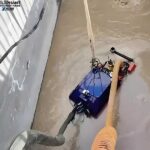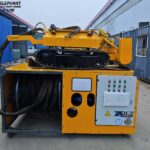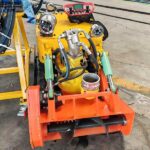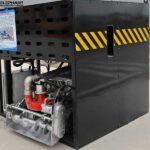
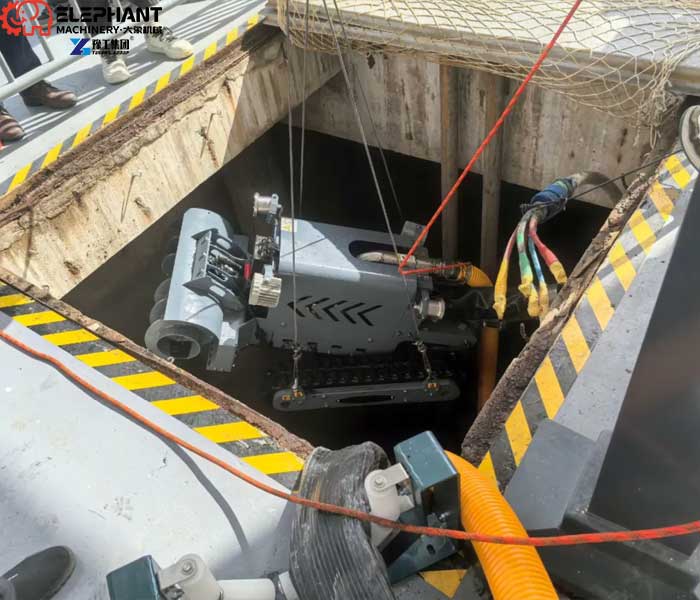

An industrial dredging robot is an advanced unmanned dredging system designed for complex industrial water environments such as wastewater treatment plants, sedimentation tanks, lagoons, and industrial ponds. It integrates hydraulic crawler mobility, high-efficiency slurry pumping, and remote control technology to perform continuous sludge and sediment removal in hazardous or hard-to-access areas.
Compared with traditional manual cleaning or mechanical dredging equipment, an industrial dredging robot significantly improves safety, efficiency, and operational consistency while reducing downtime and labor costs.
Industrial Dredging Robot Parameters
| Parameter | YG450 | YG500 | YG600 | YG700 | YG800 | YG900 | YG1200 |
| Robot Dimensions (mm) | ≤1700 × 450 × 450 | 1500 × 500 × 650 | 1500 × 600 × 650 | 1600 × 700 × 650 | 1600 × 850 × 700 | 1650 × 960 × 750 | 1900 × 1200 × 750 |
| Applicable Manhole / Access | ≥600 mm opening | ≥600 mm opening | ≥600 mm opening | ≥700 mm opening | ≥800 mm opening | ≥900 mm opening | Large culvert / open access |
| Dredging Width (mm) | 450 | 500 | 600 | 700 | 800 | 900 | Suitable for large culverts |
| Travel Speed (m/s) | 3–12 | 3–15 | 3–15 | 3–15 | 3–15 | 3–15 | 0–17 m/min |
| Pump Diameter (inch) | 3 | 3 | 3 | 4 | 4 | 4 | 4 or 6 |
| Pump Flow (m³/h) | 50 | 100 | 100 | 160 | 160 | 200 | 250 |
| Pump Head (m) | 0-30 | 0–30 | 0–30 | 0–25 | 0–25 | 0–25 | 0–30 (Horizontal: 100–150 m) |
| Hydraulic Station Dimensions (mm) | 2000 × 1100 × 1500 (recommended) | 2200 × 1200 × 1700 | 2200 × 1200 × 1700 | 2200 × 1200 × 1700 | 2200 × 1200 × 1700 | 2200 × 1200 × 1700 | 2120 × 1240 × 1200 |
| Main Motor Power (kW) | 11–15 kW | 18 | 18 | 22 | 22 | 22 | 45 kW (50 kW) / Diesel 76 kW (123 kW) |
| Hydraulic System Pressure (MPa) | 0–16 | 0–16 | 0–16 | 0–16 | 0–16 | 0–16 | Custom / high-pressure system |
| Particle Size Capacity (mm) | ≤10–20 mm (soft sludge) | 15 | 15 | 40 | 40 | 50 | 0–40 (customizable) |
| Winch Speed (r/min) | 0–10 | 0–10 | 0–10 | 0–10 | 0–10 | 0–10 | 0–10 |
| Pipe Length (m) | 20–30 optional | 30–50 optional | 30–50 optional | 30–50 optional | 30–50 optional | 30–50 optional | 30 m/pack, high-pressure resistant |
| Control System | Wireless Remote Control | Wireless Remote | Wireless Remote | Wireless Remote | Wireless Remote | Wireless Remote | Wireless Remote |
| Lighting System | Underwater LED ×2 | Underwater LED ×2 | Underwater LED ×2 | Underwater LED ×2 | Underwater LED ×2 | Underwater LED ×2 | Underwater LED ×2 |
Get the Right Model for Your Project
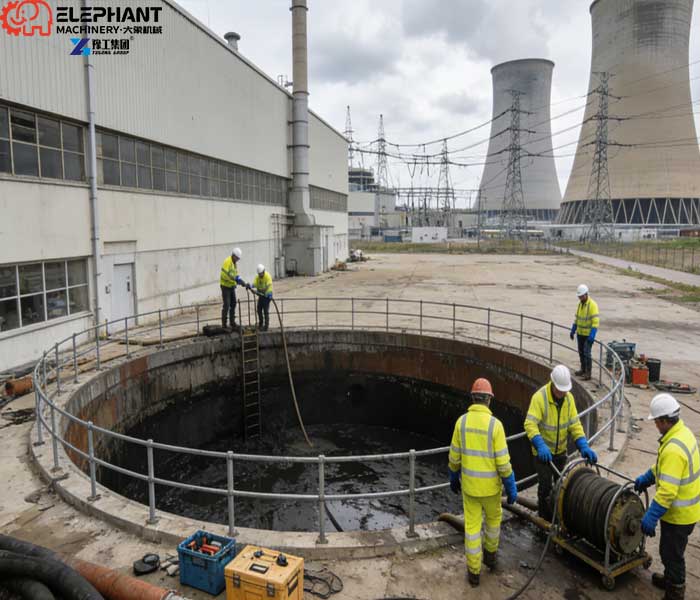

Why Industrial Facilities Need Industrial Dredging Robots?
In industrial environments, sludge accumulation and sediment buildup are persistent problems that directly affect operational efficiency and system safety. Over time, wastewater treatment tanks, sedimentation basins, and industrial ponds experience:
- Reduced storage and treatment capacity
- Blocked flow channels and reduced circulation efficiency
- Increased maintenance frequency and operational downtime
- High labor risk in confined or hazardous environments
- Environmental compliance pressure
Traditional cleaning methods often require tank shutdowns, manual entry, or large auxiliary equipment, which increases cost and safety risks.
This is why many operators are shifting toward remote control dredging robot systems and industrial dredging robot solutions.
Core Features and Engineering Advantages
1. Hydraulic Crawler Drive System
The industrial dredging robot uses a hydraulic crawler chassis designed for unstable and sludge-filled environments.
It is engineered with strong terrain adaptability and can operate on inclined and uneven surfaces with a climbing angle of up to 30°, ensuring stable performance even in complex industrial tank bottoms and sludge environments.
Key advantages:
- High torque for soft and heavy sludge conditions
- Stable movement on uneven tank bottoms
- Climbing ability up to 30° for complex terrain operation
- Reliable continuous operation in submerged environments
- Easy maintenance and modular hydraulic components
This makes it suitable for both confined industrial tanks and large-scale open sludge ponds.dustrial ponds.
2. High-Efficiency Slurry Pumping System
A key feature of the system is its high-capacity slurry transport capability.
- Continuous sludge extraction and discharge
- Stable flow rate even in high-density sediment conditions
- Long-distance pipeline transportation capability
- Reduced risk of clogging compared to conventional systems
This ensures uninterrupted operation in large-scale industrial cleaning projects.
3. Remote Control and Intelligent Operation
Modern intelligent dredging robot systems are equipped with remote operation and monitoring functions.
- Real-time video monitoring inside tanks or underwater environments
- Remote control of movement, pumping, and dredging tools
- Reduced human entry into hazardous environments
- Improved precision and operational safety
4. Strong Adaptability to Complex Media
Industrial sludge often contains mixed materials such as oil residue, sand, and chemical sediment.
The system performs effectively in:
- sludge removal robot applications
- sediment dredging robot operations
- silt removal robot environments
- high-density wastewater sludge conditions
It ensures stable performance even in complex industrial waste compositions.
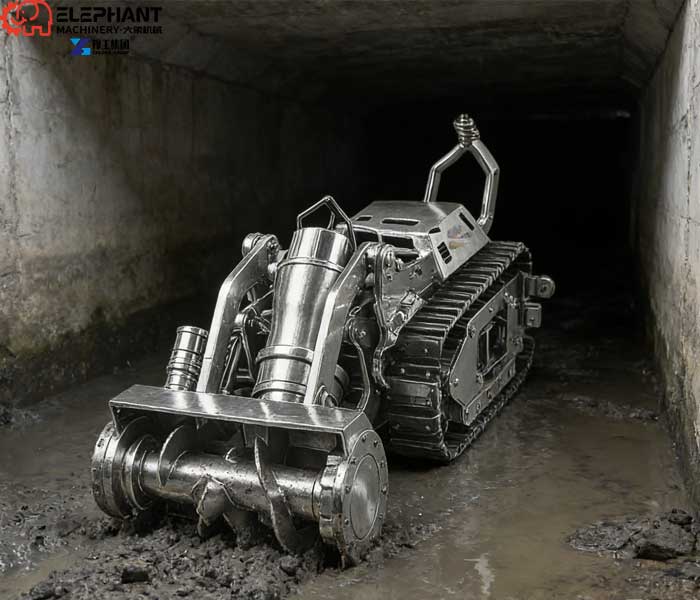

Application Scenarios of Industrial Dredging Robot
It is widely used across multiple industries:
- Wastewater treatment plants (desilting robot for wastewater treatment plant)
- Sedimentation tanks and clarification basins
- Industrial ponds and storage tanks
- Lagoon dredging robot applications
- River-connected industrial discharge systems
- Aquaculture pond cleaning and sludge management
- Sewer and culvert sediment removal (culvert cleaning robot, sewer pipe cleaning robot)
- Industrial tank cleaning robot and confined space cleaning projects
It can also be adapted into sedimentation tank dredging robot and industrial tank cleaning robot configurations depending on project requirements.
Why Customers Choose Industrial Dredging Robots?
From a procurement perspective, customers are mainly concerned with three issues: safety, efficiency, and cost control.
An industrial dredging robot solves these problems by:
- Eliminating the need for manual entry into hazardous tanks
- Reducing plant shutdown time during cleaning
- Improving sludge removal efficiency and consistency
- Lowering long-term maintenance and labor costs
- Supporting continuous operation in critical industrial systems
In many cases, it replaces traditional cleaning methods entirely, especially in confined or high-risk environments.
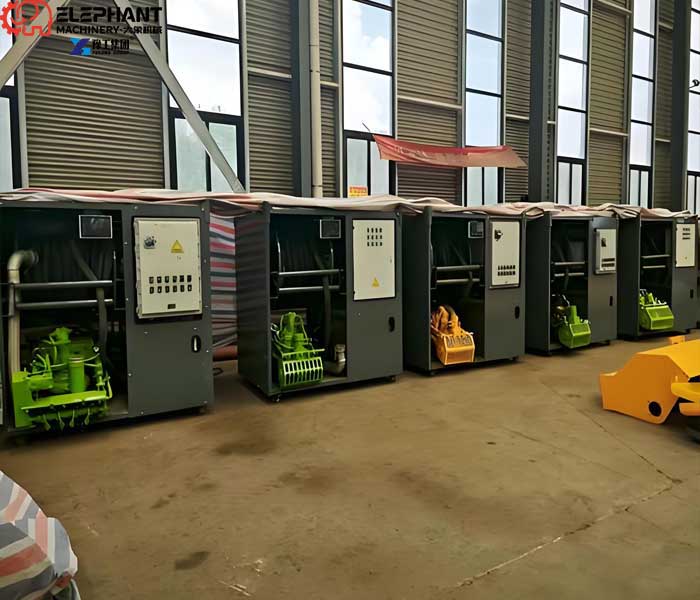

Elephant Machinery Strength and Engineering Capability
As part of Elephant Machinery (Yugong Group), the company has strong manufacturing and engineering capabilities in environmental and dredging equipment.
Key strengths include:
- 20+ years of heavy machinery manufacturing experience
- Advanced hydraulic system engineering and integration capability
- In-house R&D team for customized dredging solutions
- Export experience to Europe, Africa, Southeast Asia, and the Middle East
- OEM/ODM customization for different industrial applications
The company focuses on providing reliable robotic dredge and robotic dredging solutions for global industrial clients, ensuring stable performance in demanding environments.
FAQ about Industrial Dredging Robot
1. What is an industrial dredging robot used for?
It is used for removing sludge, sediment, and waste materials from industrial tanks, wastewater plants, lagoons, and other confined or open water systems.
2. Can it operate in confined or closed tanks?
Yes, it is designed for semi-enclosed and confined environments such as industrial tanks and sedimentation basins.
3. How does it compare with manual cleaning?
It is safer, faster, and more efficient, eliminating the need for human entry into hazardous sludge environments.
4. What types of sludge can it handle?
It can handle oil sludge, chemical sediment, sand mixtures, and high-density wastewater sludge.
5. Can it be customized?
Yes, Elephant Machinery provides customized solutions including crawler systems, pump capacity, and control systems.
Conclusion
The industrial dredging robot represents a new generation of intelligent cleaning technology for industrial water systems. With hydraulic crawler mobility, high-efficiency pumping, and remote operation, it significantly improves safety and efficiency in sludge and sediment removal tasks.
For industries facing increasing pressure in environmental compliance and operational efficiency, robotic dredging solutions provide a reliable, scalable, and cost-effective alternative to traditional cleaning methods.