


A Lake Dredging Robot is an advanced unmanned underwater dredging system designed for large-scale lake restoration, sediment removal, and ecological rehabilitation projects. It combines hydraulic crawler mobility, high-lift slurry pumping, and remote intelligent control to enable continuous dredging in complex aquatic environments.
Compared with traditional dredging vessels and manual excavation methods, modern robotic dredging systems provide higher efficiency, lower operational risk, and significantly improved cost performance for long-term lake management projects.
Lake Dredging Robot Parameters
| Parameter | YG450 | YG500 | YG600 | YG700 | YG800 | YG900 | YG1200 |
| Robot Dimensions (mm) | ≤1700 × 450 × 450 | 1500 × 500 × 650 | 1500 × 600 × 650 | 1600 × 700 × 650 | 1600 × 850 × 700 | 1650 × 960 × 750 | 1900 × 1200 × 750 |
| Applicable Manhole / Access | ≥600 mm opening | ≥600 mm opening | ≥600 mm opening | ≥700 mm opening | ≥800 mm opening | ≥900 mm opening | Large culvert / open access |
| Dredging Width (mm) | 450 | 500 | 600 | 700 | 800 | 900 | Suitable for large culverts |
| Travel Speed (m/s) | 3–12 | 3–15 | 3–15 | 3–15 | 3–15 | 3–15 | 0–17 m/min |
| Pump Diameter (inch) | 3 | 3 | 3 | 4 | 4 | 4 | 4 or 6 |
| Pump Flow (m³/h) | 50 | 100 | 100 | 160 | 160 | 200 | 250 |
| Pump Head (m) | 0-30 | 0–30 | 0–30 | 0–25 | 0–25 | 0–25 | 0–30 (Horizontal: 100–150 m) |
| Hydraulic Station Dimensions (mm) | 2000 × 1100 × 1500 (recommended) | 2200 × 1200 × 1700 | 2200 × 1200 × 1700 | 2200 × 1200 × 1700 | 2200 × 1200 × 1700 | 2200 × 1200 × 1700 | 2120 × 1240 × 1200 |
| Main Motor Power (kW) | 11–15 kW | 18 | 18 | 22 | 22 | 22 | 45 kW (50 kW) / Diesel 76 kW (123 kW) |
| Hydraulic System Pressure (MPa) | 0–16 | 0–16 | 0–16 | 0–16 | 0–16 | 0–16 | Custom / high-pressure system |
| Particle Size Capacity (mm) | ≤10–20 mm (soft sludge) | 15 | 15 | 40 | 40 | 50 | 0–40 (customizable) |
| Winch Speed (r/min) | 0–10 | 0–10 | 0–10 | 0–10 | 0–10 | 0–10 | 0–10 |
| Pipe Length (m) | 20–30 optional | 30–50 optional | 30–50 optional | 30–50 optional | 30–50 optional | 30–50 optional | 30 m/pack, high-pressure resistant |
| Control System | Wireless Remote Control | Wireless Remote | Wireless Remote | Wireless Remote | Wireless Remote | Wireless Remote | Wireless Remote |
| Lighting System | Underwater LED ×2 | Underwater LED ×2 | Underwater LED ×2 | Underwater LED ×2 | Underwater LED ×2 | Underwater LED ×2 | Underwater LED ×2 |
Get the Right Model for Your Project
Why Lake Dredging Is Becoming Increasingly Critical?
Many natural and artificial lakes worldwide are facing serious sedimentation problems caused by urban runoff, agricultural discharge, and long-term ecological imbalance.
Over time, these issues lead to:
- Continuous reduction of lake depth and storage capacity
- Increased flood risk during heavy rainfall seasons
- Decline in water quality and oxygen levels
- Excessive growth of aquatic vegetation and algae
- Reduced ecological and recreational value
In many regions, lake sediment accumulation exceeds natural self-cleaning capacity, making mechanical intervention necessary.
A lake dredging robot system provides a scalable and cost-efficient solution for restoring lake function without requiring large-scale infrastructure disruption.


What Is a Lake Dredging Robot?
A Lake Dredging Robot is a remotely operated underwater dredging system designed to remove sludge, silt, and sediment from lakebeds.
It is typically categorized as:
- underwater dredging robot
- industrial dredging robot
- sediment dredging robot
- intelligent dredging robot
Core system composition:
- Hydraulic crawler chassis
- High-torque dredging head (cutter or auger)
- High-lift slurry pumping system
- Remote control + camera monitoring system
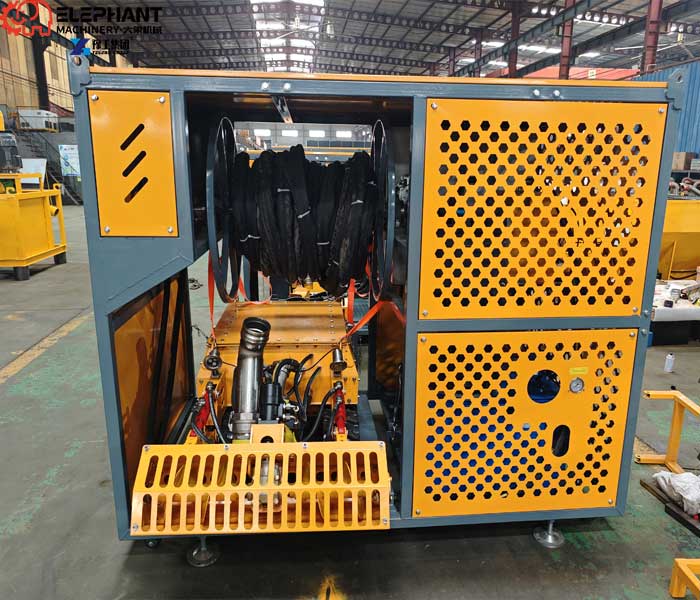
- Diesel hydraulic power unit
This integrated architecture allows continuous underwater operation in soft sediment, deep sludge layers, and narrow lake zones.

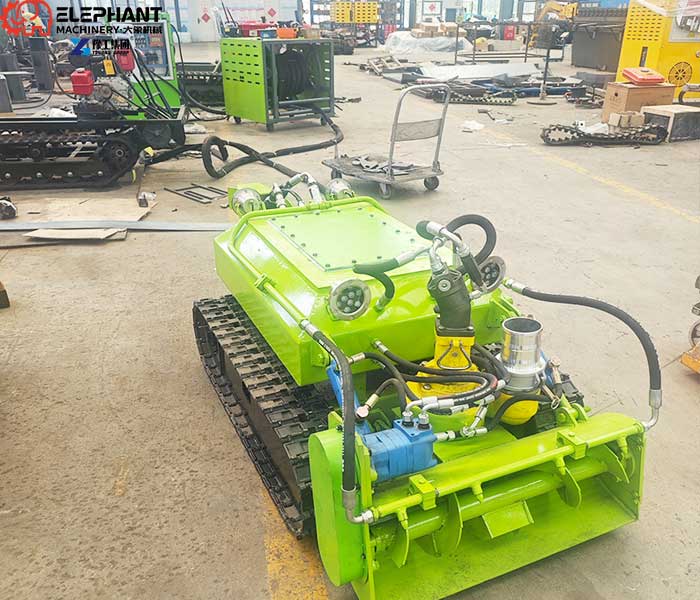
Hydraulic Drive System: Stability and High Torque Performance
The robot adopts a fully hydraulic crawler system designed for unstable lakebed conditions.
Key advantages:
- High torque output for deep sediment penetration
- Stable traction on soft and uneven lake bottoms
- High reliability in long-duration underwater operation
- Modular hydraulic components for easier maintenance
This makes it suitable for continuous dredging operations in lakes, reservoirs, and lagoons where ground conditions are unpredictable.
Diesel / Electric Hydraulic Power System: Flexible Operation
The lake dredging robot uses a hydraulic drive system that can be configured with either a diesel-hydraulic or electric-hydraulic power unit, depending on site conditions and project needs. This ensures strong adaptability in different lake dredging environments.
- The diesel-hydraulic system is suitable for remote or off-grid lakes, providing high power output for heavy-duty dredging and fast field deployment. It is commonly used in large lakes and reservoirs without stable electricity.
- The electric-hydraulic system is designed for urban or industrial sites with stable power supply. It offers low noise, lower operating cost, and continuous stable operation, making it ideal for environmentally sensitive areas.
Overall, diesel systems suit remote projects, while electric systems are better for urban applications, ensuring flexible and cost-efficient lake dredging solutions.
Get Your Solutions for lake dredging


High-Lift Slurry Pumping System: Continuous Sediment Transport
One of the most critical subsystems is the high-lift dredging pump, responsible for transporting sediment-water mixture through pipelines.
Technical benefits:
- Stable and continuous slurry discharge
- Long-distance pipeline transport capability
- Reduced clogging in high-solid-content sediment
- High efficiency in deep sludge extraction zones
This enables large-area lake dredging without frequent system shutdowns.
Intelligent Control and Remote Operation System
Modern lake dredging robots integrate intelligent control systems that significantly improve safety and precision.
Features include:
- Real-time camera monitoring underwater
- Remote operation of movement, pump, and cutter
- Multi-channel control system integration
- Data feedback for dredging performance optimization
Key benefits:
- Operators stay outside hazardous water environments
- Improved precision in sediment targeting
- Reduced manpower requirement
- Safer operation in contaminated or deep-water lakes
This makes the system highly aligned with modern intelligent dredging robot standards.


Anti-Clogging and Sludge Conditioning System
Lake sediment often contains mixed materials such as clay, organic sludge, and debris.
To ensure stable operation, the robot integrates:
- Auger or stirring unit for sediment loosening
- Solid-liquid mixing chamber before pumping
- Anti-blocking suction design
Advantages:
- Prevents pipeline blockage
- Maintains stable slurry density
- Improves long-distance transport efficiency
This is especially important for sediment dredging robot performance in natural lakes.
Modular Structure and Easy Maintenance Design
Large lake dredging projects require long operational cycles. Therefore, maintainability is essential.
Modular design includes:
- Replaceable hydraulic crawler system
- Swappable dredging head modules
- Quick-maintenance pump assembly
- Field-service-friendly structure
Benefits:
- Reduced downtime during large projects
- Lower maintenance cost over project lifecycle
- Faster repair and component replacement

Complex Terrain Adaptability in Lake Environments
Lake environments vary significantly in sediment depth and consistency.
The robot is designed to operate in:
- Soft mud and deep sludge zones
- Shallow shoreline transitions
- Uneven lakebed terrain
- Vegetation-covered sediment areas
Technical advantage:
- Low ground pressure crawler system ensures stability
- Continuous dredging in deep and shallow transitions
- Suitable for long-distance lake coverage projects
Environmental and Ecological Benefits
Beyond engineering performance, lake dredging robots contribute to ecological restoration.
Environmental advantages:
- Reduces turbidity spread during dredging
- Minimizes secondary water pollution
- Improves water circulation and oxygen levels
- Supports long-term lake ecosystem recovery
This makes it ideal for government-led lake restoration and environmental protection projects.
Investment Value and Cost Efficiency
Compared with traditional dredging methods, a lake dredging robot system can reduce operating costs, improve flexibility, and increase long-term project efficiency.
| Comparison Factor | Traditional Dredging Methods | Lake Dredging Robot System |
|---|---|---|
| Setup & Transportation | High vessel mobilization and transportation costs | Lower setup and transportation costs |
| Labor Requirements | Requires a larger operating crew | Reduces manpower requirements |
| Operational Flexibility | Limited by vessel access and site conditions | Suitable for various lake environments and confined areas, depending on the model |
| Operating Efficiency | May involve longer setup times and operational downtime | Supports efficient, continuous operation under suitable working conditions |
| Maintenance Costs | May involve higher vessel and supporting equipment maintenance costs | Potentially lower long-term maintenance costs, depending on system configuration and usage |
| Long-Term ROI | Can be affected by high mobilization and labor expenses | Potentially improves ROI through increased efficiency and reduced downtime |
For large-scale lake restoration projects, a lake dredging robot system can help reduce total operating costs and improve project efficiency. The actual cost savings and return on investment depend on sediment conditions, project size, equipment configuration, and operating requirements.igher operational efficiency and reduced downtime.

Typical Application Scenarios
A lake dredging robot is widely used in:
- Lake sediment removal and restoration projects
- Reservoir capacity recovery
- Lagoon dredging operations
- Aquaculture pond cleaning
- River-connected lake systems
- Environmental rehabilitation projects
It can also be adapted into river dredging robot and lagoon dredging robot configurations depending on project requirements.
FAQ about Lake Dredging Robot
1. What is a lake dredging robot used for?
A lake dredging robot is used for removing sediment, sludge, and silt from lakebeds. It helps restore lake depth, improve water quality, and recover storage capacity in natural and artificial lakes.
2. How does a lake dredging robot work?
The robot uses a hydraulic crawler system to move on the lakebed, while a dredging head loosens sediment. A high-lift pump then transports the slurry through pipelines to a designated discharge area.
3. Can the robot work in deep sludge or soft mud?
Yes. The lake dredging robot is specifically designed for soft mud, deep sludge layers, and uneven lakebeds. Its hydraulic drive system ensures stable operation in complex underwater environments.
4. What makes it better than traditional dredging methods?
Compared to traditional dredging vessels, the robot offers:
- Lower operational cost
- No need for large floating platforms
- Remote-controlled operation for safety
- Continuous underwater dredging capability
5. Is the system suitable for large-scale lake restoration projects?
Yes. The system is designed for continuous large-area dredging and can operate with high-lift pipeline systems for long-distance sediment transport, making it suitable for lakes and reservoirs.
6. Does it require external power supply during operation?
No. Most lake dredging robots use a diesel-hydraulic power unit, which allows fully independent operation without external electricity.
7. What environments can it be used in besides lakes?
It can also be used in reservoirs, lagoons, aquaculture ponds, rivers, and sedimentation tanks depending on configuration.
Conclusion
The Lake Dredging Robot represents a new generation of intelligent dredging technology that combines hydraulic power systems, high-efficiency slurry transport, and remote operation capabilities.
With increasing global demand for sustainable water management, it has become a core solution for lake restoration projects requiring:
- High efficiency sediment removal
- Continuous underwater operation
- Low operational risk
- Long-term cost effectiveness
As a result, intelligent dredging robot systems are rapidly replacing traditional mechanical dredging methods in modern lake and reservoir engineering projects.


