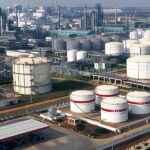
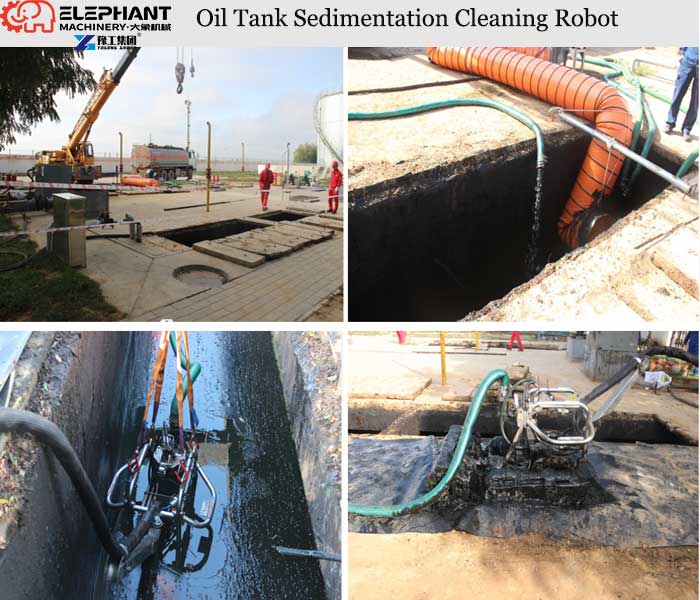

Industrial tanks are widely used in oil refineries, wastewater treatment plants, chemical facilities, and water storage systems. However, sludge accumulation inside tanks is a persistent operational challenge that affects efficiency, safety, and maintenance cost.
The tank cleaning robot system provides a modern, remote-controlled solution for cleaning confined space tanks without manual entry, reducing risk while improving cleaning efficiency and sludge removal performance.
What Is a Tank Cleaning Robot System?
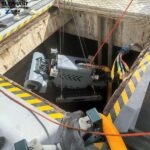
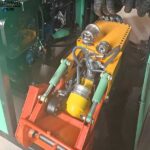
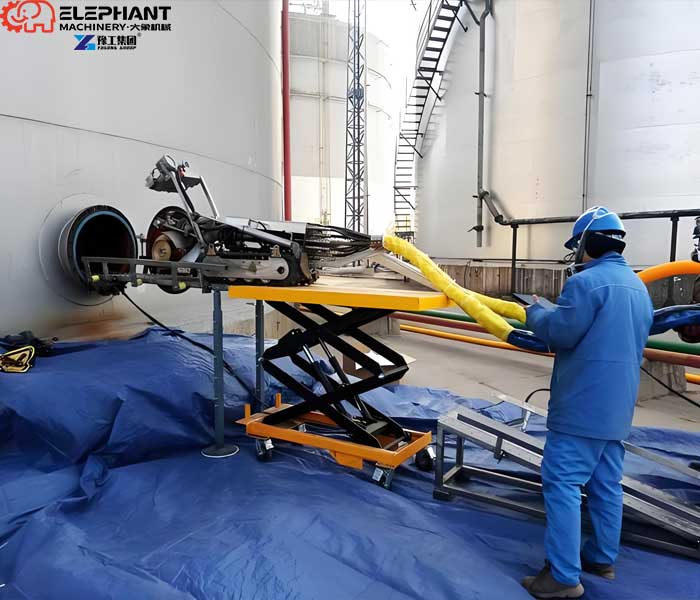
A tank cleaning robot system is an engineered cleaning solution designed to remove sludge, sediment, and residues from industrial tanks without requiring workers to enter confined spaces.
Unlike traditional cleaning methods, the system operates remotely using a combination of mechanical mobility, fluid agitation, and suction-based sludge extraction.
In industrial environments, tanks often contain hazardous gases, oil residues, or biological waste, making manual entry extremely dangerous.
This is why confined space cleaning has become one of the most critical safety challenges in industrial maintenance.
Key Concepts in Tank Cleaning Systems
In industrial tank cleaning applications, several key concepts define the system and its operating principles:
- Tank cleaning robot refers to a remote-controlled system designed for sludge and sediment removal inside industrial tanks without human entry.
- Industrial tank cleaning system is an integrated solution combining mechanical movement, hydraulic agitation, and sludge extraction technology.
- Confined space cleaning refers to safe cleaning operations conducted inside enclosed environments with limited ventilation and high safety risks.
By eliminating human entry, the system significantly improves operational safety while maintaining continuous production efficiency.


Industrial Tank Cleaning Robot Parameters
| Parameter | YG450 | YG500 | YG600 | YG700 | YG800 | YG900 | YG1200 |
| Robot Dimensions (mm) | ≤1700 × 450 × 450 | 1500 × 500 × 650 | 1500 × 600 × 650 | 1600 × 700 × 650 | 1600 × 850 × 700 | 1650 × 960 × 750 | 1900 × 1200 × 750 |
| Applicable Manhole / Access | ≥600 mm opening | ≥600 mm opening | ≥600 mm opening | ≥700 mm opening | ≥800 mm opening | ≥900 mm opening | Large culvert / open access |
| Dredging Width (mm) | 450 | 500 | 600 | 700 | 800 | 900 | Suitable for large culverts |
| Travel Speed (m/s) | 3–12 | 3–15 | 3–15 | 3–15 | 3–15 | 3–15 | 0–17 m/min |
| Pump Diameter (inch) | 3 | 3 | 3 | 4 | 4 | 4 | 4 or 6 |
| Pump Flow (m³/h) | 50 | 100 | 100 | 160 | 160 | 200 | 250 |
| Pump Head (m) | 0-30 | 0–30 | 0–30 | 0–25 | 0–25 | 0–25 | 0–30 (Horizontal: 100–150 m) |
| Hydraulic Station Dimensions (mm) | 2000 × 1100 × 1500 (recommended) | 2200 × 1200 × 1700 | 2200 × 1200 × 1700 | 2200 × 1200 × 1700 | 2200 × 1200 × 1700 | 2200 × 1200 × 1700 | 2120 × 1240 × 1200 |
| Main Motor Power (kW) | 11–15 kW | 18 | 18 | 22 | 22 | 22 | 45 kW (50 kW) / Diesel 76 kW (123 kW) |
| Hydraulic System Pressure (MPa) | 0–16 | 0–16 | 0–16 | 0–16 | 0–16 | 0–16 | Custom / high-pressure system |
| Particle Size Capacity (mm) | ≤10–20 mm (soft sludge) | 15 | 15 | 40 | 40 | 50 | 0–40 (customizable) |
| Winch Speed (r/min) | 0–10 | 0–10 | 0–10 | 0–10 | 0–10 | 0–10 | 0–10 |
| Pipe Length (m) | 20–30 optional | 30–50 optional | 30–50 optional | 30–50 optional | 30–50 optional | 30–50 optional | 30 m/pack, high-pressure resistant |
| Control System | Wireless Remote Control | Wireless Remote | Wireless Remote | Wireless Remote | Wireless Remote | Wireless Remote | Wireless Remote |
| Lighting System | Underwater LED ×2 | Underwater LED ×2 | Underwater LED ×2 | Underwater LED ×2 | Underwater LED ×2 | Underwater LED ×2 | Underwater LED ×2 |
Why Traditional Tank Cleaning Methods Are No Longer Efficient?
Conventional tank cleaning methods are widely used, but they are increasingly unsuitable for modern industrial requirements due to safety risks, low efficiency, and operational downtime.
❌ Manual Entry Cleaning
Workers enter tanks with protective equipment to remove sludge manually.
Problems:
- Dangerous confined space exposure
- Toxic gas accumulation risk (H₂S, methane, VOCs)
- Low working efficiency in deep sludge layers
- High labor intensity and safety compliance cost
❌ Water Filling + Flushing Method
Tanks are filled with water to dilute sludge before discharge.
Problems:
- High water consumption and waste
- Incomplete sludge removal
- Secondary contamination risk
- Inefficient for heavy sediment layers
❌ Mechanical Scraping
Mechanical tools or tools mounted on rods are used for cleaning.
Problems:
- Cannot reach tank corners or deep sludge layers
- Limited mobility inside complex tank structures
- Low adaptability for different sludge types
Key Insight
Traditional methods focus on manual or indirect cleaning, while modern industrial tanks require continuous, controlled, and fully remote sludge removal systems.
How Tank Cleaning Robots Work?
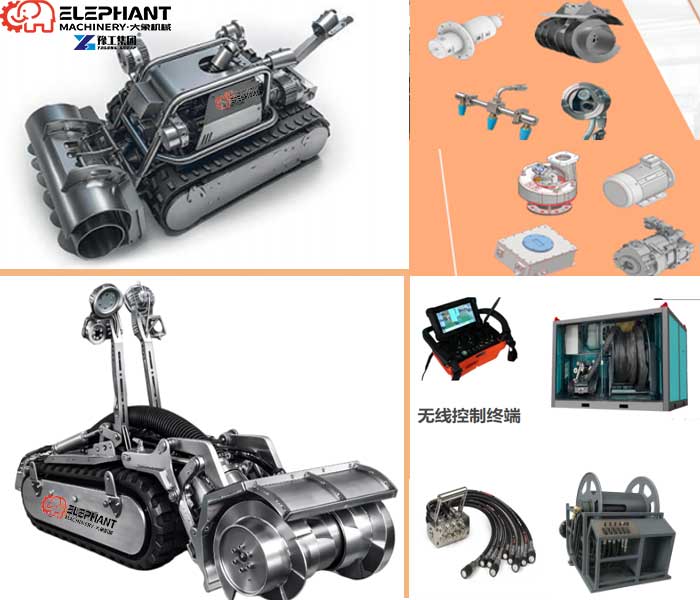
The tank cleaning robot system operates through a multi-stage engineering process designed to break, mobilize, and extract sludge efficiently.
Working Process:
Crawler / platform system
↓
High-pressure or hydraulic agitation system
↓
Sludge breaking system
↓
Suction system
↓
Remote discharge pipeline
System Explanation:
1. Mobility System (Crawler / Platform)
Ensures stable movement inside tanks or mounted entry points, allowing precise positioning.
2. Agitation System
Uses hydraulic or high-pressure water flow to loosen compacted sludge and sediments.
3. Sludge Breaking System
Breaks hardened or layered sludge into pumpable material.
4. Suction System
Extracts mobilized sludge efficiently using industrial-grade pumping units.
5. Remote Discharge Pipeline
Transfers sludge directly to external treatment or storage areas without manual handling.
Different tank types require different pumping pressure, agitation intensity, and discharge configurations depending on sludge composition and operational environment.
Types of Tank Cleaning Applications
Tank cleaning robot systems are widely used across different industrial and infrastructure sectors. Each application has unique sludge characteristics, operational risks, and cleaning requirements.
1. Oil Storage Tanks
Oil storage tanks typically accumulate heavy hydrocarbon-based sludge formed by long-term sedimentation and refinery processing residues.
- crude oil sludge
- refinery bottom residue
These environments require high-efficiency sludge extraction and explosion-safe operation.
2. Sewage Tanks
Sewage tanks contain high-concentration biological sludge formed from wastewater treatment processes.
- municipal sludge
- wastewater sediment
These systems require continuous sludge removal to maintain treatment efficiency and prevent system overload.
3. Industrial Chemical Tanks
Chemical storage tanks may contain corrosive residues, mixed sediments, and hazardous chemical sludge layers.
Proper cleaning systems must ensure corrosion resistance and operational safety in confined environments.
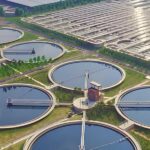
4. Sedimentation Tank Dredging Systems
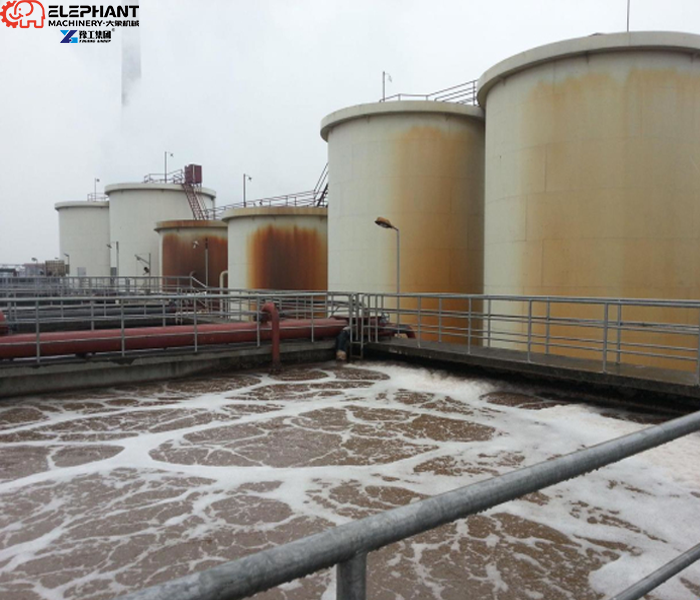
Sedimentation tanks in wastewater treatment plants are critical for solid-liquid separation processes. Over time, heavy sludge accumulates at the bottom, reducing treatment efficiency and increasing operational load.
Sedimentation tank dredging robots are designed to:
- Remove compacted sludge layers
- Restore tank capacity
- Maintain stable wastewater treatment performance
Typical applications include:
- primary sedimentation tanks
- secondary clarifiers
- wastewater treatment plant basins
👉 This category is especially important for municipal and industrial wastewater infrastructure.
5. Marine & Cargo Hold Cleaning Systems
In marine environments, tank cleaning systems are used for cargo holds and confined ship compartments where sludge, residues, and sediment accumulate during transportation.
- bulk carrier cargo holds
- ship storage compartments
- marine sludge accumulation zones
Cargo hold cleaning systems help reduce manual entry risks and improve cleaning efficiency in confined marine environments.
6. Water Storage Tanks
Water storage systems require periodic cleaning to remove sediment, biofilm, and particulate accumulation.
- drinking water tanks
- industrial clean water tanks
Clean water environments require low-turbidity cleaning to avoid secondary contamination.

Key Advantages of Tank Cleaning Robot System
A modern tank cleaning robot system provides significant improvements over traditional cleaning methods.
1. No Man Entry Cleaning
Eliminates the need for human entry into hazardous confined spaces.
2. Continuous Sludge Removal
Enables uninterrupted cleaning without stopping industrial operations.
3. Remote Operation Control
Operators control the system from a safe external environment.
4. Confined Space Safety Compliance
Reduces risks associated with toxic gases and oxygen deficiency.
5. High Efficiency Sediment Removal
Designed for heavy sludge, layered sediment, and industrial residues.
How to Choose the Right Tank Cleaning Solution?
Selecting the right tank cleaning system depends on real industrial conditions rather than generic specifications.
Tank Type
- Oil tanks / sewage tanks
Different tank types require different sludge handling methods.
Sludge Type
- Soft sludge
- Heavy sediment
- Solidified sludge layers
Tank Size
- Small storage tanks
- Medium industrial tanks
- Large refinery tanks
Cleaning Environment
- Confined space
- Explosive atmosphere
- Corrosive chemical environment
Discharge Distance
- Short-distance discharge
- Long-distance hydraulic pumping systems
Long-distance systems often require reinforced pumping and pipeline configurations.
Industrial Applications of Tank cleaning robot
Tank cleaning robot systems are used across a wide range of industries where sludge accumulation affects production efficiency.
- Oil refinery plants
- Municipal wastewater treatment plants
- Food storage facilities
- Chemical processing plants
- Industrial water storage systems
- Energy and mining facilities
Each industry presents different sludge types, requiring customized cleaning configurations.


Why Choose Our Tank Cleaning Robot System?
We provide engineering-driven tank cleaning solutions designed for complex industrial environments.
- OEM/ODM customization capability
- Multiple robot configuration options
- Experience in global industrial projects
- Engineering-based system design for different sludge conditions
- Suitable for oil, sewage, water, and chemical tank applications
Our focus is not only equipment supply, but also providing complete tank cleaning system solutions tailored to operational requirements.
Related Tank Cleaning Robot Solutions
Explore specialized solutions based on tank type:
- Oil Tank Cleaning Robot
- Sewage Tank Cleaning Robot
- Water Tank Cleaning Robot
These dedicated systems provide optimized performance for specific sludge types and industrial environments.
FAQ about Tank Cleaning Robot
What is a tank cleaning robot?
A remote-controlled system designed to remove sludge and sediment from industrial tanks without human entry.
Can it work in confined space tanks?
Yes. It is specifically designed for confined space cleaning applications with remote operation.
How does sludge discharge work?
Sludge is broken, suctioned, and transported through a remote discharge pipeline system to external collection points.
Is it safe for oil tanks?
Yes. Systems can be configured for oil sludge environments with appropriate safety and explosion-proof designs.
Do tanks need to be emptied first?
Not necessarily. Many systems are designed for cleaning with partial or full liquid presence depending on application.
Can it handle heavy sludge layers?
Yes. Hydraulic agitation and cutting systems are designed for compacted and layered sludge.
What industries use this system most?
Oil refineries, wastewater treatment plants, chemical industries, and industrial storage facilities.
Is remote operation standard?
Yes. All systems are designed for remote control to ensure operator safety.
Conclusion
Tank sludge accumulation is an unavoidable issue in industrial storage systems, but traditional cleaning methods are no longer suitable for modern safety and efficiency requirements.
The tank cleaning robot system provides a safe, efficient, and scalable solution for cleaning oil, sewage, and water tanks without human entry, reducing operational risks while improving maintenance efficiency.
For industries dealing with confined space cleaning challenges, adopting robotic tank cleaning technology is becoming a standard approach to ensure safety, compliance, and long-term operational stability.