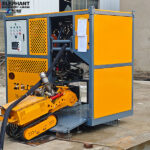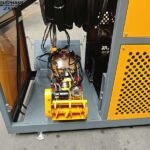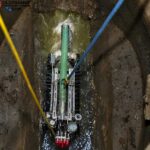


A culvert cleaning robot provides a practical way to remove accumulated sediment, sludge, sand, gravel, and other blockage materials from drainage culverts without sending workers into difficult confined spaces.
Culverts can gradually lose their drainage capacity as sediment and debris build up on the bottom. During heavy rainfall, a partially blocked culvert can restrict water flow and increase the risk of localized flooding.
Elephant Machinery provides remote-controlled crawler dredging robots for municipal drainage, stormwater culverts, highway drainage systems, industrial channels, and other restricted-access structures.
The system can be configured with a breaking head, high-pressure water jet, and hydraulic slurry transfer pump according to the culvert size and material to be removed.
Culvert Cleaning Robot Parameters
Elephant Machinery offers several crawler dredging robot sizes for different culvert widths, access openings, sediment conditions, and pumping requirements.
| Parameter | YG450 | YG500 | YG600 | YG700 | YG800 | YG900 | YG1200 |
| Robot Dimensions (mm) | ≤1700 × 450 × 450 | 1500 × 500 × 650 | 1500 × 600 × 650 | 1600 × 700 × 650 | 1600 × 850 × 700 | 1650 × 960 × 750 | 1900 × 1200 × 750 |
| Applicable Manhole / Access | ≥600 mm opening | ≥600 mm opening | ≥600 mm opening | ≥700 mm opening | ≥800 mm opening | ≥900 mm opening | Large culvert / open access |
| Dredging Width (mm) | 450 | 500 | 600 | 700 | 800 | 900 | Suitable for large culverts |
| Travel Speed (m/s) | 3–12 | 3–15 | 3–15 | 3–15 | 3–15 | 3–15 | 0–17 m/min |
| Pump Diameter (inch) | 3 | 3 | 3 | 4 | 4 | 4 | 4 or 6 |
| Pump Flow (m³/h) | 50 | 100 | 100 | 160 | 160 | 200 | 250 |
| Pump Head (m) | 0-30 | 0–30 | 0–30 | 0–25 | 0–25 | 0–25 | 0–30 (Horizontal: 100–150 m) |
| Hydraulic Station Dimensions (mm) | 2000 × 1100 × 1500 (recommended) | 2200 × 1200 × 1700 | 2200 × 1200 × 1700 | 2200 × 1200 × 1700 | 2200 × 1200 × 1700 | 2200 × 1200 × 1700 | 2120 × 1240 × 1200 |
| Main Motor Power (kW) | 11–15 kW | 18 | 18 | 22 | 22 | 22 | 45 kW (50 kW) / Diesel 76 kW (123 kW) |
| Hydraulic System Pressure (MPa) | 0–16 | 0–16 | 0–16 | 0–16 | 0–16 | 0–16 | Custom / high-pressure system |
| Particle Size Capacity (mm) | ≤10–20 mm (soft sludge) | 15 | 15 | 40 | 40 | 50 | 0–40 (customizable) |
| Winch Speed (r/min) | 0–10 | 0–10 | 0–10 | 0–10 | 0–10 | 0–10 | 0–10 |
| Pipe Length (m) | 20–30 optional | 30–50 optional | 30–50 optional | 30–50 optional | 30–50 optional | 30–50 optional | 30 m/pack, high-pressure resistant |
| Control System | Wireless Remote Control | Wireless Remote | Wireless Remote | Wireless Remote | Wireless Remote | Wireless Remote | Wireless Remote |
| Lighting System | Underwater LED ×2 | Underwater LED ×2 | Underwater LED ×2 | Underwater LED ×2 | Underwater LED ×2 | Underwater LED ×2 | Underwater LED ×2 |
*Particle-size capacity depends on the pump, sediment characteristics, and actual system configuration.
Final configuration should be selected according to culvert dimensions, access conditions, sediment type, particle size, water level, pumping distance, and required capacity.
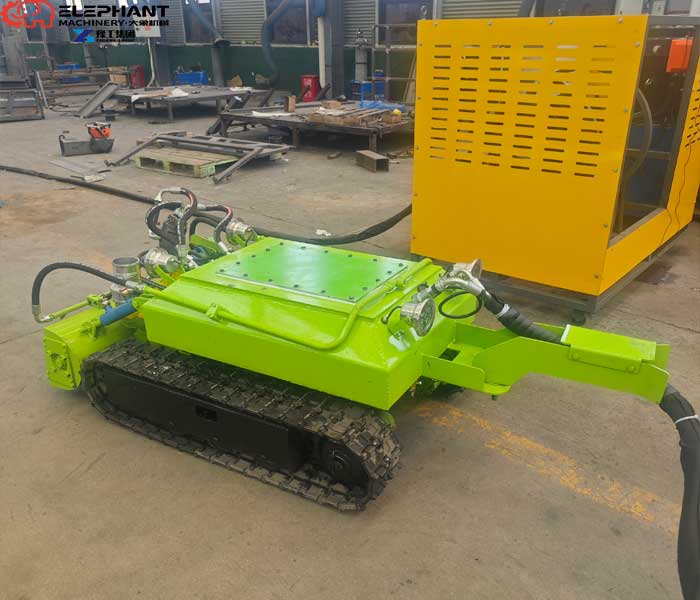

How Does a Culvert Cleaning Robot Work?
The cleaning process depends on the type and condition of the blockage. For heavy sediment, the system can combine mechanical breaking, water conditioning, and slurry pumping.
Break → Add Water → Pump Out
1. Crawler Robot Reaches the Blockage
The tracked robot travels along the culvert floor and reaches the accumulated sediment or blockage.
Its crawler chassis provides traction on wet, slippery, or uneven surfaces, while wireless remote control allows the operator to work from outside the confined area.
2. Breaking Head Loosens Compacted Sediment
When sediment has become compacted, a hydraulic breaking head can mechanically loosen the deposits.
This is useful for dense sludge, sand and sludge mixtures, and other deposits that cannot be transferred efficiently in their original condition.
3. High-Pressure Water Jet Conditions the Material
A high-pressure water jet can be used to introduce water into dense sediment.
The water helps loosen and mix the material, improving its flowability and preparing it for pumping.
The required water addition depends on the sediment composition and pumping conditions. The system can therefore be configured according to the required slurry consistency rather than using a fixed water ratio for every project.
4. Hydraulic Slurry Pump Removes the Material
After the sediment has been sufficiently loosened and conditioned, a hydraulic slurry transfer pump transports the material through the discharge hose to a collection or treatment point.
This approach is particularly useful when heavy settled sediment is difficult to remove by suction alone.
Core Features of Culvert Cleaning Robot
1. Compact Crawler Design for Small Access Culverts
Most culverts have limited entry points (often 400–1000 mm). The robot is designed with a low-profile tracked chassis, allowing it to enter narrow or partially blocked structures without dismantling infrastructure.
2. High-Efficiency Sludge Removal System
The system typically includes a hydraulic remote slurry delivery pump or suction dredging module, capable of removing:
- Thick sludge layers
- Sand and gravel deposits
- Organic waste accumulation
Some models can handle slurry densities up to 20–30% solid content, making them suitable for heavy sediment environments.
3. Remote-Control Operation for Maximum Safety
Operators control the robot via a wireless or wired console with live video feedback. This eliminates the need for confined-space entry, significantly reducing occupational risk.
4. Integrated Camera and Lighting System
High-definition waterproof cameras combined with LED lighting allow real-time inspection of:
- Blockage locations
- Structural damage
- Water flow conditions
This makes the system not only a cleaning tool but also an inspection and maintenance robot.
5. Strong Mobility in Complex Environments
The crawler system ensures stable movement in:
- Slippery sediment layers
- Uneven culvert floors
- Partially flooded channels
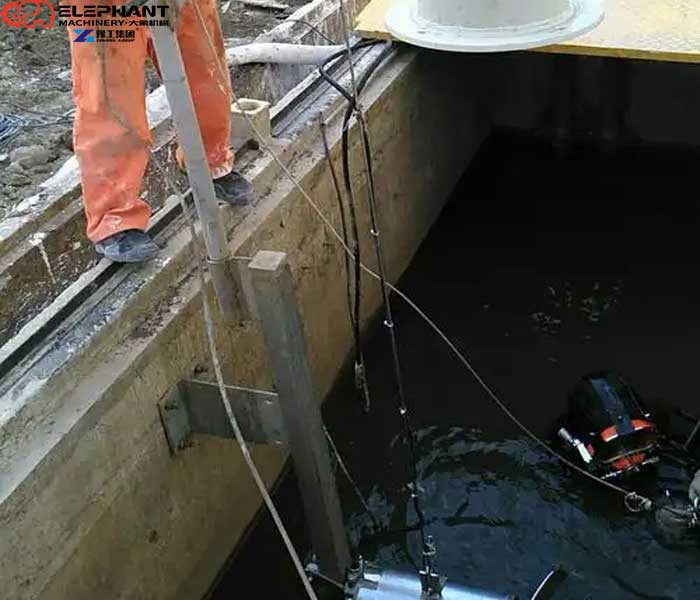

What Can a Culvert Cleaning Robot Remove?
The robot can be configured for different types of accumulated material, including:
- Sludge and silt
- Sand deposits
- Fine gravel
- Organic sediment
- Mud and debris
- Mixed sediment deposits
- Other pumpable blockage materials
For large rocks, solid waste, or oversized debris, the removal method should be evaluated separately before selecting the robot and pump configuration.
Culvert Cleaning Robot Applications
A culvert cleaning robot can be used in a range of drainage and water-management applications.
Municipal and Stormwater Drainage
Suitable for:
- Stormwater culverts
- Urban drainage channels
- Roadside drainage structures
- Flood-control drainage systems
Regular sediment removal helps maintain the designed flow capacity of drainage infrastructure.
Highway and Railway Culverts
Culverts beneath roads and railways can be difficult to access with conventional equipment. A compact tracked robot can enter through available access points and remove accumulated sediment without requiring workers to work directly inside the structure.
Industrial Drainage Systems
The system can also be configured for drainage channels and culverts around:
- Power plants
- Industrial facilities
- Manufacturing sites
- Wastewater infrastructure
Site conditions and material characteristics should be evaluated before selecting the equipment.
Agricultural and Rural Drainage
For irrigation and rural drainage structures, the robot can help remove accumulated silt, mud, and other sediment that restricts water flow.
Culvert Cleaning Robot vs. Conventional Cleaning
The main advantage of a robotic system is not simply replacing one machine with another. It provides a way to combine access, sediment loosening, and material removal when conventional equipment is difficult to position.
| Cleaning Challenge | Robotic Solution |
|---|---|
| Narrow access | Compact crawler platform |
| Thick or compacted sediment | Hydraulic breaking head |
| Material too dense to pump | High-pressure water conditioning |
| Long or difficult discharge route | Configurable slurry pump and hose |
| Wet or slippery culvert floor | Tracked crawler mobility |
| Difficult manual access | Remote operation |
For heavy sediment, the integrated approach can be more practical than relying on suction or water flushing alone.


How to Choose the Right Culvert Cleaning Robot?
The robot should be selected according to the actual working conditions rather than culvert width alone.
Before requesting a configuration, prepare the following information:
Culvert Dimensions
- Internal width or diameter
- Culvert height
- Access opening size
- Cleaning length
Sediment Conditions
- Estimated sediment thickness
- Sludge, sand, gravel, or mixed material
- Approximate particle size
- Whether the deposits are compacted
Water Conditions
- Dry, partially flooded, or submerged working environment
- Water depth
- Flow conditions
Pumping Requirements
- Required discharge flow
- Horizontal pumping distance
- Vertical lifting height
- Discharge location
With this information, Elephant Machinery can recommend the crawler size, breaking equipment, water jet, pump, hose, and hydraulic system for the application.
FAQ – Culvert Cleaning Robot
1. Can the culvert cleaning robot work in fully flooded culverts?
Yes. Many models are designed for fully submerged environments, using waterproof motors and sealed electrical systems.
2. What is the maximum distance it can clean?
Depending on the pumping system, some robots can operate over 100–500 meters of pipeline or culvert length.
3. Is it suitable for very small culverts?
Yes. Compact models are available for culverts as small as 400 mm diameter.
4. How is the sludge removed after cleaning?
The system usually transfers sludge via:
- External slurry pump system
- Collection tank truck
- Pipeline discharge system
5. Does it require trained operators?
Basic training is sufficient. Most systems use joystick-style remote control interfaces similar to industrial machinery.
6. Can the robot be customized?
Yes. The crawler width, breaking equipment, water jet, pump, hose, hydraulic system, and control configuration can be selected according to the application.
Conclusion: Remote-Controlled Culvert Cleaning for Difficult Drainage Conditions
A culvert cleaning robot provides a practical option for removing accumulated sediment from drainage structures where access is restricted or manual cleaning is difficult.
Elephant Machinery combines a tracked crawler, hydraulic breaking head, high-pressure water jet, and slurry transfer pump to create a configurable system for sediment and blockage removal.
From municipal stormwater culverts and highway drainage to industrial and rural drainage structures, the right configuration depends on the culvert dimensions, access opening, sediment condition, water level, and pumping requirements.
Send us your culvert dimensions, access size, sediment type, and cleaning distance to discuss a suitable robotic cleaning system.