When dredging a lake, pond, river, or industrial tank, the extracted material often contains a mixture of water, fine mud, sand, and other solid particles. Sending all this slurry directly to the next treatment stage may increase the processing load and make downstream sludge dewatering more difficult.
A mud sand separator helps separate sand and other suitable solid particles from slurry before further treatment. When integrated with a remote-controlled dredging robot and a chamber filter press, it can form an efficient sludge treatment system that covers underwater sediment extraction, sand separation, sludge dewatering, and water management.
Elephant Dredging provides dredging and sludge treatment equipment for projects that require a coordinated solution from sediment removal to downstream processing. Depending on the slurry characteristics and treatment objectives, a suitable system can include a dredging robot, mud sand separator, chamber filter press, feed pumps, pipelines, and auxiliary equipment.
Whether you are working on lake dredging, pond cleaning, river sediment removal, or industrial tank cleaning, selecting the right separation and dewatering equipment starts with understanding the material to be processed.
Request a Customized Mud Sand Separation Solution

How Does a Mud Sand Separator Work with a Dredging Robot?
A mud sand separator is often used as a pretreatment unit in a dredging slurry treatment system. Its main purpose is to separate sand or other particles within its effective separation range before the remaining slurry enters the next treatment stage.
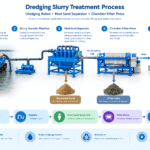
For projects involving underwater sludge removal, the complete process can be organized into four main stages.
Step 1: Extract Sludge with a Dredging Robot
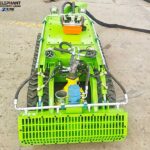
A remote-controlled dredging robot moves along the bottom of a lake, pond, tank, or settling basin to collect accumulated sludge and sediment.
The robot pumps the extracted material through a discharge pipeline to the downstream treatment area. The slurry may contain water, fine mud, sand, and other suspended or settled particles.
Using a remote-controlled dredging robot can reduce the need for personnel to enter confined or difficult-to-access cleaning areas.
Step 2: Separate Sand from the Slurry
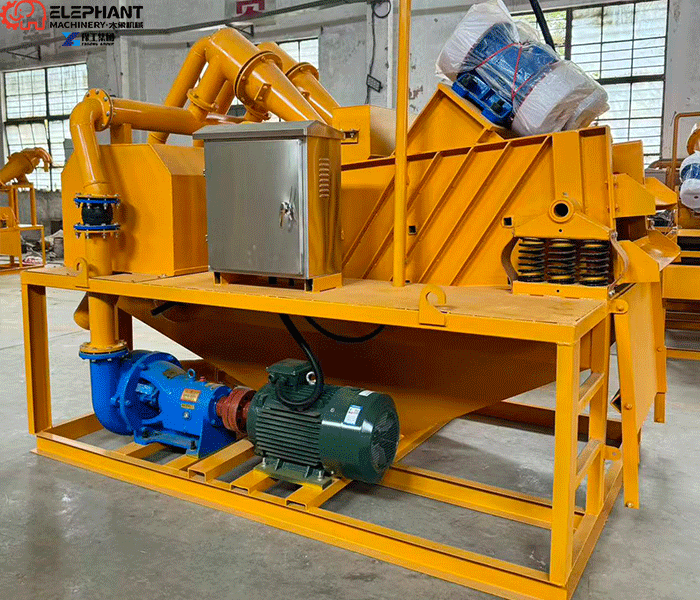
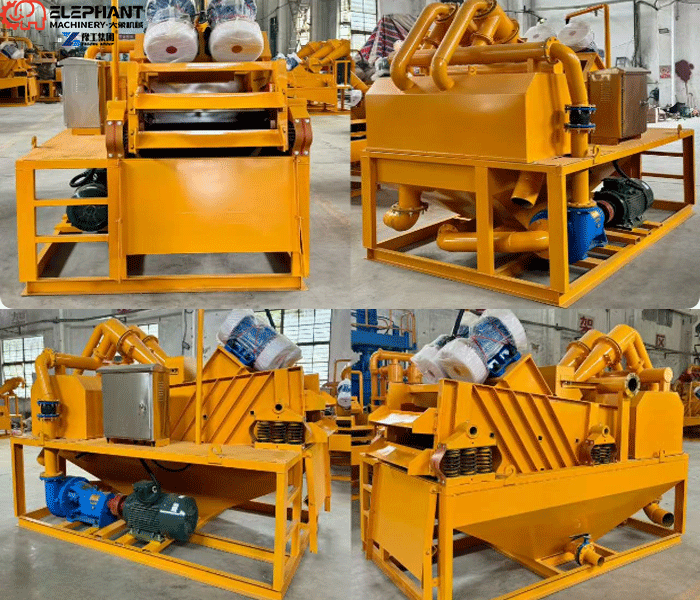
The extracted slurry is transferred to the mud sand separator for preliminary solid separation.
Depending on the equipment design, the separator may use hydraulic, centrifugal, screening, or other separation principles to separate sand and suitable solid particles from the slurry.
The separation stage can help reduce the amount of coarse material entering the downstream dewatering equipment. Separated sand may be collected for further handling, while the remaining slurry proceeds to the next stage.
The actual separation efficiency depends on particle size, particle density, slurry concentration, flow rate, and the separator configuration.
Step 3: Dewater the Remaining Slurry with a Chamber Filter Press
After sand separation, the remaining slurry may still contain fine mud, clay, organic matter, and a substantial amount of water.
A chamber filter press provides a further solid-liquid separation stage. Under pressure, liquid passes through the filter cloth while suitable solid particles accumulate in the filter chambers to form filter cake.
This process reduces the water content of the treated solids and produces a separate filtrate stream.
The mud sand separator and chamber filter press serve different purposes: the separator handles sand and other particles within its separation range, while the filter press dewaters suitable remaining slurry.
Step 4: Collect Solids and Manage the Separated Water
After treatment, the system produces separate solid and liquid streams that can be managed according to project requirements.
- Separated sand: Collect and evaluate it for suitable reuse, recovery, or disposal.
- Filter cake: Transport for further handling, recovery, or disposal according to its composition and applicable requirements.
- Separated water: Collect the filtrate for potential reuse, additional treatment, or discharge where permitted.
For lake and pond dredging, returning treated water to the original water body may be possible if its quality meets the applicable environmental requirements. Industrial sludge may require additional treatment depending on its contaminants.
The complete system helps manage both the extracted sediment and the water associated with it, rather than simply transferring wet sludge from one location to another.
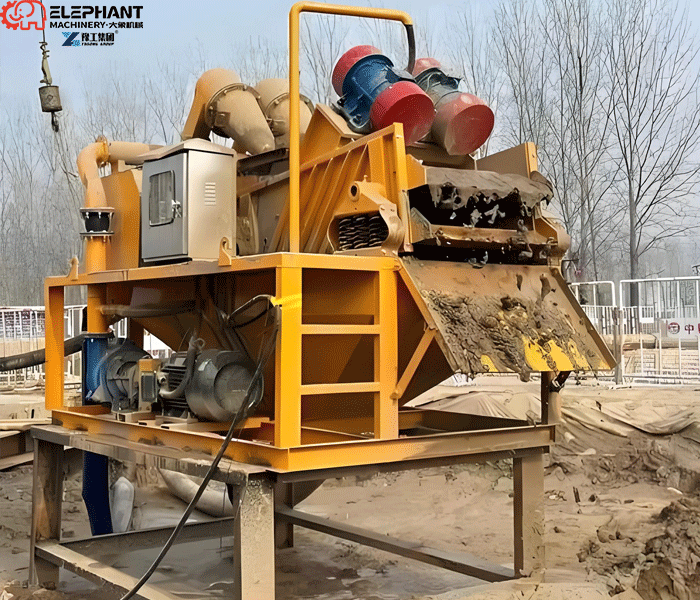
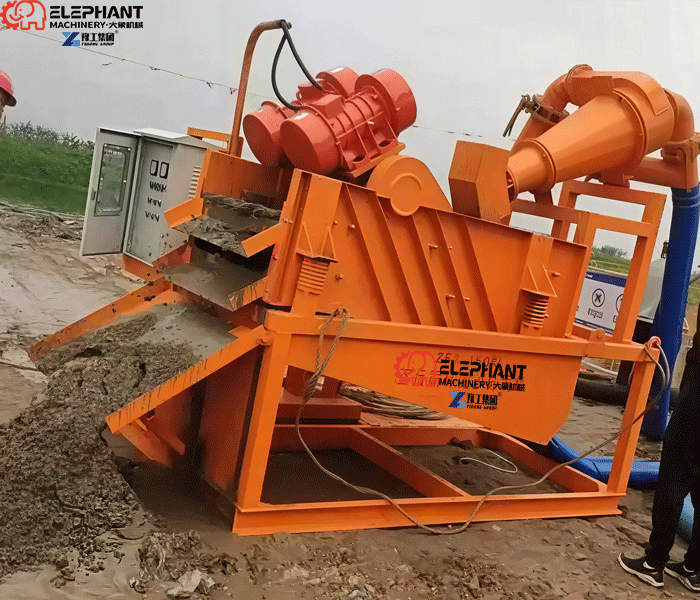
Key Benefits of a Mud Sand Separator
1. Reduce Coarse Solids in Downstream Slurry
Slurry extracted during dredging may contain significant quantities of sand and other relatively coarse particles.
A suitably selected mud sand separator can remove part of this material before the slurry enters the chamber filter press. This helps reduce the coarse-solids load on downstream equipment and allows the treatment process to be designed around the remaining slurry.
The actual benefit depends on the feed material and the separator’s effective particle separation range.
2. Improve the Overall Sludge Treatment Process
Combining a mud sand separator with a dredging robot and filter press creates a more complete treatment process.
The dredging robot removes accumulated sediment, the separator handles suitable sand and coarse particles, and the filter press dewaters the remaining slurry.
Instead of relying on a single machine to handle every stage, each unit performs a specific function within the overall system.
3. Support Further Sand Handling and Recovery
Depending on its composition and quality, the separated sand may be suitable for further processing or recovery.
However, separated material should not automatically be considered reusable. Its particle size, contamination level, and intended application must be evaluated before reuse.
For projects with a high sand content, a mud sand separation machine can be an important part of the overall material handling process.
4. Reduce the Volume of Wet Sludge Requiring Handling
Sand separation removes part of the solid material before downstream dewatering. The chamber filter press then removes additional water from suitable slurry.
Together, these stages can help reduce the volume of wet material requiring transportation or disposal. Actual reductions depend on the original slurry composition, solids concentration, and treatment performance.
5. Enable More Effective Water Management
Water separated during sand separation and filter pressing can be collected as separate liquid streams.
Depending on the system configuration and water quality, these streams may be reused, returned to a designated water body, or sent for additional treatment.
A suitable process design considers the entire water management system, including suspended solids, potential contaminants, environmental requirements, and the intended reuse or discharge destination.
Mud Sand Separator in a Complete Dredging Slurry Treatment System
A mud sand separator can be an important part of a complete dredging slurry treatment system, especially when the extracted material contains significant amounts of sand or coarse particles.
For Elephant Dredging projects, the separator can work alongside a remote-controlled dredging robot and a chamber filter press. The separator removes suitable sand and solid particles, while the filter press dewaters the remaining slurry into filter cake and filtrate.
Typical system configuration:
Dredging Robot → Slurry Transfer Pipeline → Mud Sand Separator → Chamber Filter Press → Filter Cake Collection
Depending on the project, additional equipment may include a feed tank, slurry pump, mixing or conditioning equipment, and facilities for filtrate collection or further water treatment.
The final configuration depends on the slurry composition, particle size, solids concentration, required processing capacity, installation conditions, and treatment objectives. A mud sand separator is not necessary for every project, and the separation method should be selected according to the actual material and equipment design.
Applications of a Mud Sand Separator
1.Lake and Pond Dredging
Lake and pond sediment may contain fine mud, organic deposits, sand, and other settled material.
A dredging robot can extract the sediment without requiring the entire water body to be drained. When the slurry contains a meaningful proportion of separable sand, a mud sand separator can be installed before the downstream filter press.
This arrangement is worth evaluating for artificial lakes, landscape ponds, reservoirs, and other sediment removal projects.
2.River Dredging and Sediment Removal
River sediment varies significantly with location and local conditions. Some material contains considerable sand, while other deposits consist mainly of fine silt and clay.
A mud sand separator may be useful for river dredging projects where the feed material falls within the equipment’s effective separation range. For predominantly fine sediment, the benefits of sand separation should be assessed before adding the equipment to the system.
3.Industrial Tank and Settling Basin Cleaning
Industrial tanks and settling basins can accumulate mixtures of water, sand, mineral particles, and sludge.
A dredging robot can remove suitable deposits and transfer the slurry to a separation system. The mud sand separator handles the separable sand fraction, while the chamber filter press can process suitable remaining slurry.
For oily, chemically contaminated, or hazardous sludge, additional material assessment and treatment requirements must be considered before selecting the equipment.
4.Sand Washing and Slurry Processing
Sand washing operations generate slurry containing sand, fine particles, and water.
A suitable mud sand separator or other sand separation equipment can be used to separate particles according to the process requirements. The remaining fine slurry may require additional treatment, including filter pressing, depending on the desired water recovery and solids handling objectives.
5.Piling and Tunnel Construction
Piling operations and tunnel boring can generate slurry containing sand, soil particles, and fine solids.
Depending on the construction method and slurry composition, a mud sand separation machine can be incorporated into the slurry treatment process to remove suitable particles before further processing.
Equipment selection should consider the required circulation rate, particle-size distribution, solids concentration, and the specific requirements of the construction process.
Mud Sand Separator vs. Chamber Filter Press
A mud sand separator and a chamber filter press are complementary pieces of equipment, but they do not perform the same task.
| Comparison | Mud Sand Separator | Chamber Filter Press |
|---|---|---|
| Main purpose | Separate sand and suitable solid particles from slurry | Dewater suitable slurry through pressure filtration |
| Primary function | Preliminary separation or particle classification | Further solid-liquid separation |
| Main outputs | Separated sand or coarse solids and remaining slurry | Solid filter cake and filtrate |
| Typical position | Before downstream dewatering when required | After preliminary separation when required |
| Main selection factors | Particle size, density, slurry flow, separation requirements | Filtration area, solids concentration, cycle time, cake characteristics |
For slurry containing substantial sand, using a separator before a filter press may help reduce the coarse-solids load.
For slurry containing predominantly fine particles, the separation stage may provide limited benefit. A filter press or another treatment process may be more appropriate, depending on the material.
The most suitable arrangement should be based on the actual feed material rather than the assumption that every dredging project needs both machines.


How to Choose the Right Mud Sand Separator?
Selecting a mud sand separator based only on its nominal capacity may result in unsuitable separation performance. Before choosing a model, evaluate the following factors.
- Slurry flow rate: Determine the expected volume of slurry delivered by the dredging robot per hour.
- Particle-size distribution: Identify the proportions of sand, coarse solids, fine silt, and clay in the extracted material.
- Solids concentration: Establish the approximate solid content of the slurry under normal operating conditions.
- Separation requirements: Define which particles need to be removed and what characteristics are required for the separated sand and remaining slurry.
- Downstream equipment: Check whether the separator’s output is compatible with the feed requirements of the chamber filter press.
- Water management: Determine whether the separated liquid needs further treatment before reuse, return, or discharge.
- Installation conditions: Consider available space, pipeline layout, pumping requirements, and the operating environment.
A representative material sample and an assessment of the intended process can help determine whether a mud sand separator is necessary and how it should be configured.
FAQ about Slurry Sand Separator
1. What is a mud sand separator used for?
A mud sand separator is used to separate sand and other suitable solid particles from slurry. It is commonly considered for dredging, sand washing, construction slurry processing, and selected industrial sediment treatment applications.
Its performance depends on the separation principle, particle characteristics, and operating conditions.
2. Can a mud sand separator work with a dredging robot?
Yes. A mud sand separator can be integrated with a dredging robot when the extracted slurry contains particles that benefit from preliminary separation.
The robot extracts and pumps the slurry, while the separator removes sand or other particles within its effective separation range. The remaining slurry can then be sent for further treatment, including filter pressing where appropriate.
3. Does the system also need a chamber filter press?
Not always. A chamber filter press may be beneficial when the remaining slurry requires further dewatering after sand separation.
If the material contains little separable sand, a separate sand separation stage may not be necessary. The system should be designed according to the feed material and the required final output.
4. What is the difference between a mud sand separator and a hydrocyclone?
A hydrocyclone is a separation device that uses centrifugal effects generated by fluid flow to separate particles according to characteristics such as size and density.
Mud sand separator is a broader equipment name and does not necessarily identify one specific separation mechanism. A mud sand separator may use a hydrocyclone or another separation method, depending on its design.
Confirm the equipment’s actual structure before specifying it as a hydrocyc