

Municipal sewer systems are essential for modern cities, but they are constantly affected by serious operational challenges such as sludge accumulation, sediment buildup, and blockages in confined underground spaces. Traditional manual cleaning methods are not only inefficient but also highly dangerous. Workers are often exposed to toxic gases, limited visibility, and confined-space risks. This is why the demand for a sewer cleaning robot has become increasingly urgent. A sewer cleaning robot provides a reliable alternative by performing sludge removal, sediment dredging, and debris extraction without requiring workers to enter hazardous underground environments.
Sewer Cleaning Robot Parameters
| Parameter | YG450 | YG500 | YG600 | YG700 | YG800 | YG900 | YG1200 |
| Robot Dimensions (mm) | ≤1700 × 450 × 450 | 1500 × 500 × 650 | 1500 × 600 × 650 | 1600 × 700 × 650 | 1600 × 850 × 700 | 1650 × 960 × 750 | 1900 × 1200 × 750 |
| Applicable Manhole / Access | ≥600 mm opening | ≥600 mm opening | ≥600 mm opening | ≥700 mm opening | ≥800 mm opening | ≥900 mm opening | Large culvert / open access |
| Dredging Width (mm) | 450 | 500 | 600 | 700 | 800 | 900 | Suitable for large culverts |
| Travel Speed (m/s) | 3–12 | 3–15 | 3–15 | 3–15 | 3–15 | 3–15 | 0–17 m/min |
| Pump Diameter (inch) | 3 | 3 | 3 | 4 | 4 | 4 | 4 or 6 |
| Pump Flow (m³/h) | 50 | 100 | 100 | 160 | 160 | 200 | 250 |
| Pump Head (m) | 0-30 | 0–30 | 0–30 | 0–25 | 0–25 | 0–25 | 0–30 (Horizontal: 100–150 m) |
| Hydraulic Station Dimensions (mm) | 2000 × 1100 × 1500 (recommended) | 2200 × 1200 × 1700 | 2200 × 1200 × 1700 | 2200 × 1200 × 1700 | 2200 × 1200 × 1700 | 2200 × 1200 × 1700 | 2120 × 1240 × 1200 |
| Main Motor Power (kW) | 11–15 kW | 18 | 18 | 22 | 22 | 22 | 45 kW (50 kW) / Diesel 76 kW (123 kW) |
| Hydraulic System Pressure (MPa) | 0–16 | 0–16 | 0–16 | 0–16 | 0–16 | 0–16 | Custom / high-pressure system |
| Particle Size Capacity (mm) | ≤10–20 mm (soft sludge) | 15 | 15 | 40 | 40 | 50 | 0–40 (customizable) |
| Winch Speed (r/min) | 0–10 | 0–10 | 0–10 | 0–10 | 0–10 | 0–10 | 0–10 |
| Pipe Length (m) | 20–30 optional | 30–50 optional | 30–50 optional | 30–50 optional | 30–50 optional | 30–50 optional | 30 m/pack, high-pressure resistant |
| Control System | Wireless Remote Control | Wireless Remote | Wireless Remote | Wireless Remote | Wireless Remote | Wireless Remote | Wireless Remote |
| Lighting System | Underwater LED ×2 | Underwater LED ×2 | Underwater LED ×2 | Underwater LED ×2 | Underwater LED ×2 | Underwater LED ×2 | Underwater LED ×2 |
Standard models are designed for sewer and drainage structures with access openings of 600 mm and above. Customized compact models are available for smaller access conditions.
Get the Right Model for Your Project


What Is a Sewer Cleaning Robot?
It is an advanced remote-controlled machine designed specifically for municipal pipeline and drainage system maintenance.
It is a type of remote control dredging robot that operates inside municipal drainage channels, large-diameter sewer structures, culverts, and wastewater facilities to remove sludge, sediment, and accumulated debris.
Depending on the application, it can also be referred to as:
- sludge cleaning robot
- sewer pipe cleaning robot
- desilting robot
- sludge removal robot
These robots are engineered to handle complex underground environments where traditional equipment cannot operate effectively.
Key Features and Advantages of Sewer Cleaning Robot
✔ Enhanced Safety
The robot eliminates the need for human entry into hazardous sewer environments, significantly reducing risks such as toxic gas exposure, collapse hazards, and confined-space accidents.
✔ High-Efficiency Sludge Removal
Designed to handle heavy sediment and sludge buildup, it performs well in:
- sludge cleaning robot applications
- sedimentation tank dredging robot operations
- silt removal in drainage systems
✔ Remote Intelligent Control
Operators can control the system remotely with real-time monitoring, ensuring precision and safety even in complex pipeline networks.
✔ Strong Adaptability
The system is suitable for various sewer diameters and complex municipal drainage structures, making it highly flexible for different city infrastructures.
✔ Continuous Working Capability
The robot is designed for long-duration operation, making it ideal for large-scale municipal maintenance projects.


Main Application of Sewer Cleaning Robot
Municipal Sewer Networks
The primary application of sewer cleaning robots is municipal underground pipeline maintenance. They are designed to remove accumulated sludge, sand, and sediment from sewer pipes without requiring workers to enter hazardous confined spaces.
These robots help municipalities maintain:
- Municipal drainage systems and large sewer channels
- Underground drainage networks
- Aging sewer systems
- Blockage-prone pipeline sections
Wastewater Treatment Facilities and Sludge Channels
Sewer cleaning robots can also be used in wastewater treatment facilities for cleaning sludge buildup inside underground pipelines and drainage channels.
They provide an efficient solution for:
- Sludge removal in wastewater pipelines
- Sediment cleaning in drainage channels
- Regular maintenance of sewage transfer systems
Stormwater Drainage Systems & Culverts
During heavy rainfall, sediment accumulation in stormwater systems can reduce drainage capacity and increase flooding risks.
A sewer cleaning robot can operate inside underground culverts and drainage structures to remove:
- Sand deposits
- Silt accumulation
- Organic debris
- Pipeline blockages
Large Underground Drainage Structures
For larger municipal infrastructure, customized sewer cleaning robots can be used in bigger pipelines, culverts, and confined underground spaces where traditional cleaning equipment is difficult to operate.
Their remote-control design allows safer maintenance in complex environments while improving cleaning efficiency.
FAQ about Sewer Cleaning Robot
What sewer diameter is suitable for this dredging robot?
Standard models are mainly designed for sewer and drainage structures with diameters or access openings of 600 mm and above. For smaller than 600 mm applications, customized compact sludge removal robots are available.【WhatsApp/WeChat/Phone】+86 13837115193.
Can it handle heavy sludge or hardened sediment?
Yes. The system is designed as a high-performance sludge cleaning robot, capable of removing dense sediment and compact sludge deposits.
Does it require workers to enter the sewer?
No. The entire operation is remotely controlled, making it a true remote control dredging robot system.
What is the price of a sewer cleaning robot?
The price depends on:
- working depth
- pipeline size
- configuration (camera system, pump power, etc.)
- customization requirements
Each system is typically project-based and tailored to customer needs.
Can it be used in combined stormwater and sewage systems?
Yes. It is widely used in both combined and separate urban drainage systems for regular maintenance and emergency cleaning.


How to Choose the Right Sewer Cleaning Robot?
Selecting the right sewer cleaning robot depends mainly on pipeline conditions, cleaning requirements, and working environments. Different sewer systems require different robot sizes, pumping capacities, and configurations.
1. Consider Pipeline Diameter and Access Conditions
The first factor is the available access opening and pipeline size. Compact models are suitable for small municipal sewer pipes with limited access, while larger robots are designed for bigger drainage channels and underground structures.
2. Evaluate Sludge Type and Cleaning Requirements
Different sewer systems may contain various materials, including:
- Soft sludge
- Sand and sediment deposits
- Organic waste
- Hardened deposits
A suitable robot should have enough suction capacity and a proper cutting or mixing system to handle the specific sediment conditions.
3. Check Pumping Distance and Discharge Requirements
The sludge transportation distance affects pump selection and system configuration. For projects requiring long-distance discharge, a higher-capacity pump and customized pipeline system may be necessary.
4. Select the Right Level of Automation
Modern sewer cleaning robots are equipped with features such as:
- Wireless remote control
- HD monitoring cameras
- Underwater lighting systems
- Real-time operation feedback
These functions help operators perform cleaning tasks safely without entering hazardous underground spaces.
By evaluating pipeline size, sludge conditions, and project requirements, customers can select the most suitable sewer cleaning robot model for their applications.
Sewer Cleaning Robot Manufacturer
Choosing an experienced sewer cleaning robot manufacturer is essential for ensuring reliable equipment performance and long-term operation.
Elephant Dredging specializes in the design and manufacturing of remote-controlled dredging robots for municipal pipelines, wastewater facilities, and underground drainage systems.
Our sewer cleaning solutions feature:
- Factory-direct equipment supply
- Customized robot designs for different pipeline sizes
- Remote-control operation for confined spaces
- Powerful sludge suction and transportation systems
- Technical support for overseas projects
With professional engineering experience and customized manufacturing capability, we provide complete solutions for customers looking to improve sewer maintenance efficiency and reduce operational risks.

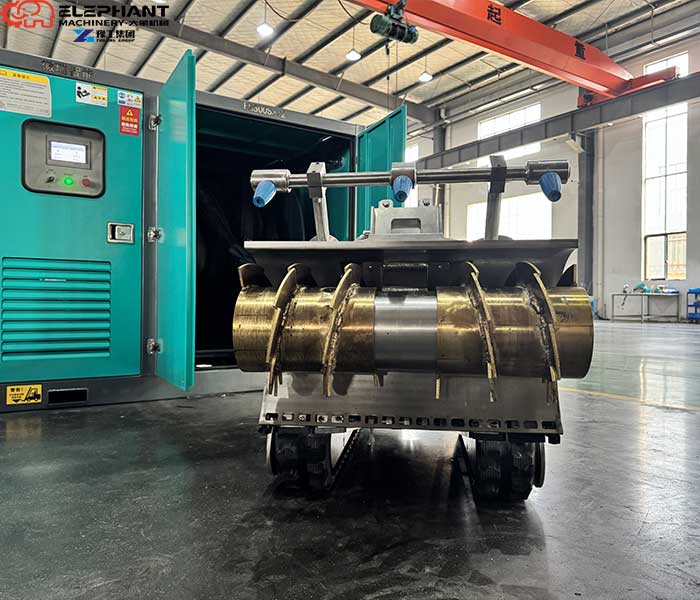
Case Study: Sewer Cleaning Robot for Urban Drainage Maintenance in Malaysia
A municipal drainage system in Malaysia faced frequent maintenance problems caused by sediment buildup, sand deposits, and sludge accumulation inside underground pipelines. Due to heavy rainfall and tropical conditions, sediment entered drainage networks continuously, reducing drainage capacity and increasing blockage risks.
Traditional manual cleaning methods required workers to enter confined underground spaces, creating safety challenges and low maintenance efficiency.
A remote-controlled sewer cleaning robot was introduced to improve cleaning performance and operator safety. The crawler-type robot removed accumulated sludge and sediment inside pipelines without human entry. With a powerful suction system, remote control operation, and underwater lighting, it provided an efficient solution for drainage environments.
Project Results:
- Reduced confined-space operation risks
- Improved pipeline cleaning efficiency
- Enabled safer underground drainage maintenance
- Helped maintain drainage system performance
Why Municipalities Need Sewer Cleaning Robots?
As urban infrastructure continues to age, traditional cleaning methods are no longer sufficient to maintain efficiency and safety.
A sewer cleaning robot provides a modern solution by:
- Reducing labor risks in confined spaces
- Improving cleaning efficiency and speed
- Preventing severe pipeline blockages
- Extending the lifespan of sewer infrastructure
- Lowering long-term maintenance costs
In modern urban management, intelligent equipment like the intelligent dredging robot is becoming a key part of sustainable infrastructure maintenance.
Conclusion
The sewer cleaning robot represents the future of municipal pipeline maintenance. By combining advanced remote-control technology with powerful sludge removal capabilities, it provides a safer, faster, and more reliable solution for modern cities.
From sewer networks to wastewater treatment plants, this technology is transforming how municipalities manage underground infrastructure.