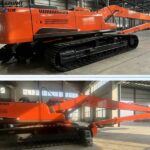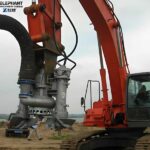


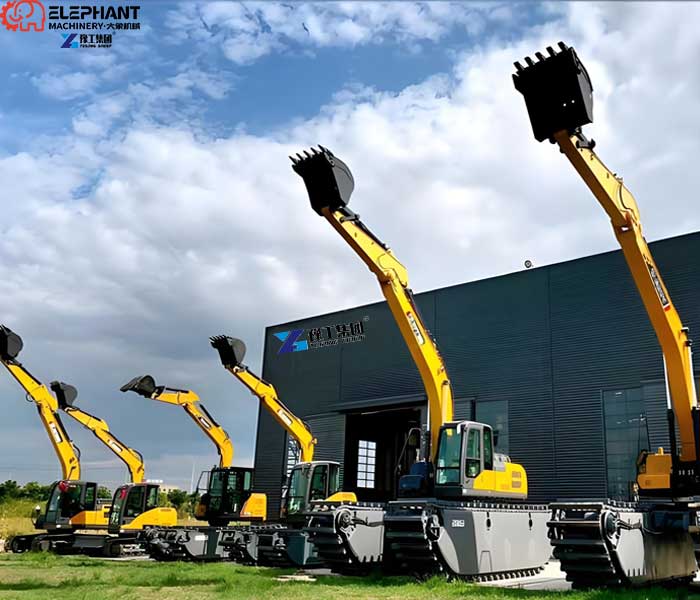
An amphibious excavator, also known as an swamp excavator,, pontoon excavator, or floating excavator, is a specially engineered dredging machine designed to operate in environments where standard excavators cannot work safely or efficiently. It is equipped with a sealed pontoon undercarriage system that provides buoyancy, allowing the machine to float and travel across soft soil, shallow water, marshlands, and flooded terrains.
This equipment is widely used in river dredging, lake restoration, wetland construction, and aquatic vegetation removal projects where ground conditions are unstable or fully submerged.
Amphibious Excavator Model Overview
| Specification | YG-AE05 (Light Series) | YG-AE50 (Heavy Duty Series) |
| Application Range | Small rivers, ponds, wetland maintenance | Large rivers, lakes, mining tailings, deep dredging |
| Excavator Class | 5–6 ton class base machine | 45–50 ton class base machine |
| Bucket Capacity | 0.21 m³ | Up to 2.6 m³ |
| Standard Boom Length | 3.2 m | 6.9 m |
| Standard Arm Length | 1.5 m | 3.35 m |
| Max Working Reach | ~11–12 m | Up to ~23 m |
| Max Digging Depth | ~3.2–4.6 m | ~6.5–11.3 m (depending on configuration) |
| Overall Width (Pontoon) | ~2.7–3.9 m | ~5.8–6.2 m |
| Transport Length | ~6.8–9.6 m | ~14–20 m |
| Pontoon Structure | Standard sealed dual pontoons | Reinforced multi-compartment heavy-duty pontoons |
| Stability System | Basic floating stability | Heavy-duty pontoon + spud anchoring system |
| Chain System | Standard steel chain | 40Cr heat-treated reinforced chain |
| Working Conditions | Shallow water, soft soil, ponds | Deep water, strong current, heavy sediment zones |
| Typical Projects | Pond dredging, fish farm cleaning, small river maintenance | River dredging, lake restoration, mining tailings, industrial sludge removal |
| Operation Type | Flexible, light-duty operation | Continuous heavy-duty excavation |
| Upgrade Options | Long arm, small dredging bucket | Long boom, dredging pump, weed cutting system integration |
Get the Right Model for Your Project

How Does a Swamp Excavator Work?
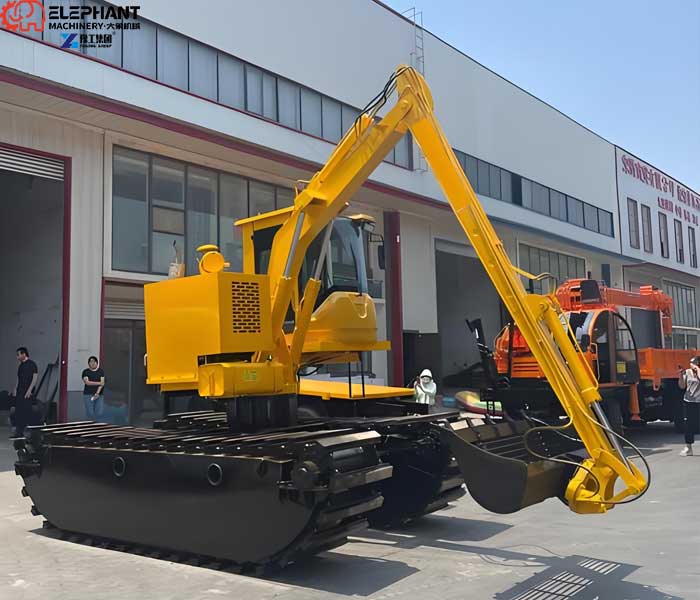
Amphibious excavators have a cab, boom, and attachment system similar to traditional excavation equipment. However, by making use of sealed pontoons to add buoyancy, the chassis crawler is able to work in especially swampy conditions. Additional weighted support prevents excessive arm swinging and rollovers during the excavation process. Buoyancy tanks in a dual-body boat form aid in movement across moderately deep waters. A reducer propels the crawler chain, allowing unrestricted and easy movement. An amphibious excavator’s upper structure is modified to endure the wet conditions while still allowing for 360-degree rotation and full hydraulic operations.
Key Features of Amphibious Excavator
1. Strong Adaptability for Land-Water Transition
The amphibious excavator is designed with a unique pontoon chassis structure that allows seamless transition between land and water environments. It can enter swamp areas, shallow rivers, and soft mud terrains without sinking or losing stability.
The side pontoons and main pontoons work together to distribute weight evenly, ensuring smooth operation even in deep mud or low-bearing capacity soil conditions.
2. High-Precision Hydraulic Performance System
The machine is equipped with a high-efficiency hydraulic system combined with a powerful engine, delivering stable digging force and precise control.
This system ensures consistent performance even during heavy-duty dredging operations such as sediment removal, riverbed excavation, and wetland reshaping. Operators can achieve accurate digging depth and positioning with minimal effort.
3. Extended Working Reach and Deep Excavation Capability
The amphibious excavator offers extended boom and arm configurations that significantly increase working reach and depth capacity.
It is capable of accessing remote or difficult-to-reach areas in rivers, lakes, and marshlands, making it ideal for large-scale dredging projects, environmental restoration, and land reclamation work.
Optional long-arm configurations further extend operational range for deep-water or wide-channel applications.

4. Reinforced Pontoon Structure with High Stability
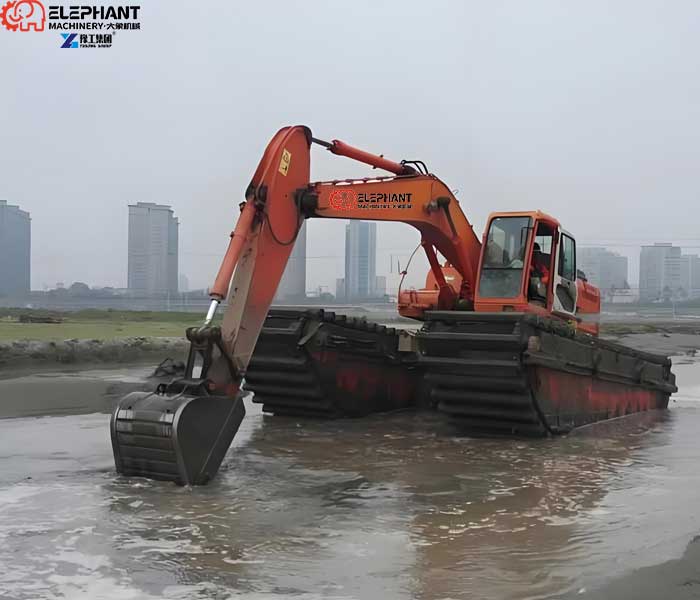
The pontoon system is built using high-strength welded structural steel with multi-compartment waterproof design. Each pontoon contains separate sealed chambers to improve buoyancy safety and reduce the risk of water ingress.
The chain system is manufactured using 40Cr high-strength steel and undergoes heat treatment to improve wear resistance and impact durability. Both standard and reinforced chain options are available depending on project requirements.
5. Anchoring Spud System for Stable Operation
Spuds are installed to fix the machine at the bottom of the water body during excavation work. This system prevents drifting caused by water flow or hydraulic movement, ensuring stable and controlled digging operations even under strong current conditions.
6. Operator Comfort and Safety Design
The operator cabin is ergonomically designed to reduce fatigue during long working hours. It provides wide visibility, shock absorption, and a stable working environment.
Safety is enhanced through reinforced frame structure, anti-slip access systems, and improved machine balance during floating operations. These features ensure both productivity and operator protection.


Application Areas of Amphibious Excavator
The amphibious excavator is widely used in:
- River dredging and channel maintenance
- Lake cleaning and sediment removal
- Wetland ecological restoration
- Marshland and swamp construction projects
- Flooded construction site recovery
- Aquatic vegetation and reed removal
It can also work together with an aquatic weed harvester for surface vegetation control and with a dredging robot system for deep sludge extraction, forming a complete water environment restoration solution.
Advantages of Amphibious Excavator
- Stable operation in water, swamp and soft terrain
- High hydraulic efficiency for heavy-duty dredging
- Customizable boom length and pontoon size
- Multi-functional attachment compatibility
- Suitable for environmental and industrial projects
- Strong adaptability to complex working conditions
Integrated Water Cleaning System Concept
A modern amphibious excavator is often part of a complete lake cleaning system, working together with:
- Surface floating waste removal systems
- Aquatic vegetation harvesting machines
- Deep sediment dredging systems (dredging robot)
This multi-layer system enables full-scale water body restoration from surface to bottom sediment.

FAQ – Amphibious Excavator
1. What is an amphibious excavator used for?
It is used for dredging rivers, cleaning lakes, restoring wetlands, and working in swamp and flood-prone areas.
2. Can it work in deep water?
It is designed for shallow to medium water depths and soft ground environments, with pontoon support ensuring buoyancy and stability.
3. What makes it different from a normal excavator?
Unlike standard machines, it uses a floating pontoon undercarriage that allows it to operate in water and unstable soil conditions.
4. Can it be used for vegetation removal?
Yes, it can remove reeds and aquatic plants, especially when combined with cutting attachments or a weed harvesting system.
5. Do you offer customization?
Yes, we provide full customization including boom length, pontoon size, hydraulic system upgrades, and attachment integration.
Contact Us
We provide factory-direct amphibious excavators with global shipping and customized engineering solutions.
👉 Contact us today to get a quotation within 24 hours.