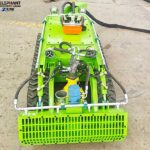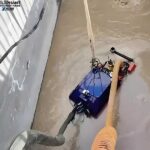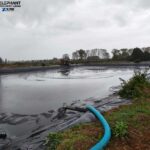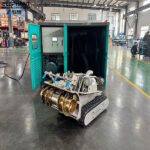
Traditional dredging and sludge cleaning often require workers to enter dirty, confined, or hazardous environments. In wastewater plants, industrial tanks, mining tailings ponds, and other sediment-filled areas, manual cleaning can involve high labor risks, low efficiency, and difficult working conditions.
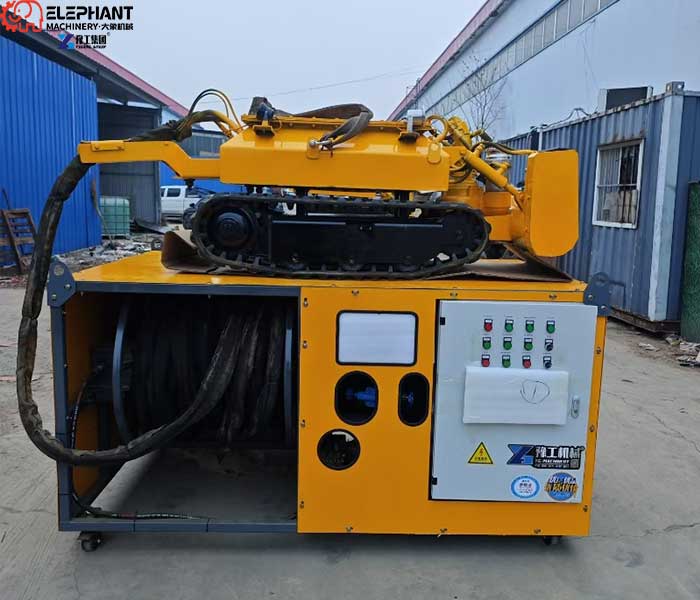
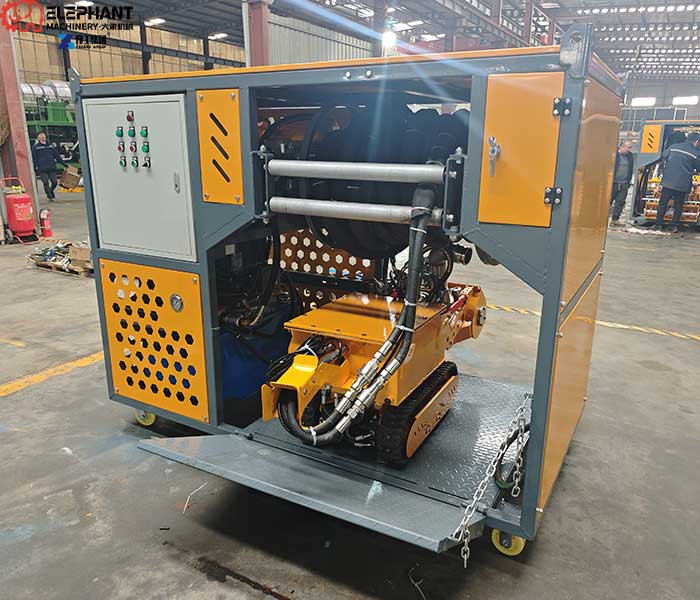
The remote control dredging robot provides a safer alternative by allowing operators to remove sludge without direct contact with dangerous environments. Equipped with remote operation, underwater monitoring, powerful suction systems, and crawler mobility, this intelligent cleaning equipment helps complete challenging dredging tasks with improved safety and efficiency.
As a professional industrial cleaning robot manufacturer, Elephant Dredging provides customized remote controlled dredging robot solutions for wastewater treatment, mining, industrial tanks, and other sludge removal applications.
Remote Control Dredging Robot Parameters
| Parameter | YG450 | YG500 | YG600 | YG700 | YG800 | YG900 | YG1200 |
| Robot Dimensions (mm) | ≤1700 × 450 × 450 | 1500 × 500 × 650 | 1500 × 600 × 650 | 1600 × 700 × 650 | 1600 × 850 × 700 | 1650 × 960 × 750 | 1900 × 1200 × 750 |
| Applicable Manhole / Access | ≥600 mm opening | ≥600 mm opening | ≥600 mm opening | ≥700 mm opening | ≥800 mm opening | ≥900 mm opening | Large culvert / open access |
| Dredging Width (mm) | 450 | 500 | 600 | 700 | 800 | 900 | Suitable for large culverts |
| Travel Speed (m/s) | 3–12 | 3–15 | 3–15 | 3–15 | 3–15 | 3–15 | 0–17 m/min |
| Pump Diameter (inch) | 3 | 3 | 3 | 4 | 4 | 4 | 4 or 6 |
| Pump Flow (m³/h) | 50 | 100 | 100 | 160 | 160 | 200 | 250 |
| Pump Head (m) | 0-30 | 0–30 | 0–30 | 0–25 | 0–25 | 0–25 | 0–30 (Horizontal: 100–150 m) |
| Hydraulic Station Dimensions (mm) | 2000 × 1100 × 1500 (recommended) | 2200 × 1200 × 1700 | 2200 × 1200 × 1700 | 2200 × 1200 × 1700 | 2200 × 1200 × 1700 | 2200 × 1200 × 1700 | 2120 × 1240 × 1200 |
| Main Motor Power (kW) | 11–15 kW | 18 | 18 | 22 | 22 | 22 | 45 kW (50 kW) / Diesel 76 kW (123 kW) |
| Hydraulic System Pressure (MPa) | 0–16 | 0–16 | 0–16 | 0–16 | 0–16 | 0–16 | Custom / high-pressure system |
| Particle Size Capacity (mm) | ≤10–20 mm (soft sludge) | 15 | 15 | 40 | 40 | 50 | 0–40 (customizable) |
| Winch Speed (r/min) | 0–10 | 0–10 | 0–10 | 0–10 | 0–10 | 0–10 | 0–10 |
| Pipe Length (m) | 20–30 optional | 30–50 optional | 30–50 optional | 30–50 optional | 30–50 optional | 30–50 optional | 30 m/pack, high-pressure resistant |
| Control System | Wireless Remote Control | Wireless Remote | Wireless Remote | Wireless Remote | Wireless Remote | Wireless Remote | Wireless Remote |
| Lighting System | Underwater LED ×2 | Underwater LED ×2 | Underwater LED ×2 | Underwater LED ×2 | Underwater LED ×2 | Underwater LED ×2 | Underwater LED ×2 |
Get the Right Model for Your Project
What Is a Remote Control Dredging Robot?
A remote control dredging robot is an unmanned cleaning machine designed to remove sludge, sediment, and waste materials from underwater or confined environments.
Unlike traditional dredging methods that require workers to manually enter tanks or polluted areas, the operator can control the robot remotely from a safe location. The equipment uses a combination of:
- Hydraulic crawler system
- Sludge suction pump
- High pressure water jet
- Underwater camera system
- Remote control technology
to loosen, collect, and transport accumulated sludge efficiently.
This makes it an ideal solution for applications where human entry is dangerous, expensive, or impossible.
Why Choose a Remote Controlled Dredging Robot?
1. No Man Entry for Safer Sludge Cleaning
Many industrial cleaning projects involve hazardous environments, including:
- Sewage tanks
- Chemical storage tanks
- Underground structures
- Mining tailings ponds
- Confined spaces
Traditional cleaning methods may expose workers to toxic gases, contaminated sludge, unstable surfaces, and limited ventilation.
A no man entry tank cleaning system allows operators to complete cleaning tasks without entering dangerous areas.
The remote-controlled design reduces safety risks while improving working efficiency.
2. Remote Operation in Dangerous Environments
The biggest advantage of an unmanned dredging robot is that operators can control the machine from a safe distance.
The remote control system allows:
- Forward and backward movement
- Turning and positioning
- Sludge suction control
- High-pressure flushing operation
- Real-time working monitoring
For difficult environments such as deep tanks or underwater sediment areas, remote operation provides better control and reduces human exposure.
3. Underwater Camera System for Precise Operation
Visibility is often a major challenge during dredging operations.
The integrated underwater camera system provides real-time images of the working environment, helping operators:
- Identify sludge accumulation areas
- Monitor cleaning progress
- Avoid obstacles
- Improve cleaning accuracy
This is especially useful for wastewater sludge removal, industrial tank cleaning, and underwater dredging projects.
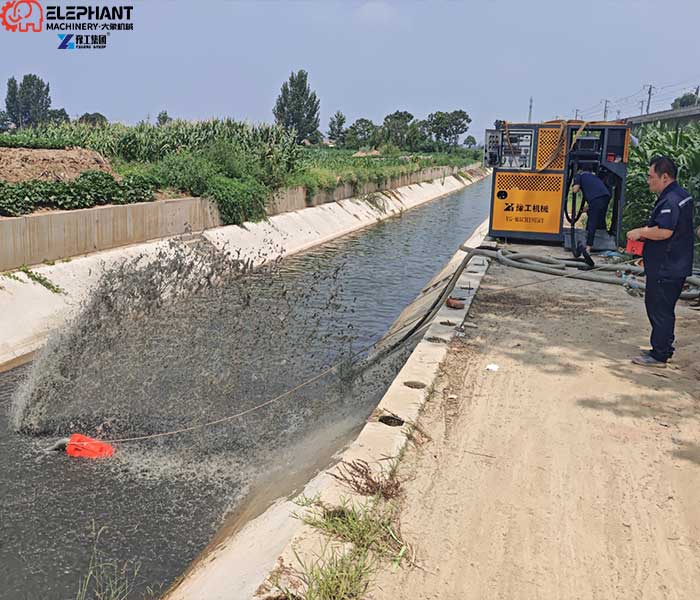
How Does the Remote Control Dredging Robot Work?
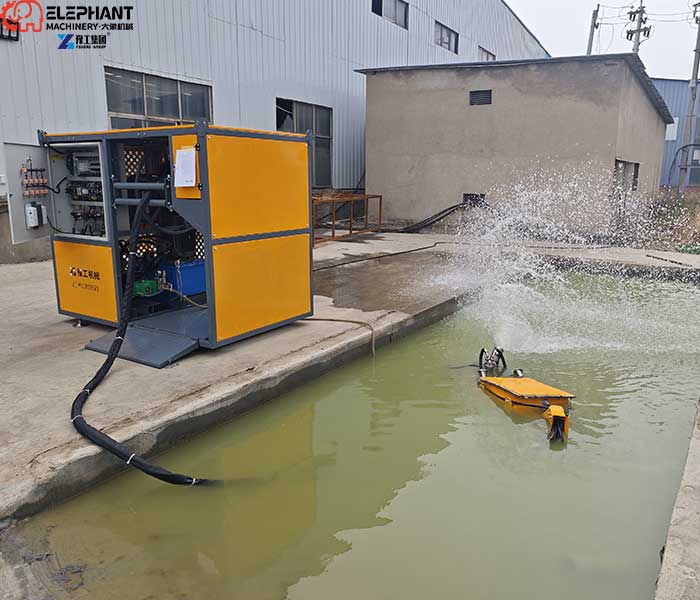
The working process includes four main steps:
Step 1: Robot Deployment
The dredging robot is placed into the working area, such as:
- Wastewater tanks
- Sedimentation basins
- Mining ponds
- Industrial reservoirs
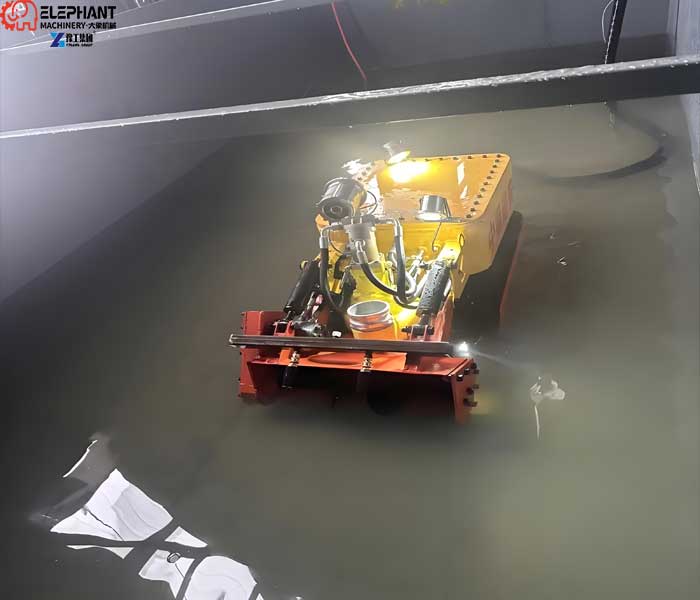
Its crawler system allows stable movement on muddy and uneven surfaces.
Step 2: Sludge Loosening and Collection
The front cleaning mechanism uses a high pressure water jet to break hardened sludge and sediment.
This improves material fluidity and helps the suction system collect sludge more efficiently.
Step 3: Sludge Suction and Transportation
The powerful sludge suction pump transfers collected materials through discharge pipelines.
Depending on project requirements, the pumping distance and capacity can be customized.
The system is suitable for:
- Thick sludge
- Sediment deposits
- Organic waste
- Industrial wastewater sludge
Step 4: Remote Monitoring and Control
Operators monitor the cleaning process through the camera system and control the robot remotely.
This intelligent operation method improves safety and reduces the need for manual intervention.

Applications of Remote Control Dredging Robot
Wastewater Sludge Removal
Wastewater treatment plants often accumulate sludge in:
- Sedimentation tanks
- Clarifiers
- Equalization tanks
The remote control dredging robot can remove sludge without stopping the entire treatment process.
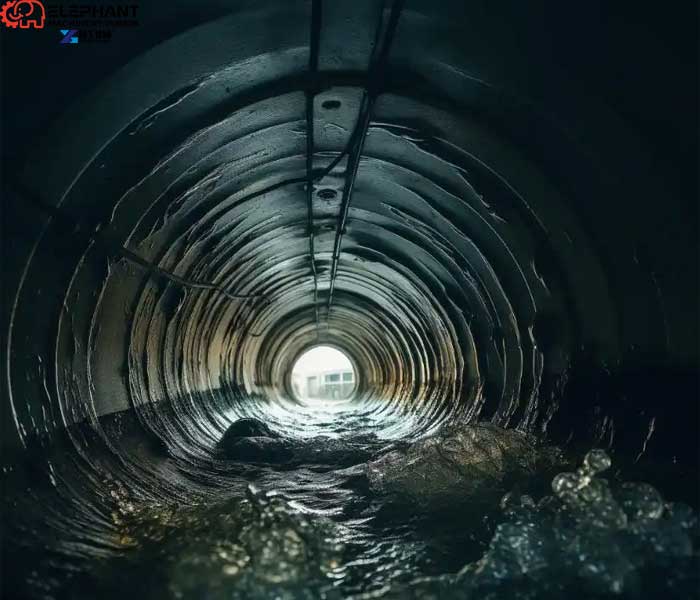
Confined Space Cleaning
Many tanks and underground facilities are difficult and dangerous for workers to enter.
The robot provides an effective solution for:
- Underground tanks
- Sewage chambers
- Industrial vessels
- Narrow working spaces
It is an ideal choice for confined space cleaning applications.
Industrial Tank Cleaning
Industrial tanks may contain:
- Heavy sediment
- Chemical residues
- Oil sludge
- Process waste
The remote-controlled system allows safer industrial tank cleaning without sending workers inside.
Mining Tailings Pond Dredging
Mining tailings ponds contain large amounts of fine sediment and abrasive materials.
A crawler-based dredging robot can operate on soft surfaces while performing:
- Sediment removal
- Sludge recovery
- Tailings pond maintenance
The system reduces the risks associated with manual operation in mining environments.
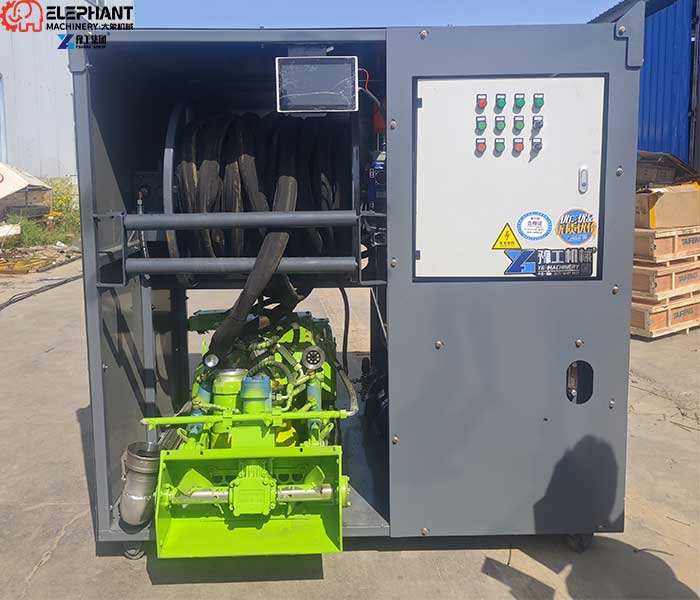
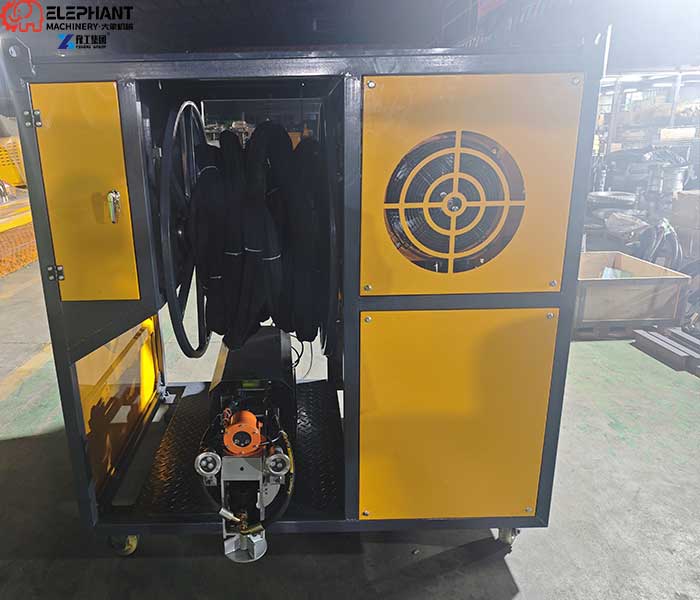
Key Features of Intelligent Dredging Robot
Hydraulic Crawler System
The crawler design provides stable movement on muddy, slippery, and uneven surfaces.
Compared with traditional floating equipment, the crawler system allows the robot to work closer to accumulated sludge.
Powerful Sludge Suction System
The high-capacity suction system is designed for continuous sludge removal.
It can handle different materials, including:
- Soft sludge
- Sand sediment
- Organic deposits
- Industrial waste materials
Intelligent Remote Control
The intelligent dredging robot integrates automation technology to simplify operation.
Operators can control the equipment without entering hazardous areas, improving both safety and productivity.
Customizable Design
Different projects require different cleaning solutions.
Elephant Dredging provides customized options according to:
- Tank dimensions
- Sludge characteristics
- Pumping distance
- Working depth
- Application environment
Remote Control Dredging Robot vs Traditional Manual Cleaning
| Worker safety | High risk in hazardous areas | No direct entry required |
| Operation environment | Limited | Suitable for confined spaces |
| Cleaning efficiency | Depends on manpower | Continuous mechanical operation |
| Monitoring | Limited visibility | Real-time camera monitoring |
| Labor cost | High | Reduced manpower requirement |
Why Choose Elephant Dredging as Your Industrial Cleaning Robot Manufacturer?
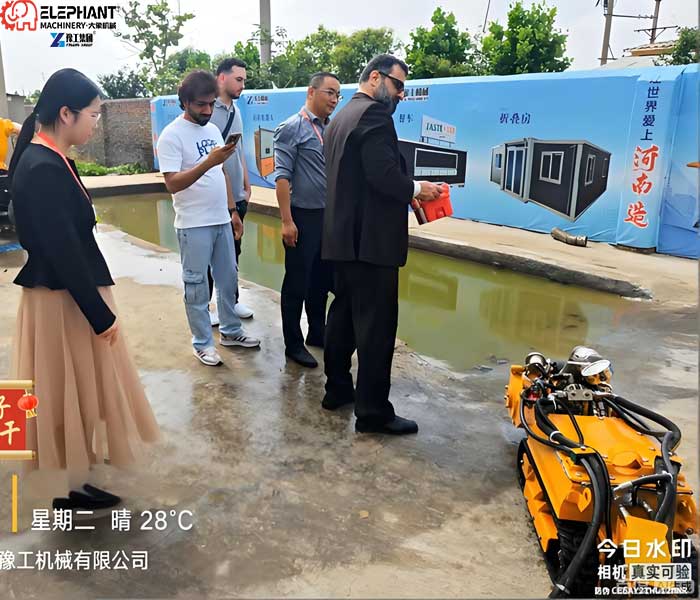
Elephant Dredging specializes in intelligent sludge removal equipment and customized dredging solutions.
Our advantages include:
✔ Remote-controlled dredging technology
✔ Customized robot design for different applications
✔ Professional technical support
✔ Complete sludge removal solutions
✔ Experience in wastewater, mining, and industrial cleaning projects
Whether you need wastewater sludge removal, industrial tank cleaning, or mining tailings pond dredging, our team can provide a suitable robotic cleaning solution.
FAQ About Remote Control Dredging Robot
Can the dredging robot work underwater?
Yes. The robot is designed for underwater sludge removal applications and can operate in submerged environments with waterproof components and camera monitoring systems.
What environments can a remote control dredging robot clean?
It can be used for:
- Wastewater treatment plants
- Industrial tanks
- Mining tailings ponds
- Reservoirs
- Sedimentation basins
- Confined spaces
Does the robot replace manual sludge cleaning?
The robot reduces the need for workers to enter dangerous areas. It provides a safer alternative for many high-risk cleaning operations.
Can the dredging robot be customized?
Yes. Robot size, suction capacity, pipeline length, and working configuration can be customized according to project requirements.
Conclusion
The remote control dredging robot offers a safer and more efficient way to remove sludge from challenging environments. By combining remote operation, underwater camera monitoring, crawler mobility, and powerful suction technology, it helps industries reduce labor risks and improve cleaning performance.
For wastewater plants, industrial tanks, mining tailings ponds, and confined spaces, this unmanned dredging solution provides a reliable alternative to traditional manual cleaning methods.
Contact Elephant Dredging for a customized remote-controlled sludge removal solution.