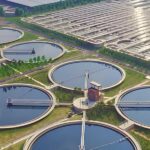
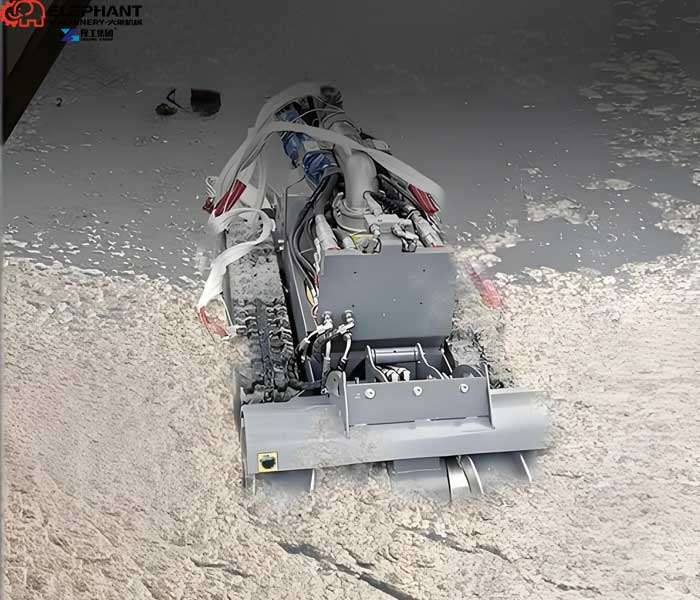
Wastewater treatment facilities often face a hidden operational challenge: sludge accumulation at the bottom of tanks, basins, and clarifiers. Over time, settled sludge reduces effective storage capacity, affects treatment efficiency, increases maintenance requirements, and may create unsafe working conditions for operators.
Traditional sludge removal methods often require tank shutdown, manual entry, or large-scale mechanical equipment, which can be costly and time-consuming. A Wastewater Sludge Removal Robot provides a safer and more efficient solution by remotely removing accumulated sludge without requiring workers to enter hazardous confined spaces.
Designed for municipal wastewater plants, industrial treatment facilities, sedimentation tanks, equalization tanks, and other challenging environments, this remote-controlled sludge removal system combines crawler mobility, powerful suction, and long-distance sludge transfer capabilities to improve wastewater maintenance efficiency.
Wastewater Sludge Removal Robot Parameters
| Parameter | YG450 | YG500 | YG600 | YG700 | YG800 | YG900 | YG1200 |
| Robot Dimensions (mm) | ≤1700 × 450 × 450 | 1500 × 500 × 650 | 1500 × 600 × 650 | 1600 × 700 × 650 | 1600 × 850 × 700 | 1650 × 960 × 750 | 1900 × 1200 × 750 |
| Applicable Manhole / Access | ≥600 mm opening | ≥600 mm opening | ≥600 mm opening | ≥700 mm opening | ≥800 mm opening | ≥900 mm opening | Large culvert / open access |
| Dredging Width (mm) | 450 | 500 | 600 | 700 | 800 | 900 | Suitable for large culverts |
| Travel Speed (m/s) | 3–12 | 3–15 | 3–15 | 3–15 | 3–15 | 3–15 | 0–17 m/min |
| Pump Diameter (inch) | 3 | 3 | 3 | 4 | 4 | 4 | 4 or 6 |
| Pump Flow (m³/h) | 50 | 100 | 100 | 160 | 160 | 200 | 250 |
| Pump Head (m) | 0-30 | 0–30 | 0–30 | 0–25 | 0–25 | 0–25 | 0–30 (Horizontal: 100–150 m) |
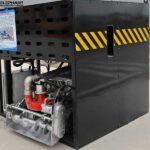
| Hydraulic Station Dimensions (mm) | 2000 × 1100 × 1500 (recommended) | 2200 × 1200 × 1700 | 2200 × 1200 × 1700 | 2200 × 1200 × 1700 | 2200 × 1200 × 1700 | 2200 × 1200 × 1700 | 2120 × 1240 × 1200 |
| Main Motor Power (kW) | 11–15 kW | 18 | 18 | 22 | 22 | 22 | 45 kW (50 kW) / Diesel 76 kW (123 kW) |
| Hydraulic System Pressure (MPa) | 0–16 | 0–16 | 0–16 | 0–16 | 0–16 | 0–16 | Custom / high-pressure system |
| Particle Size Capacity (mm) | ≤10–20 mm (soft sludge) | 15 | 15 | 40 | 40 | 50 | 0–40 (customizable) |
| Winch Speed (r/min) | 0–10 | 0–10 | 0–10 | 0–10 | 0–10 | 0–10 | 0–10 |
| Pipe Length (m) | 20–30 optional | 30–50 optional | 30–50 optional | 30–50 optional | 30–50 optional | 30–50 optional | 30 m/pack, high-pressure resistant |
| Control System | Wireless Remote Control | Wireless Remote | Wireless Remote | Wireless Remote | Wireless Remote | Wireless Remote | Wireless Remote |
| Lighting System | Underwater LED ×2 | Underwater LED ×2 | Underwater LED ×2 | Underwater LED ×2 | Underwater LED ×2 | Underwater LED ×2 | Underwater LED ×2 |
Get the Right Model for Your Project
What Is a Wastewater Sludge Removal Robot?
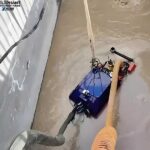
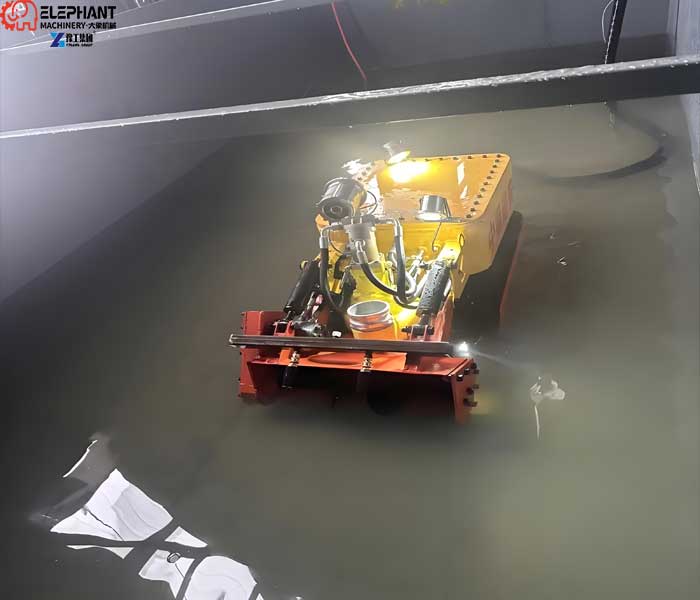
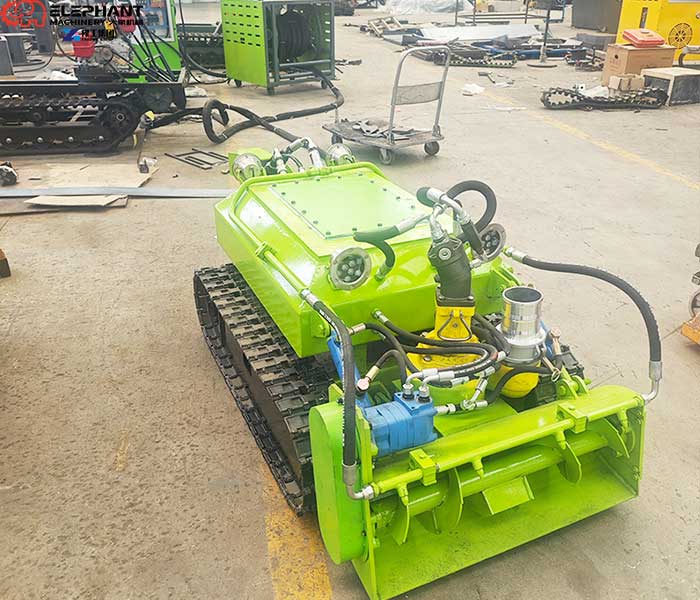
A Wastewater Sludge Removal Robot is a remote-controlled robotic cleaning system designed to remove settled sludge, sediment, and accumulated solids from wastewater tanks, sedimentation basins, clarifiers, and industrial treatment facilities.
Unlike traditional cleaning equipment, the robot can operate underwater and move across the tank bottom to reach areas that are difficult to access.
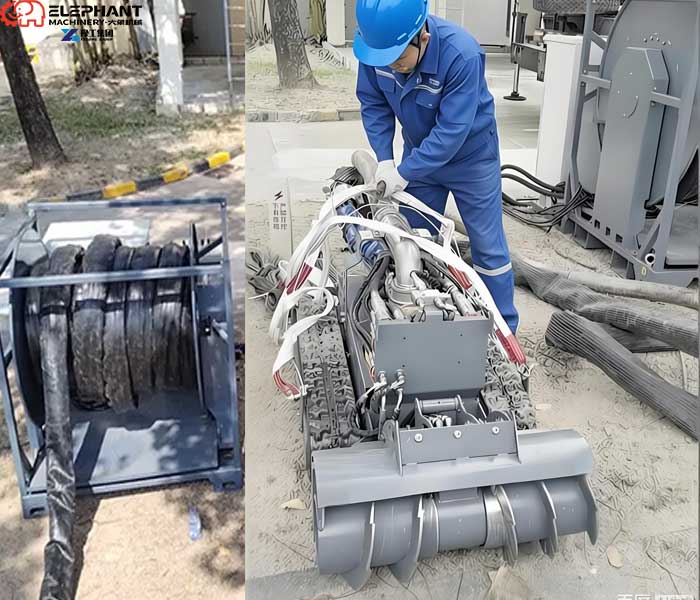
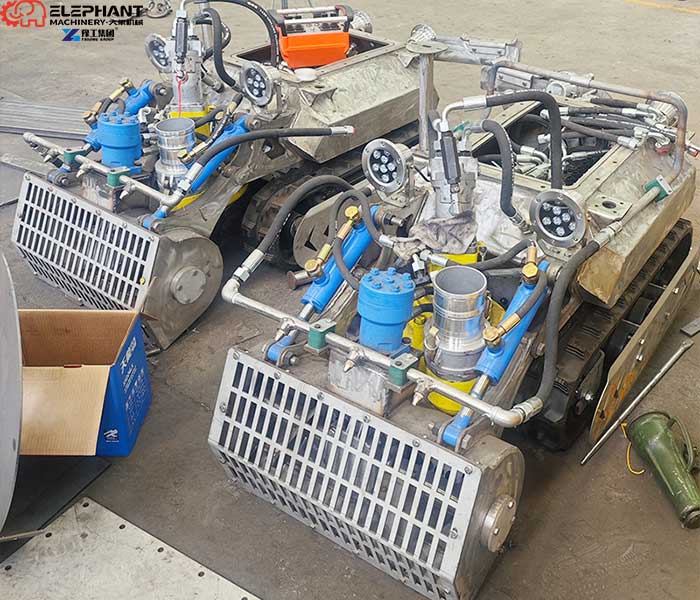
The system typically includes:
- Remote-controlled crawler robot
- High-efficiency slurry pump
- Sludge mixing and loosening system
- High-pressure water jet system
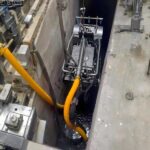
- Long-distance discharge pipeline
- Control system
The robot travels directly to sludge accumulation areas, breaks up hardened deposits, mixes sludge into pumpable slurry, and transfers the material outside the tank through a pipeline system.

How Does a Sludge Removal Robot Work?
The working process combines mechanical movement, sludge loosening, and hydraulic pumping technology.
1. Sediment Loosening and Sludge Breaking
Over time, sludge at the bottom of wastewater tanks may become compacted and difficult to pump.
The robot uses mechanical agitation and specially designed tools to loosen deposited sludge and improve removal efficiency.
2. High-Pressure Water Jet Mixing
For heavy or settled sludge, a high-pressure water jet system helps break down deposits and create a uniform sludge mixture.
This process:
- Reduces sludge viscosity
- Prevents pump blockage
- Improves suction performance
3. Sludge Homogenization
Before pumping, the robot mixes sludge and water into a consistent slurry.
This ensures:
- Stable pumping performance
- Reduced pipeline blockage risk
- Higher removal efficiency
4. Slurry Pump Suction and Transportation
The integrated slurry pump transfers the sludge through discharge pipelines to designated collection areas.
Depending on project requirements, the system can be customized with different:
- Pump capacities
- Pipeline lengths
- Discharge distances
- Robot sizes
This makes it suitable for both small tanks and large industrial wastewater facilities.

Key Features of Wastewater Sludge Removal Robot
Remote-Controlled Operation Without Human Entry
One of the biggest advantages of a robotic sludge removal system is safer operation.
Operators can control the robot remotely from outside the tank, reducing exposure to:
- Hazardous gases
- Contaminated wastewater
- Confined space risks
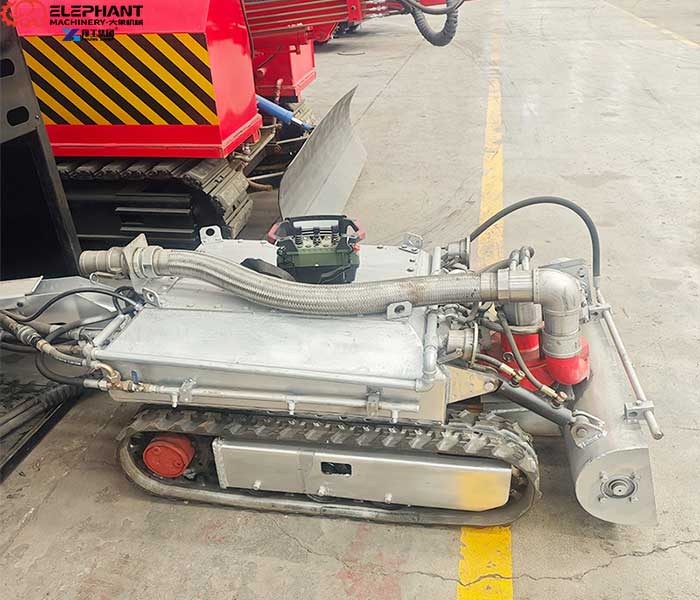
Crawler Design for Stable Underwater Movement
The crawler-based structure allows the robot to move steadily across uneven tank bottoms.
Advantages include:
- Better traction on sludge layers
- Stable operation underwater
- Ability to access difficult areas
- Reduced ground pressure
Rubber tracks can also help protect tank surfaces and liners during operation.
Powerful Sludge Suction Capability
Unlike simple pumping systems that only remove easily accessible liquid sludge, a sludge removal robot actively reaches accumulated sediment.
It is designed for removing:
- Settled sludge
- Thick sediment layers
- Industrial wastewater deposits
- Organic sludge
- Mud and slurry mixtures
Compact Structure for Difficult Cleaning Areas
Many wastewater tanks have limited access points.
A compact robotic design allows the equipment to enter through existing openings and operate in areas where traditional machinery cannot work.
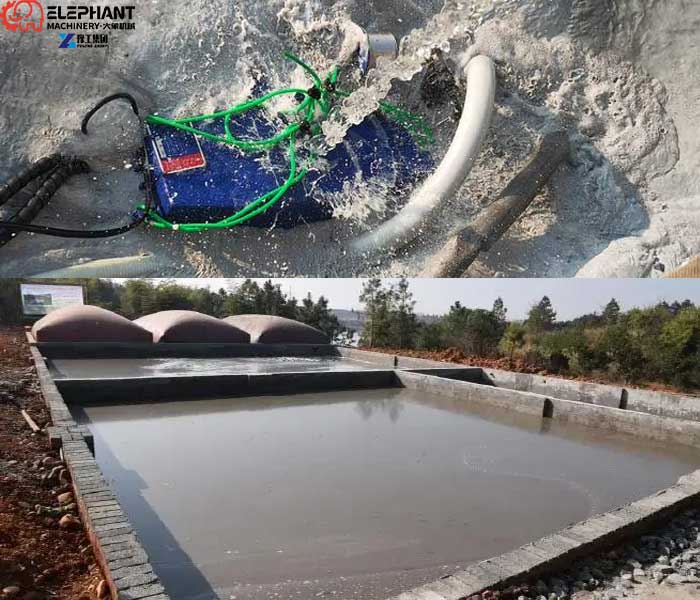
Long-Distance Sludge Transfer
The robot can transport removed sludge through pipelines, reducing the need for repeated manual handling.
This is especially useful for:
- Large treatment plants
- Industrial facilities
- Remote tanks
- Underground structures
Applications of Wastewater Sludge Removal Robots
Municipal Wastewater Treatment Plants
Municipal facilities commonly use sludge removal robots for:
- Sedimentation tanks
- Primary clarifiers
- Secondary clarifiers
- Sludge collection basins
A sewage sludge removal robot helps maintain treatment efficiency while reducing manual cleaning requirements.
Industrial Wastewater Treatment
Industrial facilities often generate sludge with higher concentrations of solids.
Applications include:
- Manufacturing wastewater tanks
- Chemical processing facilities
- Food processing wastewater systems
- Mining wastewater treatment
For these environments, industrial wastewater sludge removal requires reliable equipment capable of handling heavy deposits.
Equalization Tanks
Equalization tanks often accumulate uneven sludge deposits because of long retention times.
A sludge cleaning robot can continuously remove settled materials and maintain stable tank operation.
Aeration Tanks
Aeration tanks require proper circulation and treatment conditions.
Excess sludge accumulation may affect oxygen transfer and biological treatment efficiency.
Robotic sludge removal helps maintain cleaner operating conditions.
Clarifiers and Sedimentation Basins
Clarifiers are among the most common applications for sediment removal robots.
The equipment can remove:
- Settled solids
- Organic deposits
- Bottom sediment layers
without completely draining the structure.
Wastewater Sludge Removal Robot vs Traditional Cleaning Methods
| Manual cleaning | High safety risks and labor requirements |
| Excavator cleaning | Cannot enter tanks or confined areas |
| Pump-only removal | Difficult to remove compacted bottom sludge |
| Tank draining | Requires shutdown and high operating costs |
| Sludge removal robot | Remote operation, targeted cleaning, reduced downtime |
Compared with traditional approaches, robotic sludge removal provides a more flexible solution for facilities that need regular sludge management.
How to Choose the Right Wastewater Sludge Removal Solution?
Before selecting equipment, facilities should evaluate several factors:
1. Sludge Characteristics
Important parameters include:
- Sludge thickness
- Solid content
- Viscosity
- Sediment hardness
2. Tank Dimensions
The robot configuration should match:
- Tank size
- Access opening
- Cleaning area
- Operating depth
3. Pumping Requirements
Consider:
- Required flow capacity
- Transfer distance
- Pipeline layout
- Discharge location
4. Working Environment
Different industries may require customized solutions, such as:
- Explosion-proof motors
- Corrosion-resistant materials
- Special sealing systems
- Remote monitoring functions
Conclusion: A Smarter Solution for Wastewater Sludge Management
Accumulated sludge is a common challenge in wastewater treatment and industrial facilities. Traditional cleaning methods often involve high labor costs, safety risks, and operational interruptions.
A Wastewater Sludge Removal Robot provides a modern alternative by combining remote control technology, underwater mobility, powerful sludge suction, and efficient sediment transportation.
For wastewater plants, industrial facilities, and challenging cleaning environments, robotic sludge removal equipment offers a safer, more efficient, and more sustainable way to manage sludge accumulation.
FAQ about Wastewater Sludge Removal Robot
Can a wastewater sludge removal robot work underwater?
Yes. The robot is designed for underwater operation in wastewater tanks, sedimentation basins, and industrial treatment facilities.
What types of sludge can the robot remove?
It can remove biological sludge, settled sediment, industrial wastewater sludge, mud, and other pumpable slurry materials.
Does the robot require workers to enter the tank?
No. The system is remotely controlled, reducing the need for confined space entry.
How far can removed sludge be transported?
The transportation distance depends on pump capacity, pipeline design, and project requirements. Customized solutions are available for different applications.
Can the robot be customized for industrial wastewater?
Yes. The system can be customized according to sludge characteristics, tank dimensions, corrosion requirements, and operating conditions.