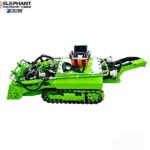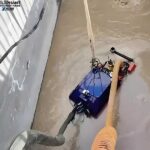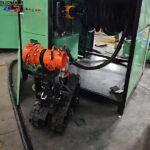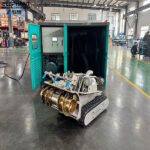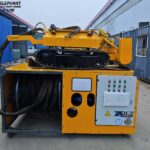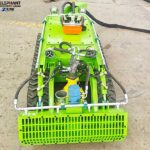


A sediment removal robot is an advanced remote-controlled dredging system designed for removing accumulated sediment, silt, and settled deposits from reservoirs, ponds, wastewater facilities, and industrial basins.
Equipped with hydraulic crawler mobility, high-pressure flushing technology, and a powerful slurry pumping system, the robot provides an efficient solution for underwater sediment removal without requiring workers to enter dangerous environments.
Compared with traditional dredging methods, a sediment removal robot improves cleaning efficiency, reduces operational downtime, and helps restore the capacity and performance of water storage and treatment facilities.
Sediment Removal Robot Parameters
| Parameter | YG450 | YG500 | YG600 | YG700 | YG800 | YG900 | YG1200 |
| Robot Dimensions (mm) | ≤1700 × 450 × 450 | 1500 × 500 × 650 | 1500 × 600 × 650 | 1600 × 700 × 650 | 1600 × 850 × 700 | 1650 × 960 × 750 | 1900 × 1200 × 750 |
| Applicable Manhole / Access | ≥600 mm opening | ≥600 mm opening | ≥600 mm opening | ≥700 mm opening | ≥800 mm opening | ≥900 mm opening | Large culvert / open access |
| Dredging Width (mm) | 450 | 500 | 600 | 700 | 800 | 900 | Suitable for large culverts |
| Travel Speed (m/s) | 3–12 | 3–15 | 3–15 | 3–15 | 3–15 | 3–15 | 0–17 m/min |
| Pump Diameter (inch) | 3 | 3 | 3 | 4 | 4 | 4 | 4 or 6 |
| Pump Flow (m³/h) | 50 | 100 | 100 | 160 | 160 | 200 | 250 |
| Pump Head (m) | 0-30 | 0–30 | 0–30 | 0–25 | 0–25 | 0–25 | 0–30 (Horizontal: 100–150 m) |
| Hydraulic Station Dimensions (mm) | 2000 × 1100 × 1500 (recommended) | 2200 × 1200 × 1700 | 2200 × 1200 × 1700 | 2200 × 1200 × 1700 | 2200 × 1200 × 1700 | 2200 × 1200 × 1700 | 2120 × 1240 × 1200 |
| Main Motor Power (kW) | 11–15 kW | 18 | 18 | 22 | 22 | 22 | 45 kW (50 kW) / Diesel 76 kW (123 kW) |
| Hydraulic System Pressure (MPa) | 0–16 | 0–16 | 0–16 | 0–16 | 0–16 | 0–16 | Custom / high-pressure system |
| Particle Size Capacity (mm) | ≤10–20 mm (soft sludge) | 15 | 15 | 40 | 40 | 50 | 0–40 (customizable) |
| Winch Speed (r/min) | 0–10 | 0–10 | 0–10 | 0–10 | 0–10 | 0–10 | 0–10 |
| Pipe Length (m) | 20–30 optional | 30–50 optional | 30–50 optional | 30–50 optional | 30–50 optional | 30–50 optional | 30 m/pack, high-pressure resistant |
| Control System | Wireless Remote Control | Wireless Remote | Wireless Remote | Wireless Remote | Wireless Remote | Wireless Remote | Wireless Remote |
| Lighting System | Underwater LED ×2 | Underwater LED ×2 | Underwater LED ×2 | Underwater LED ×2 | Underwater LED ×2 | Underwater LED ×2 | Underwater LED ×2 |

Why Do Facilities Need Sediment Removal Robots?
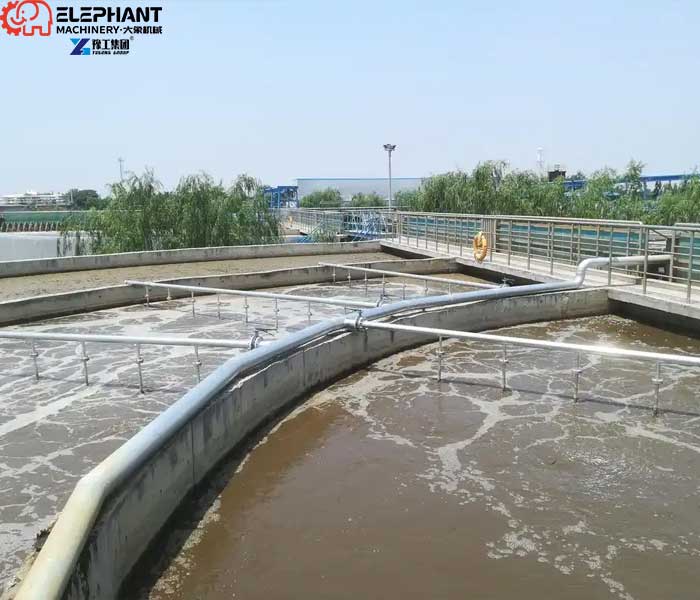
Sediment accumulation is a common challenge in reservoirs, ponds, wastewater facilities, and industrial water systems. Over time, settled sediment can reduce storage capacity, affect operational efficiency, and increase maintenance requirements.
Common problems caused by sediment buildup include:
- Reduced water storage capacity in reservoirs and ponds
- Lower treatment efficiency in wastewater systems
- Hardened sediment layers that are difficult to remove
- Increased maintenance frequency and operating costs
- Safety risks caused by manual cleaning in confined or underwater environments
Traditional sediment removal methods often require draining facilities, using large equipment, or sending workers into hazardous areas. A remote-controlled sediment removal robot provides a safer and more efficient alternative for removing underwater deposits.
Core Features of Sediment Removal Robot
1. Hydraulic Crawler System for Stable Operation
The sediment removal robot uses a hydraulic crawler system to provide stable movement across uneven underwater surfaces, muddy bottoms, and sediment-filled environments.
It can operate in confined sedimentation tanks with strong traction and precise maneuverability, making it suitable for long-duration industrial cleaning tasks.
2. High-Pressure Water Jet Cleaning System
A key feature of the system is its integrated high-pressure water jet (water gun) system, which is used to break down hardened sludge and compact sediment layers.
This allows the robot to:
- Break hardened sediment deposits
- Loosen thick sediment layers before suction
- Improve overall dredging efficiency
- Handle long-term accumulated tank residues
This makes it far more effective than standard tank cleaning robot systems.


3. High-Efficiency Sediment Extraction and Transportation
The robot combines a powerful slurry pump with a suction system to continuously extract sediment and transport it through discharge pipelines.
It is designed for:
- Soft sediment
- Silt deposits
- Settled solids
- Hardened sediment layers
The system improves dredging efficiency while reducing manual underwater operations.
4. Remote Control and Intelligent Operation
Modern intelligent dredging robot systems allow operators to control all functions remotely, including movement, water jet activation, and pumping.
Key advantages:
- No human entry into hazardous tanks
- Real-time monitoring via camera systems
- Improved operational safety and precision
- Reduced labor requirements
Key Advantages for Industrial Users
A sediment removal robot provides significant operational benefits:
- Safe cleaning without confined space entry
- Continuous operation without full tank shutdown
- Effective removal of hardened sludge and sediment layers
- Reduced maintenance and labor costs
- High adaptability to different tank sizes and conditions
Compared with traditional methods, it significantly improves both efficiency and safety in wastewater treatment operations.


Applications of Sediment Removal Robot
Reservoir Sediment Removal
Reservoirs often accumulate large amounts of sediment due to upstream erosion and long-term water flow. Excessive sediment deposition can reduce effective storage capacity and affect water management efficiency.
A sediment removal robot provides an efficient solution for underwater sediment extraction without requiring complete reservoir drainage.
Key benefits include:
- Restoring reservoir capacity
- Reducing sediment accumulation
- Improving long-term water management
- Enabling safer underwater dredging operations
Pond Sediment Removal
Ponds used for aquaculture, landscaping, and irrigation can gradually accumulate sludge and sediment at the bottom.
The sediment removal robot helps remove settled deposits from:
- Aquaculture ponds
- Landscape lakes
- Irrigation ponds
- Water treatment ponds
By operating underwater with remote control, the system reduces manual labor and improves pond maintenance efficiency.
Wastewater Sediment Removal
Wastewater treatment facilities rely on sedimentation tanks and treatment basins to separate suspended solids from water.
Over time, settled sediment can accumulate and reduce system efficiency.
The sediment removal robot is suitable for:
- Municipal wastewater treatment plants
- Industrial wastewater facilities
- Sedimentation tanks
- Sludge settling basins
It removes accumulated deposits while reducing the need for tank draining and manual cleaning.
Industrial Basin and Mining Sediment Removal
Industrial facilities and mining operations often generate large amounts of settled solids and sediment.
The sediment removal robot can be used in:
- Industrial settling ponds
- Mining ponds
- Tailings ponds
- Water treatment basins
The remote-controlled system provides an efficient way to remove sediment deposits in large or difficult-to-access areas.
How to Choose the Right Sediment Removal Robot?
Choosing the right sediment removal robot depends on the tank conditions, sludge characteristics, and operational requirements. A suitable system should not only improve cleaning efficiency but also ensure stable and safe long-term operation.
- First, consider the sludge type and hardness. For thick or hardened deposits, a robot equipped with a high-pressure water jet system is essential to break down compacted sludge before suction. For lighter sediment, a standard hydraulic dredging system may be sufficient.
- Second, evaluate the tank structure and working environment. Confined or semi-enclosed tanks require a compact crawler dredging robot design with strong maneuverability and stable traction. If the tank is large or deep, a system with high-capacity pumping and long-distance slurry discharge capability is recommended.
- Third, consider the operation method and safety requirements. For high-risk environments, a remote control dredging robot is preferred to eliminate the need for manual entry into confined spaces, significantly improving worker safety.
- Finally, assess whether the system offers customization options such as pump capacity, crawler configuration, and control systems. A flexible solution ensures better adaptability to different sedimentation tank sizes and industrial conditions.
A well-chosen system not only improves cleaning efficiency but also reduces downtime, maintenance cost, and long-term operational risks in wastewater treatment facilities.


Why Customers Choose Elephant Dredging?
Elephant Dredging (Yugong Group) is a professional manufacturer of dredging and environmental cleaning equipment with strong engineering and export capability.
Key strengths include:
- Over 20 years of heavy machinery manufacturing experience
- In-house hydraulic system and dredging technology R&D
- Customized solutions for different tank conditions
- Export experience in Europe, Africa, Southeast Asia, and the Middle East
- Full OEM/ODM support for industrial projects
The company specializes in robotic dredge and robotic dredging solutions designed for complex industrial sludge and sediment environments.
FAQ about Sediment Removal Robot
1. What is a sediment removal robot used for?
A sediment removal robot is used for removing accumulated sediment, silt, and settled deposits from reservoirs, ponds, wastewater facilities, and industrial basins. It provides a safer alternative to traditional dredging methods.2. Can a sediment removal robot work in reservoirs and ponds?
Yes. The sediment removal robot is designed for underwater operation and can be used in reservoirs, aquaculture ponds, landscape lakes, and other water environments where sediment buildup occurs.3. What types of sediment can the robot remove?
The robot can remove various types of underwater deposits, including silt, settled solids, soft sediment, and hardened sediment layers with the assistance of a high-pressure water jet system.4. Is sediment removal possible without draining the water?
Yes. The remote-controlled sediment removal robot can operate underwater, allowing facilities to remove sediment without completely draining tanks, ponds, or water bodies.5. Can the robot be customized for different applications?
Yes. Elephant Machinery provides customized solutions based on working depth, sediment conditions, pump capacity, access size, and project requirements.Sediment Removal Robot in Elephant Dredging
The sediment removal robot is an efficient solution for reservoirs, ponds, wastewater facilities, and industrial basins. With hydraulic crawler mobility, high-pressure water jet cleaning, powerful sediment suction, and remote control operation, it provides a safer and more efficient alternative for underwater sediment removal.
For organizations dealing with sediment accumulation, silt buildup, and difficult dredging environments, intelligent sediment removal systems offer a reliable way to restore capacity and improve maintenance efficiency.