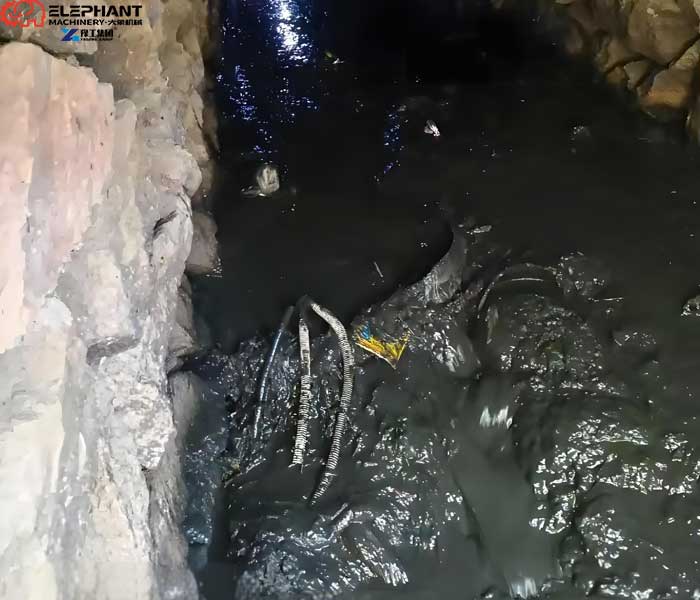
In March 2026, a municipal wastewater treatment contractor from Mexico officially purchased our sludge removal robot for wastewater treatment to solve a long-standing operational issue in its deep sedimentation system. The facility had been facing severe sludge accumulation in multiple wastewater tank cleaning robot zones, especially in the primary clarifier and anaerobic sludge thickening tanks. The main challenges included sludge layers up to 1.2–1.8 meters, frequent blockage in discharge pipelines, and unsafe manual entry caused by toxic gas buildup. Elephant Machinery’s sludge removal robot perfectly solved all the problems the customer was facing.
Customer’s Key Operational Problems Before Deployment
Before adopting our solution, the client reported several critical issues:
Frequent clogging in sludge discharge channels
Inefficient manual cleaning inside deep sedimentation tanks
High H₂S gas concentration preventing safe human entry
Excessive downtime affecting wastewater discharge compliance
High operational cost due to repeated sludge evacuation cycles
The facility was urgently seeking a more stable and automated sludge cleaning solution for wastewater plant that could operate continuously without tank drainage.
Customized Solution for Mexico Project
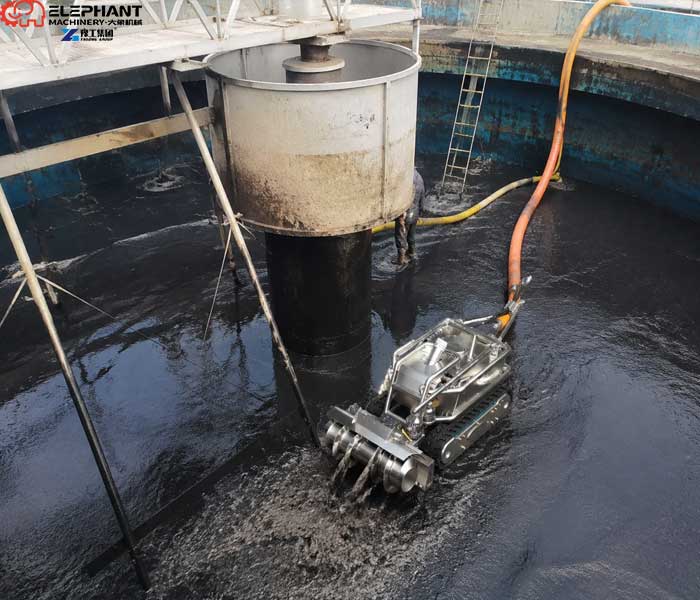
After a detailed on-site assessment of the wastewater treatment plant in Mexico, Elephant Machinery designed a fully customized sludge removal robot for wastewater treatment solution tailored to the facility’s complex operating conditions.
To address the plant’s mixed sludge environment and multiple tank structures, the client purchased two units of sludge removal robots:
- YG450 compact model for narrow and confined spaces
- YG800 heavy-duty model for large sedimentation tanks and high-volume sludge zones
This dual-robot configuration was selected based on the plant’s real operational requirements, including:
- Narrow pipelines and manholes (600–800 mm access)
- Large sedimentation tanks with spans of tens of meters
- Highly variable sludge conditions (soft sludge / compacted sludge / oily sludge)
- Continuous operation requirements with no long-term shutdown allowed
By combining two different capacity systems, the plant achieved full coverage of both confined pipeline zones and large-scale sludge accumulation areas, significantly improving overall treatment efficiency.
⚙️ System Configuration & Engineering Design
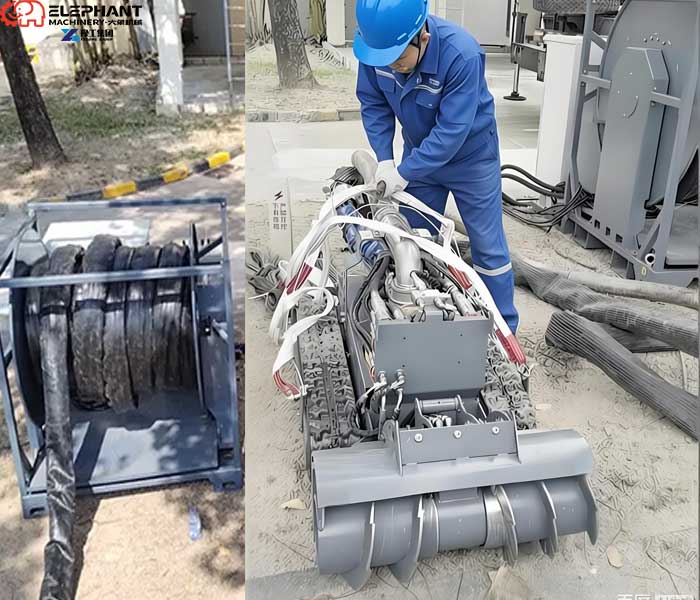
The deployed system integrates both YG450 and YG800 platforms into a unified industrial dredging robot solution, ensuring flexible operation across different wastewater zones.
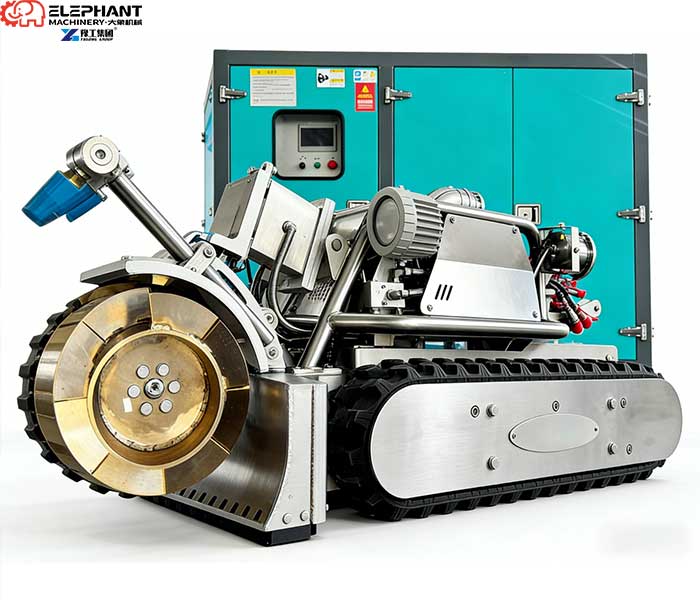

✔ YG450 Compact Sludge Cleaning Robot (Confined Areas)
Designed for narrow and complex environments such as pipelines and small tanks:
- Lightweight modular structure (≤350 kg) for fast deployment
- High-torque crawler system (2500 N traction force)
- IP68 deep-water protection (up to 20 m operation depth)
- Dual-camera + dual-light real-time monitoring system
- Wireless intelligent remote control system
- Suitable for 600–800 mm manhole access
- High maneuverability for confined sludge zones
👉 Ideal for: pipeline sludge, pump stations, narrow sediment channels
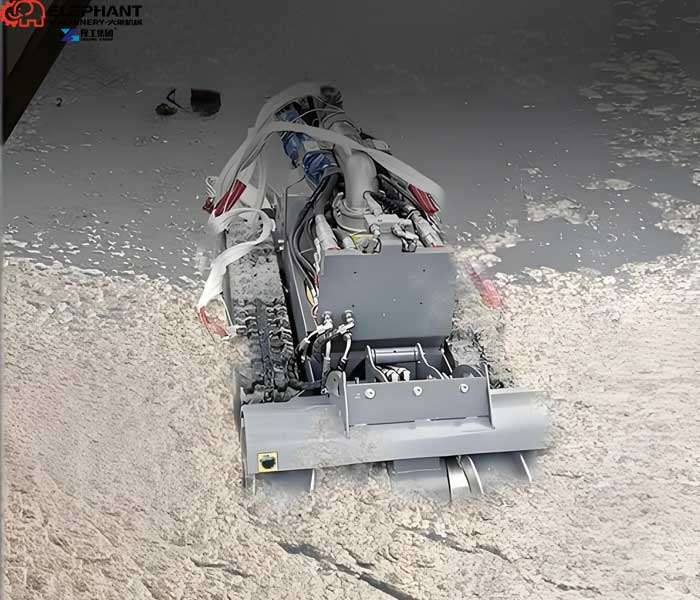
✔ YG800 Heavy-Duty Sludge Removal Robot (Large Tanks)
Designed for large sedimentation tanks and heavy sludge environments:
- Hydraulic synchronized drive system for stable multi-action operation
- High-pressure water jet breaking system for compacted sludge
- Reversible auger anti-clogging mixing head
- Stainless steel high-head slurry pump with 75 mm discharge system
- Strong crawler traction system for heavy sediment layers
- Continuous sludge extraction capability for large-volume operation
👉 Ideal for: large clarifiers, sedimentation tanks, thick sludge accumulation zones
✔ Shared Intelligent Control System (Both Units)
Both YG450 and YG800 are integrated with:
- Wireless remote intelligent control platform
- Real-time video monitoring system (forward + rear view)
- Explosion-proof design (Zone 1 & Zone 2 IIC compatible configuration)
- Integrated power station + hose reel deployment system
- Fast on-site installation and plug-and-play operation
Engineering Highlights for This Project
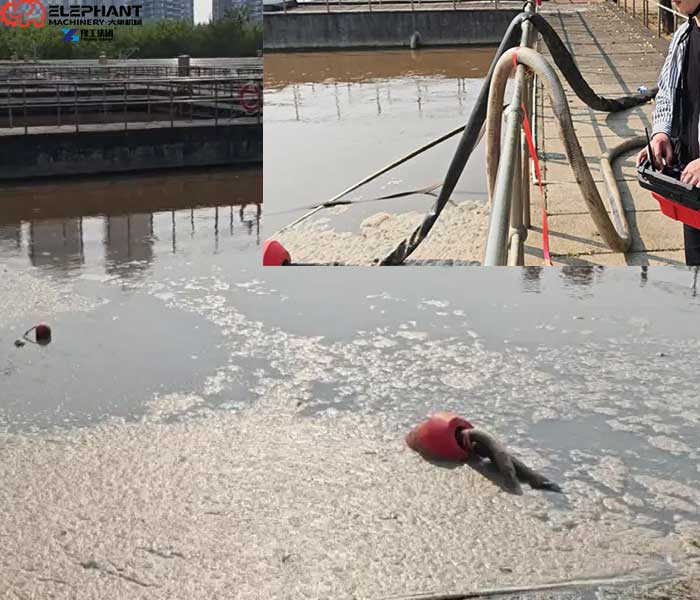
Due to high water content and unstable sludge composition, a Mud-Water Separator module was integrated into the discharge system.
This upgrade significantly improved:
- Solid-liquid separation efficiency
- Downstream pipeline load reduction
- Continuous operation stability in high-flow conditions
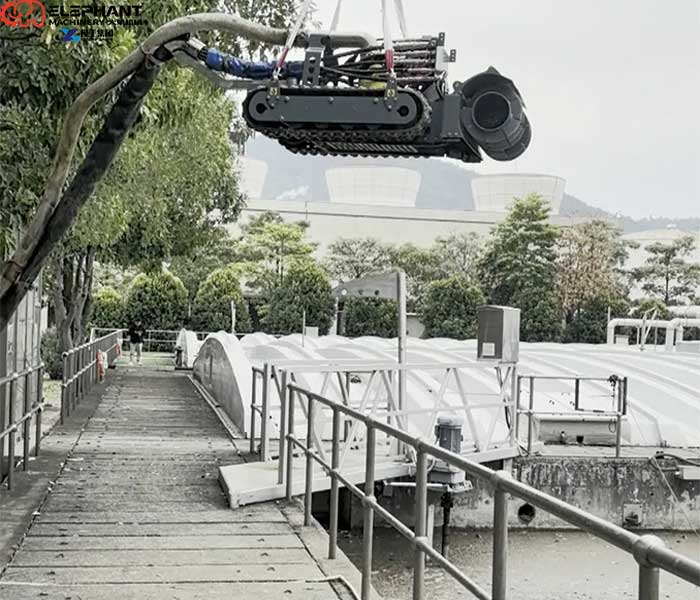
Why This Dual-Robot Solution Works?
The combination of YG450 + YG800 transforms the system into a complete sludge cleaning solution for wastewater plant operations, allowing the facility to handle different operational challenges simultaneously:
- ✔ YG450 handles narrow and hard-to-reach pipeline zones
- ✔ YG800 handles large-scale sedimentation and heavy sludge zones
- ✔ Continuous operation without plant shutdown
- ✔ Safe operation in explosive gas environments
- ✔ Stable performance under mixed sludge conditions
On-Site Deployment & Operational Results in Mexico
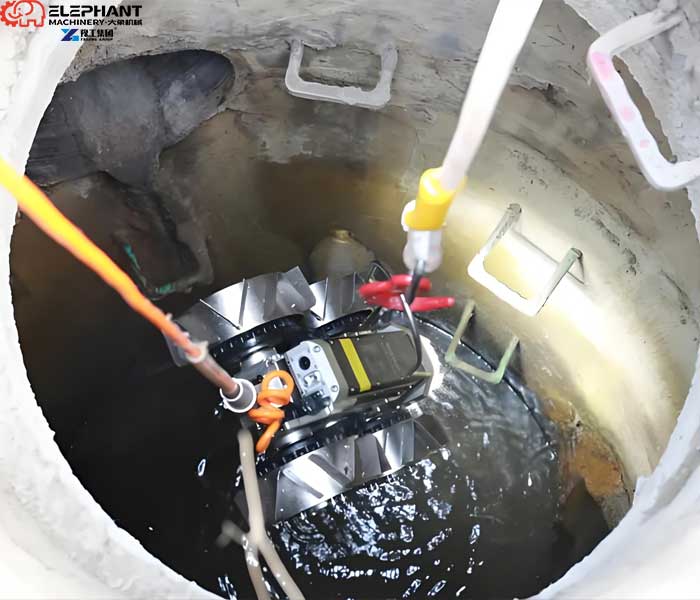
After installation and commissioning, both systems were fully operational within 48 hours, significantly improving maintenance efficiency.
Performance Results:
- Sludge removal efficiency increased by over 320%
- Tank cleaning cycle reduced from 60 days to 18–20 days
- Labor requirement reduced by 70%
- Zero human entry into hazardous tanks
- Continuous 8–10 hour stable operation per cycle
- Sludge clogging incidents reduced by over 85%
Client Feedback
“The combination of the YG450 and YG800 completely solved our sludge problem. The small unit handles narrow pipelines perfectly, while the larger one manages heavy sludge in our main tanks. Operation is stable, safe, and highly efficient. We no longer need to shut down the plant for cleaning.”
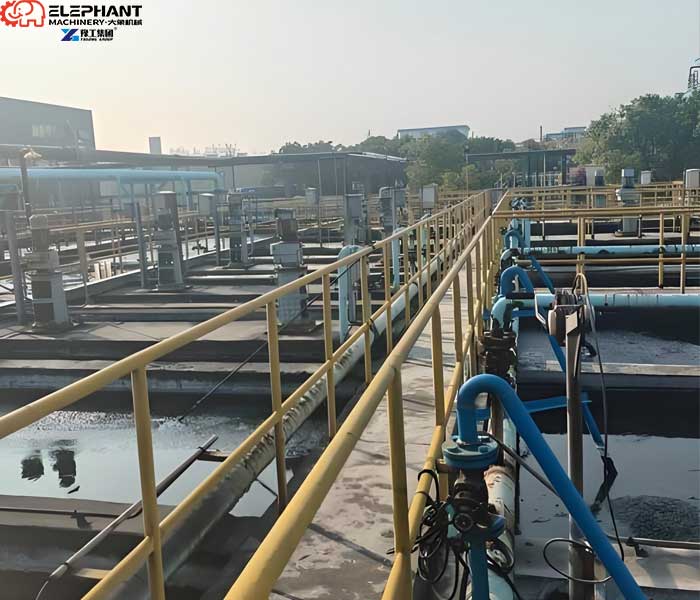
Application Value in Wastewater Treatment Systems
This project demonstrates how an advanced sewage treatment plant cleaning robot can replace traditional maintenance methods in:
- Municipal wastewater treatment plants
- Industrial sludge treatment facilities
- Chemical wastewater systems
- High-risk explosion-prone environments
The flexibility of the system makes it suitable as a long-term solution for desilting robot for wastewater treatment plant applications in Latin America and global markets.
Conclusion
The Mexico project proves that modern sludge cleaning robot technology is no longer just an auxiliary tool, but a core infrastructure component in wastewater treatment operations.
By combining explosion-proof engineering, high-pressure dredging, intelligent remote control, and modular customization, Elephant Machinery delivers a fully adaptive industrial dredging robot solution capable of handling complex sludge conditions in real-world environments.
As wastewater infrastructure continues to modernize across Latin America, demand for efficient and safe robotic cleaning systems will continue to grow rapidly.