
In many dredging and environmental engineering projects, operators often encounter a common and costly problem: traditional excavation methods are too slow, too intermittent, and inefficient for large-scale underwater sediment removal.
Rivers accumulate thick layers of sludge over time, lakes suffer from eutrophication and sediment buildup, and industrial ponds often contain mixed sludge that cannot be handled efficiently with standard buckets. In these situations, a more continuous and powerful solution is required.
This is where an excavator dredge pump system becomes a highly effective solution for modern dredging projects.
Excavator Dredge Pump Parameters
| Serial No. | Model | Flow m3/h | Lift(m) | Matching Agitator | Stirrer Torque | Excavator Tonnage |
| 1 | YG200-15 | 200 | 15 | 5.5KW | 1556 | 10T-20T |
| 2 | YG150-30 | 150 | 30 | |||
| 3 | YG300-20 | 300 | 20 | |||
| 4 | YG400-10 | 400 | 10 | 7.5KW | 1946 | 20T-30T |
| 5 | YG500-15 | 500 | 15 | |||
| 6 | YG250-35 | 250 | 35 | |||
| 7 | YG300-30 | 300 | 30 | 15KW | 2433 | 30T-40T |
| 8 | YG400-30 | 400 | 30 | |||
| 9 | YG400-40 | 400 | 40 |
Get the Right Model for Your Project
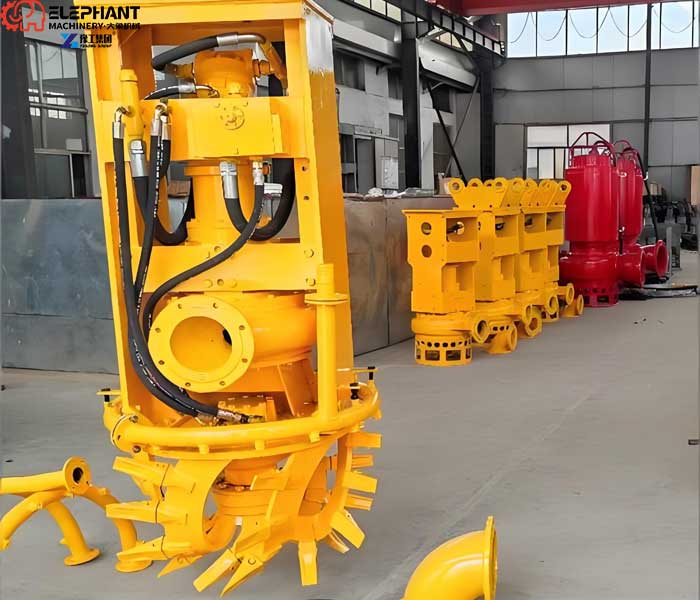
What Is an Excavator Dredge Pump?
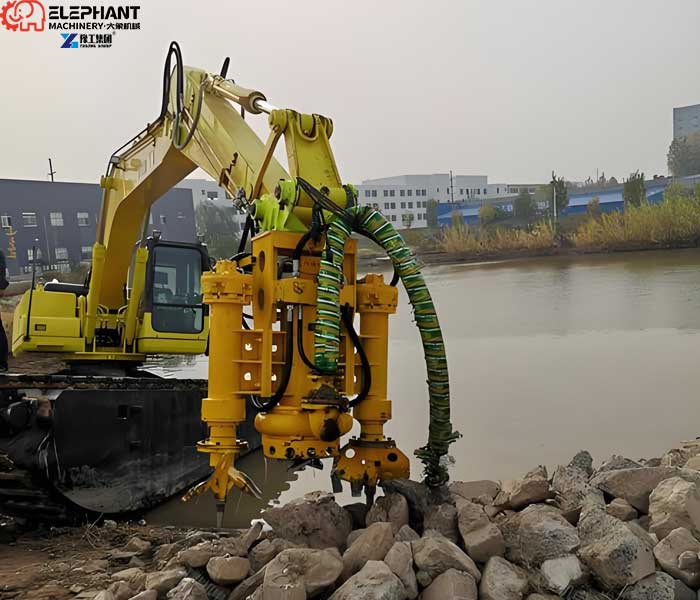
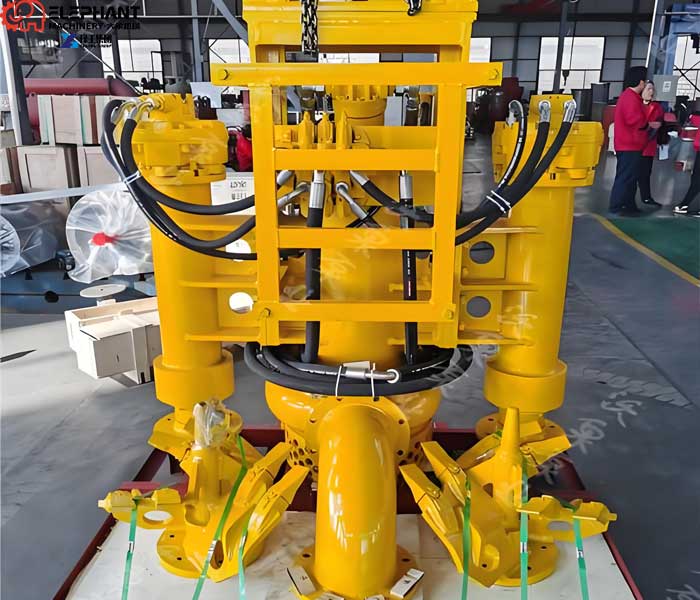
An excavator dredge pump is a hydraulic slurry pumping attachment system designed to convert a standard excavator into a continuous dredging machine. Instead of digging and dumping material in cycles, the system directly sucks sediment, sludge, sand, and water mixture and transfers it through pipelines for long-distance discharge.
Unlike conventional bucket-based dredging, this system enables continuous material extraction, making it significantly more efficient for large-scale dredging excavator operations.
It is widely used in:
- river dredging excavator projects
- lake dredging excavator cleaning
- canal dredging excavator maintenance
- pond dredging machine operations
- wetland excavation and restoration
Why Traditional Dredging Methods Are No Longer Enough?
In real-world dredging projects, operators face several limitations with bucket-based systems:
- Excavation is discontinuous, requiring frequent loading cycles
- Sediment dispersion increases turbidity and reduces efficiency
- Deep water or soft sludge conditions reduce digging effectiveness
- Transporting excavated material increases time and cost
As a result, project timelines often extend far beyond expectations, especially in large river or lake restoration works.
The excavator dredge pump solves these issues by introducing a continuous hydraulic pumping system that eliminates the need for repetitive bucket cycles.


How Excavator Dredge Pump System Works?
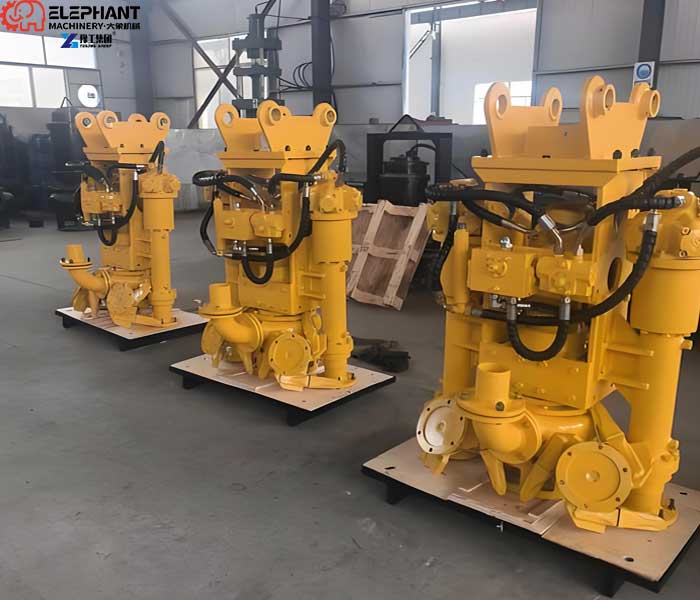
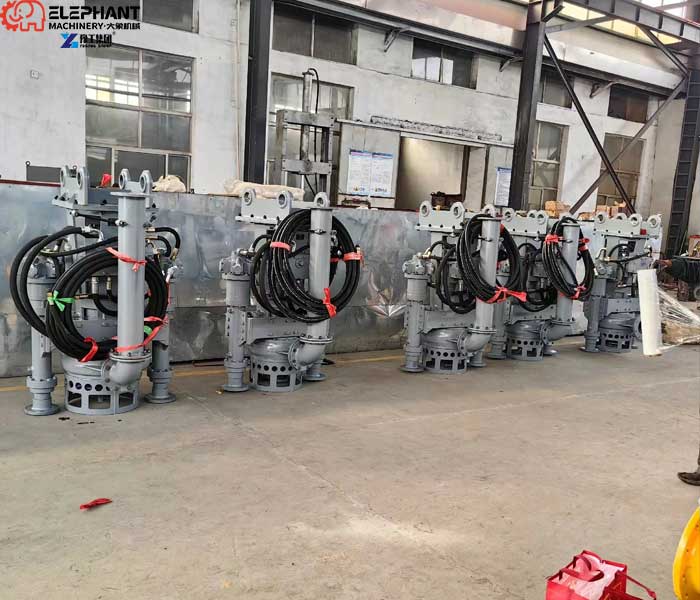
The system operates through a submersible hydraulic pump installed on the excavator boom. Once activated, it creates strong suction force to extract sediment directly from the underwater layer.
The mixture of water, sludge, sand, and debris is then transported through discharge pipelines to a designated area such as a settling pond or disposal zone.
This method ensures that dredging is no longer limited by bucket capacity or transport cycles, but becomes a continuous flow-based operation.
Key Features and Technical Advantages
1. Continuous High-Efficiency Dredging
The biggest advantage of an excavator dredge pump is its ability to perform uninterrupted dredging. This significantly increases productivity compared to traditional excavation methods.
2. Strong Suction for Heavy Sediment Conditions
The system is specifically designed to handle dense and complex materials such as clay, compacted sludge, sand layers, and mixed organic waste often found in rivers and lakes.
3. Long-Distance Slurry Transport Capability
One of the most valuable features is the ability to transport dredged material over long distances through pipelines. This reduces the need for truck transportation and lowers overall project costs.
4. Flexible Excavator Compatibility
The dredge pump system can be installed on multiple platforms, including:
- long reach excavator systems
- amphibious excavator platforms
- barge-mounted dredging equipment
It can also be integrated with a dredging robot for confined space dredging or used together with a amphibious excavator for shallow water environments.
5. Reduced Environmental Disturbance
Compared with mechanical digging, the pumping system reduces sediment dispersion, improving water clarity and minimizing environmental impact during dredging operations.
Common Applications of Excavator Dredge Pump
1.River Dredging Excavator Projects
Used to restore river flow capacity by removing accumulated sludge and sediment layers.
2.Lake Dredging Excavator Operations
Ideal for large lake restoration projects where thick sediment and organic sludge must be removed efficiently.
3.Canal Cleaning and Maintenance
Ensures smooth water flow in irrigation canals and urban drainage systems.
4.Pond Dredging Machine Applications
Widely used in aquaculture ponds and industrial sediment basins to maintain water quality and depth.
5. Wetland and Environmental Restoration
Supports ecological rehabilitation projects by removing contaminated sediment layers without large-scale excavation disruption.
Excavator Bucket vs Excavator Dredge Pump
In practical engineering projects, choosing the right system is critical.
A bucket system is suitable for small-scale and shallow excavation, but it becomes inefficient in large-scale continuous dredging. In contrast, the dredge pump system is designed for high-volume continuous sediment removal, making it more suitable for rivers, lakes, and industrial water bodies.
How to Choose the Right Excavator Dredge Pump System?
Selecting the correct system depends on several project conditions.
The most important factors include sediment type, water depth, discharge distance, and excavator size. For example, sandy sediment requires different pump configuration than heavy clay sludge, while long-distance discharge projects require higher pump pressure systems.
In complex environments, many contractors choose to combine dredge pump systems with pond dredging machine or amphibious platforms to maximize efficiency.


FAQ – Excavator Dredge Pump
1. What is an excavator dredge pump used for?
It is used for river dredging, lake cleaning, canal maintenance, and sludge removal in industrial water environments.
2. Can it replace a dredging bucket?
In most large-scale continuous dredging projects, it is significantly more efficient than traditional bucket systems.
3. What type of excavators can use it?
It can be installed on long reach excavators, amphibious excavators, or barge-mounted systems.
4. Is it suitable for deep water dredging?
Yes, especially when combined with long boom or floating platform systems.
5. What materials can it handle?
It can handle mud, sand, sludge, silt, and mixed sediment commonly found in natural and industrial water bodies.
Conclusion
An excavator dredge pump is a highly efficient hydraulic dredging solution designed for modern river, lake, and industrial sediment removal projects. By enabling continuous slurry extraction and long-distance discharge, it significantly improves dredging efficiency while reducing operational cost and environmental impact.
It has become an essential system in modern dredging excavator applications, especially where traditional bucket methods are no longer sufficient for large-scale or continuous dredging operations.