Project Location: Indonesia
Industry: Wastewater Treatment
Solution: Remote Robotic Dredging System for Sludge Removal
Indonesian Wastewater Facility Found Elephant Dredging Through Google for Sludge Removal Solution
In February 2026, a wastewater treatment company in Indonesia was searching on Google for a safer and more efficient solution to remove accumulated sludge from its treatment facility. During the search process, the customer found Elephant Dredging and contacted the team to discuss their cleaning requirements.
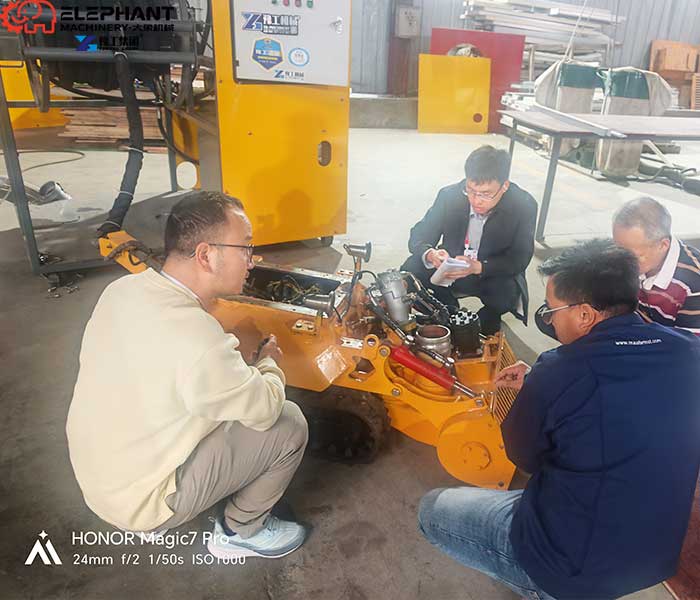
After the initial communication, the customer provided detailed information about the project, including the wastewater tank structure, sludge accumulation conditions, available working space, and expected cleaning performance.
Based on the customer’s requirements, Elephant Dredging engineers carried out a professional evaluation and developed a customized robotic dredging system for wastewater sludge removal.
The proposed solution was designed to solve the customer’s main challenges: removing thick sludge deposits efficiently while reducing the risks associated with manual tank entry and traditional cleaning methods.
Robotic Dredging Parameters
| Parameter | YG450 | YG500 | YG600 | YG700 | YG800 | YG900 | YG1200 |
| Robot Dimensions (mm) | ≤1700 × 450 × 450 | 1500 × 500 × 650 | 1500 × 600 × 650 | 1600 × 700 × 650 | 1600 × 850 × 700 | 1650 × 960 × 750 | 1900 × 1200 × 750 |
| Applicable Manhole / Access | ≥600 mm opening | ≥600 mm opening | ≥600 mm opening | ≥700 mm opening | ≥800 mm opening | ≥900 mm opening | Large culvert / open access |
| Dredging Width (mm) | 450 | 500 | 600 | 700 | 800 | 900 | Suitable for large culverts |
| Travel Speed (m/s) | 3–12 | 3–15 | 3–15 | 3–15 | 3–15 | 3–15 | 0–17 m/min |
| Pump Diameter (inch) | 3 | 3 | 3 | 4 | 4 | 4 | 4 or 6 |
| Pump Flow (m³/h) | 50 | 100 | 100 | 160 | 160 | 200 | 250 |
| Pump Head (m) | 0-30 | 0–30 | 0–30 | 0–25 | 0–25 | 0–25 | 0–30 (Horizontal: 100–150 m) |
| Hydraulic Station Dimensions (mm) | 2000 × 1100 × 1500 (recommended) | 2200 × 1200 × 1700 | 2200 × 1200 × 1700 | 2200 × 1200 × 1700 | 2200 × 1200 × 1700 | 2200 × 1200 × 1700 | 2120 × 1240 × 1200 |
| Main Motor Power (kW) | 11–15 kW | 18 | 18 | 22 | 22 | 22 | 45 kW (50 kW) / Diesel 76 kW (123 kW) |
| Hydraulic System Pressure (MPa) | 0–16 | 0–16 | 0–16 | 0–16 | 0–16 | 0–16 | Custom / high-pressure system |
| Particle Size Capacity (mm) | ≤10–20 mm (soft sludge) | 15 | 15 | 40 | 40 | 50 | 0–40 (customizable) |
| Winch Speed (r/min) | 0–10 | 0–10 | 0–10 | 0–10 | 0–10 | 0–10 | 0–10 |
| Pipe Length (m) | 20–30 optional | 30–50 optional | 30–50 optional | 30–50 optional | 30–50 optional | 30–50 optional | 30 m/pack, high-pressure resistant |
| Control System | Wireless Remote Control | Wireless Remote | Wireless Remote | Wireless Remote | Wireless Remote | Wireless Remote | Wireless Remote |
| Lighting System | Underwater LED ×2 | Underwater LED ×2 | Underwater LED ×2 | Underwater LED ×2 | Underwater LED ×2 | Underwater LED ×2 | Underwater LED ×2 |
Get the Right Model for Your Project
Project Background: Sludge Removal Challenges in an Indonesian Wastewater Facility
During continuous wastewater treatment operations, sludge gradually accumulated at the bottom of the customer’s tanks, reducing treatment efficiency and increasing maintenance pressure.
Before contacting Elephant Dredging, the Indonesian customer faced three main challenges:
Limited Access for Traditional Cleaning Equipment
The wastewater tank had restricted access, making it difficult to use conventional dredging equipment.
The customer needed a compact solution that could operate inside the tank without major site modifications or long preparation time.
Safety Concerns During Manual Sludge Removal
Manual tank cleaning required workers to enter a confined wastewater environment, creating potential risks from harmful gases, slippery sludge surfaces, and limited working space.
Reducing human entry was one of the customer’s key requirements.
Thick Sludge Deposits Requiring Efficient Removal
After long-term operation, the accumulated sludge became compacted and difficult to remove with ordinary pumping methods.
The customer required equipment that could:
- Break up hardened sludge
- Efficiently collect sediment
- Transfer sludge through pipelines over a suitable distance
Elephant Dredging’s Robotic Dredging Solution for Indonesia Project
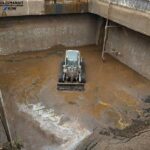
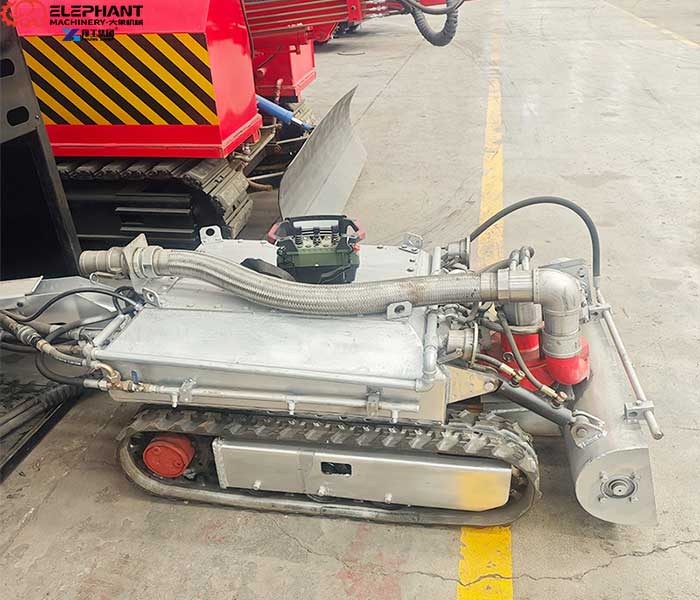
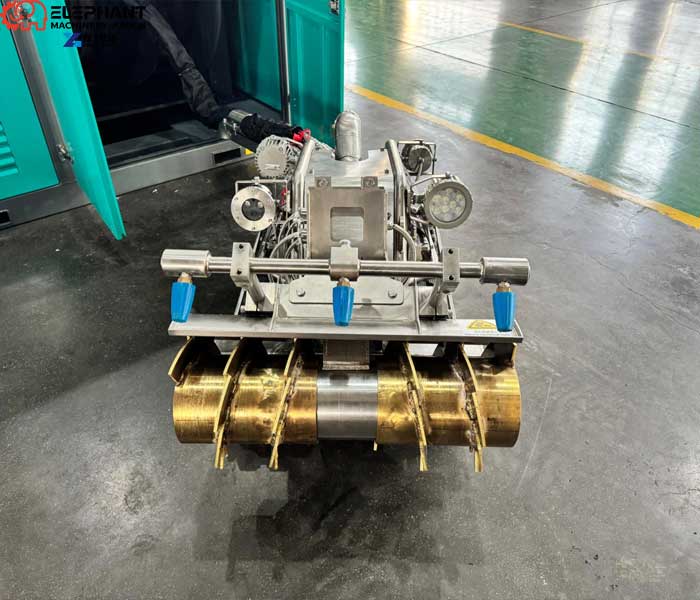
After analyzing the site conditions, Elephant Dredging engineers recommended a customized remote controlled sludge removal robot system.
The solution included:
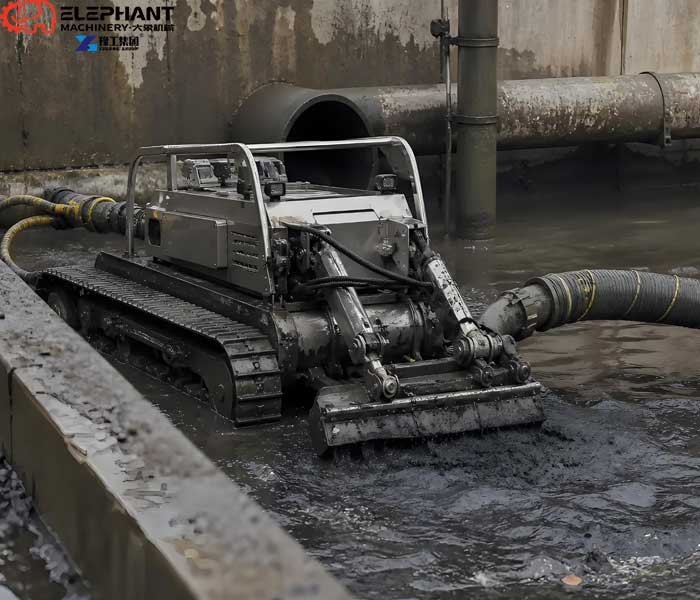
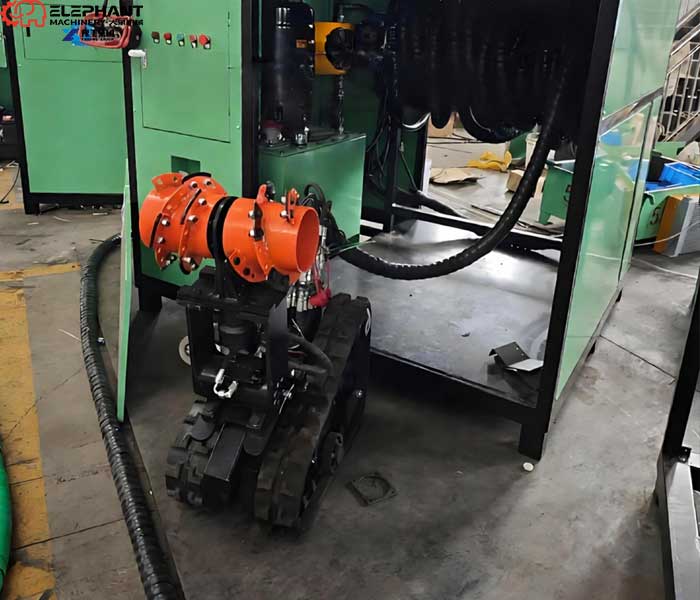
- Crawler-type dredging robot
- Remote operation control system
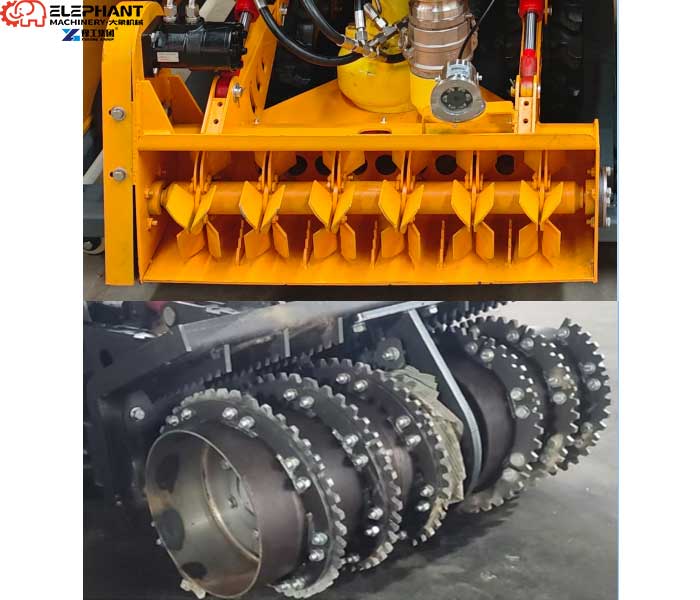
- Front sludge cutting device
- High-pressure water jet cleaning system
- High-efficiency sludge suction pump
- Slurry discharge pipeline
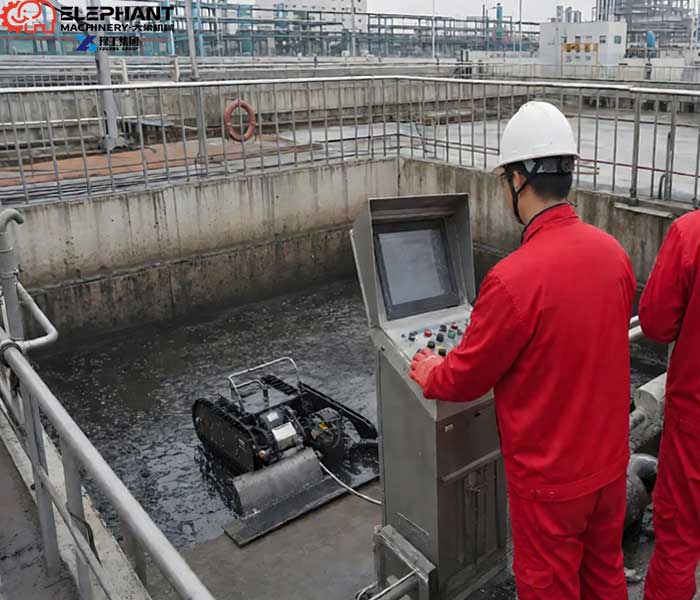
This configuration allowed the Indonesian customer to complete sludge removal operations remotely without sending workers into the wastewater tank.
How the Robotic Dredging System Improved Sludge Removal Efficiency?
Remote Operation for Safer Wastewater Tank Cleaning
The remote-controlled design was one of the key reasons the customer selected this solution.
Operators could control the robot from outside the tank while monitoring the cleaning process.
This helped reduce:
- Confined-space entry risks
- Manual cleaning requirements
- Worker exposure to hazardous environments
Crawler Movement for Stable Operation
The crawler system allowed the robot to move steadily across the sludge-covered tank bottom.
Compared with traditional suction equipment, crawler mobility provided:
- Better stability on soft sludge
- Wider cleaning coverage
- More accurate positioning
This enabled the robot to reach sediment accumulation areas that were difficult to access.
Cutting and Pumping System for Effective Sludge Removal
The front cutting mechanism helped loosen compacted sludge, while the high-pressure water jet improved cleaning performance.
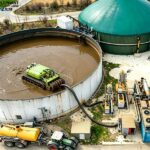
After loosening, the powerful suction pump transferred the sludge mixture through pipelines for disposal.
The integrated system improved:
- Sludge removal efficiency
- Continuous operation capability
- Overall cleaning performance
Customer Feedback from Indonesia Wastewater Project
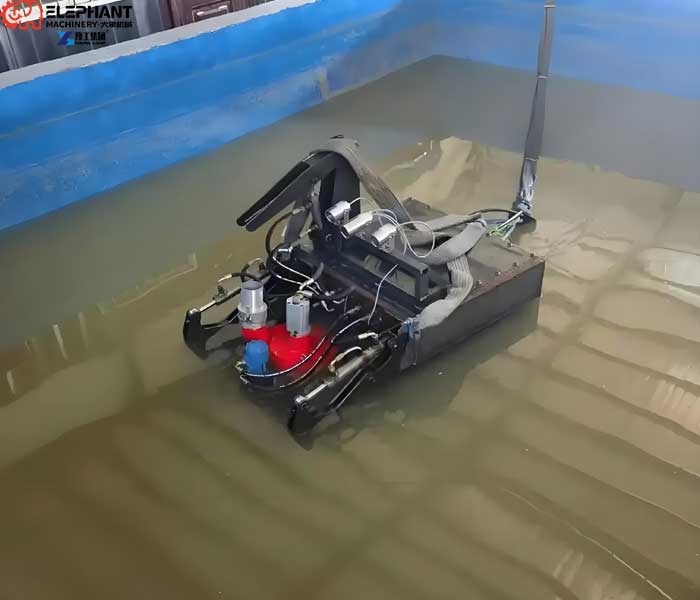
After completing the sludge removal operation, the Indonesian customer shared positive feedback about the robotic dredging solution.
The customer commented:
“The remote-controlled system solved our biggest concern. We no longer need workers to enter the tank for sludge cleaning. The robot operated smoothly and helped us complete the cleaning work more safely and efficiently.”
The customer especially appreciated:
- Safer cleaning without human entry
- Stable robot movement inside the tank
- Effective removal of accumulated sludge
- Reduced dependence on manual labor
The project proved that robotic dredging technology can provide a practical solution for wastewater facilities facing difficult sludge removal conditions.
Why More Wastewater Facilities Choose Robotic Dredging Systems?
Wastewater treatment plants around the world are facing increasing challenges related to sludge accumulation, maintenance costs, and worker safety.
Compared with traditional cleaning methods, a robotic dredging system provides advantages including:
Safer Maintenance
Remote operation reduces the need for workers to enter tanks and hazardous areas.
Flexible Deployment
Compact robotic equipment can work in:
- Wastewater tanks
- Sedimentation tanks
- Sludge ponds
- Industrial treatment facilities
Efficient Sediment and Sludge Removal
The combination of crawler movement, cutting technology, high-pressure cleaning, and pumping provides efficient sludge removal.
Reduced Operational Interruption
The robotic solution minimizes preparation requirements and helps facilities maintain more stable operation.

About Elephant Dredging
Elephant Dredging focuses on intelligent dredging equipment and remote-controlled cleaning solutions for wastewater, environmental, and industrial applications.
With professional engineering support, Elephant Dredging provides customized solutions based on:
- Tank dimensions
- Sludge characteristics
- Cleaning requirements
- Site conditions
Through advanced sludge removal robots and robotic dredging technology, Elephant Dredging helps customers worldwide improve cleaning efficiency, reduce operational risks, and achieve safer maintenance.
Conclusion
For this Indonesian wastewater facility, traditional sludge cleaning methods created challenges due to limited access, safety concerns, and difficult sludge conditions.
By implementing a robotic dredging system, Elephant Dredging provided a safer and more efficient sludge removal solution. The remote-controlled robot reduced manual risks, improved cleaning performance, and helped the customer maintain reliable wastewater operations.
This Indonesia project demonstrates how robotic dredging technology is becoming an effective solution for modern wastewater sludge management worldwide.