Remote-Controlled Solution for Safe Tailings Sediment Removal in Mining Operations
Mining operations continuously generate large amounts of tailings, sludge, and fine mineral particles during the mineral processing process. Over time, these materials settle at the bottom of tailings ponds, reducing storage capacity and affecting efficient mining tailings management.
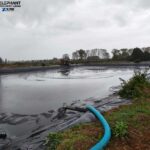
A mining company in Vietnam faced a similar challenge. The accumulated sludge in its tailings pond affected the effective storage capacity and required regular sediment removal. However, the pond was equipped with a 2mm HDPE geomembrane liner, which made conventional dredging methods difficult due to concerns about potential liner damage.
To solve this problem, the customer contacted our team for a customized Mining Sludge Removal Robot solution.
After communication about the pond conditions, liner specifications, and sediment characteristics, our engineers evaluated the working requirements and discussed a suitable robotic dredging solution.
Mining Sludge Removal Robot Specifications
| Parameter | YG450 | YG500 | YG600 | YG700 | YG800 | YG900 | YG1200 |
| Robot Dimensions (mm) | ≤1700 × 450 × 450 | 1500 × 500 × 650 | 1500 × 600 × 650 | 1600 × 700 × 650 | 1600 × 850 × 700 | 1650 × 960 × 750 | 1900 × 1200 × 750 |
| Applicable Manhole / Access | ≥600 mm opening | ≥600 mm opening | ≥600 mm opening | ≥700 mm opening | ≥800 mm opening | ≥900 mm opening | Large culvert / open access |
| Dredging Width (mm) | 450 | 500 | 600 | 700 | 800 | 900 | Suitable for large culverts |
| Travel Speed (m/s) | 3–12 | 3–15 | 3–15 | 3–15 | 3–15 | 3–15 | 0–17 m/min |
| Pump Diameter (inch) | 3 | 3 | 3 | 4 | 4 | 4 | 4 or 6 |
| Pump Flow (m³/h) | 50 | 100 | 100 | 160 | 160 | 200 | 250 |
| Pump Head (m) | 0-30 | 0–30 | 0–30 | 0–25 | 0–25 | 0–25 | 0–30 (Horizontal: 100–150 m) |
| Hydraulic Station Dimensions (mm) | 2000 × 1100 × 1500 (recommended) | 2200 × 1200 × 1700 | 2200 × 1200 × 1700 | 2200 × 1200 × 1700 | 2200 × 1200 × 1700 | 2200 × 1200 × 1700 | 2120 × 1240 × 1200 |
| Main Motor Power (kW) | 11–15 kW | 18 | 18 | 22 | 22 | 22 | 45 kW (50 kW) / Diesel 76 kW (123 kW) |
| Hydraulic System Pressure (MPa) | 0–16 | 0–16 | 0–16 | 0–16 | 0–16 | 0–16 | Custom / high-pressure system |
| Particle Size Capacity (mm) | ≤10–20 mm (soft sludge) | 15 | 15 | 40 | 40 | 50 | 0–40 (customizable) |
| Winch Speed (r/min) | 0–10 | 0–10 | 0–10 | 0–10 | 0–10 | 0–10 | 0–10 |
| Pipe Length (m) | 20–30 optional | 30–50 optional | 30–50 optional | 30–50 optional | 30–50 optional | 30–50 optional | 30 m/pack, high-pressure resistant |
| Control System | Wireless Remote Control | Wireless Remote | Wireless Remote | Wireless Remote | Wireless Remote | Wireless Remote | Wireless Remote |
| Lighting System | Underwater LED ×2 | Underwater LED ×2 | Underwater LED ×2 | Underwater LED ×2 | Underwater LED ×2 | Underwater LED ×2 | Underwater LED ×2 |
Project Background: Tailings Pond Sediment Accumulation in Vietnam
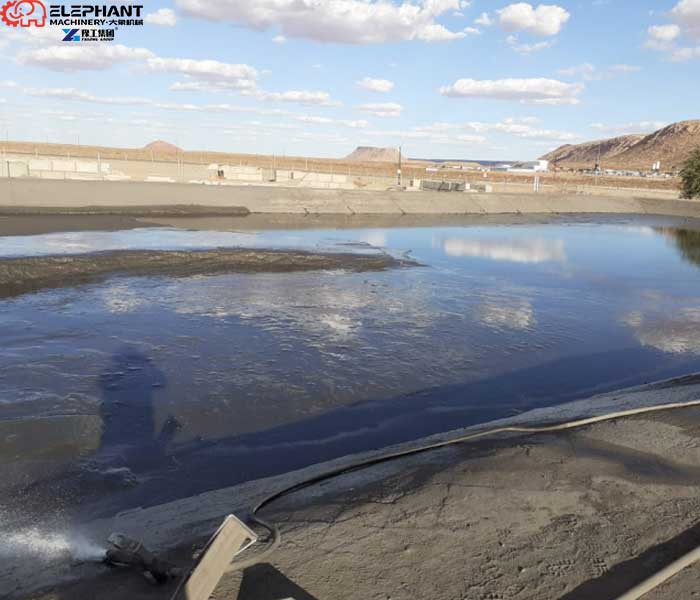
The customer operates a mining facility in Vietnam where tailings generated during mineral processing were continuously deposited into a storage pond.
Over time, sediment accumulation created several challenges:
- Reduced effective tailings pond capacity
- Increased difficulty in long-term pond maintenance
- Higher requirements for sediment management
- Potential impact on future mining operations
The customer needed an efficient tailings pond cleaning solution that could remove deposited sludge while considering the existing pond structure.
Unlike open water dredging projects, lined tailings ponds require additional evaluation before equipment selection.
Main Challenge: Removing Sludge While Considering HDPE Geomembrane Liner Conditions
The biggest concern during this project was not only sediment removal efficiency but also the condition of the existing pond liner.
The tailings pond was installed with:
- HDPE geomembrane liner
- 2mm liner thickness
HDPE liners are widely used in mining tailings facilities because they provide effective waterproofing and help prevent leakage.
However, during dredging operations, factors such as:
- Robot weight
- Track pressure
- Operating speed
- Sediment thickness
- Bottom conditions
need to be carefully considered.
For this reason, before recommending a final configuration, our engineering team communicated with the customer to understand:
- Tailings pond structure
- HDPE liner information
- Sediment characteristics
- Water depth
- Required cleaning area
- Sludge transportation distance
Based on these conditions, the dredging method and equipment configuration could be adjusted accordingly.
Customized Mining Sludge Removal Robot Solution
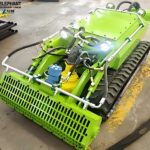
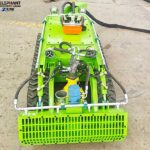
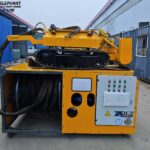
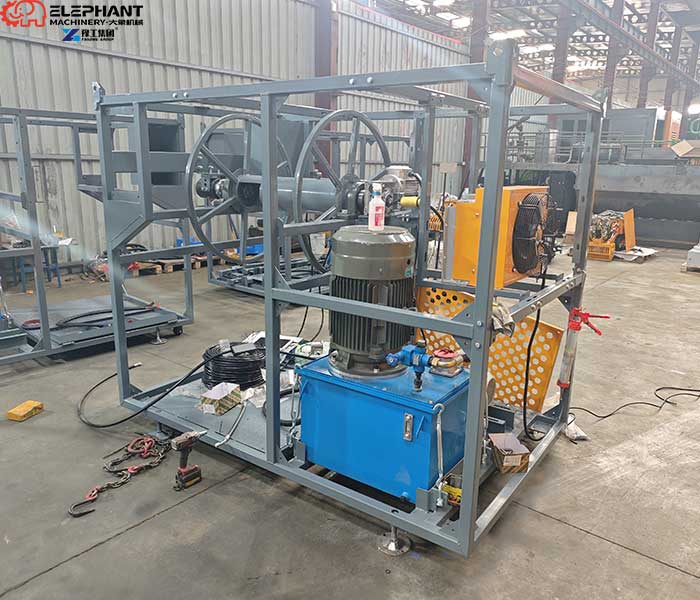
According to the project requirements, we proposed a customized remote controlled dredging robot solution.
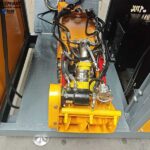
The system included:
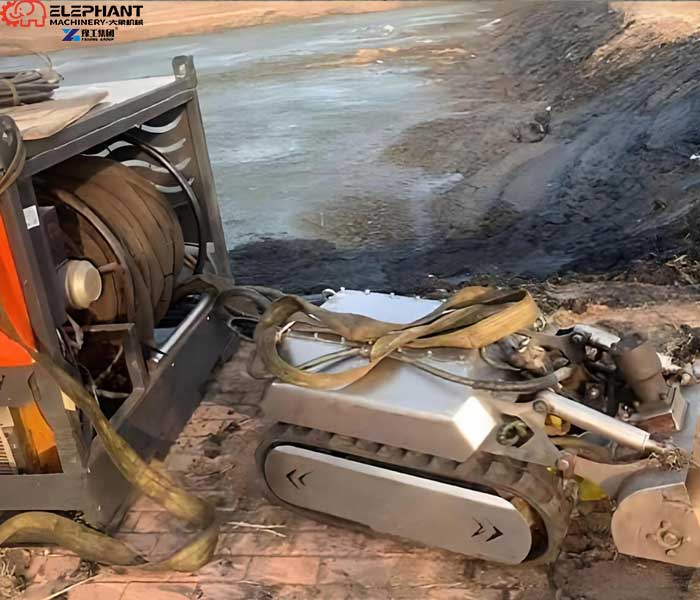
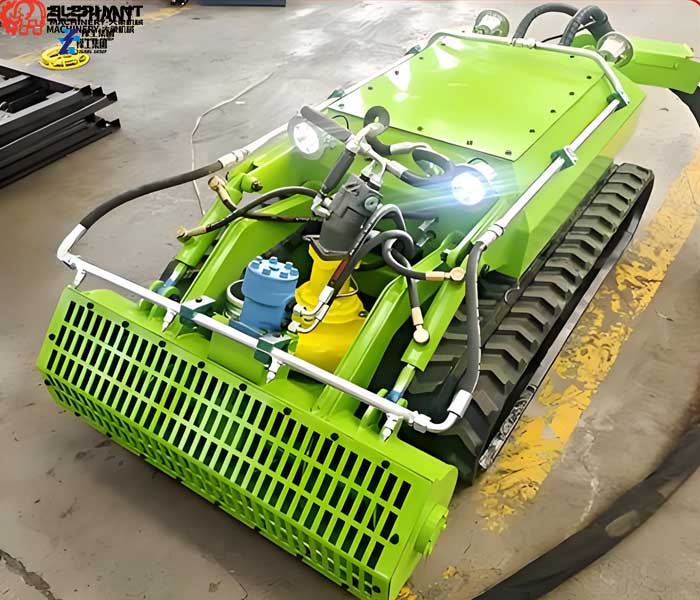
- Remote-controlled dredging robot with rubber crawler tracks
- Slurry suction system
- High-efficiency slurry pump
- Long-distance discharge pipeline
- Remote control operation system
The robot is designed to loosen and remove deposited sludge from the bottom of the tailings pond and transport the slurry through pipelines for further treatment or disposal.
Rubber Track and Limit Design for Lined Tailings Pond Protection
To protect the 2mm HDPE liner in the Vietnamese tailings pond, our dredging robot was equipped with a rubber track crawler system and customized limit control design.
Compared with traditional steel tracks, rubber tracks create lower ground pressure and a softer contact surface, effectively reducing the risk of scratching or damaging the HDPE geomembrane liner during sludge removal operations. The crawler design also provides stable traction on soft sludge and muddy pond bottoms.
A customized movement limit system was added to control the robot’s working range and prevent excessive travel on the lined pond surface. This ensures safer operation while maintaining the integrity of the tailings pond lining system.
With the combination of rubber crawler tracks, liner protection design, and remote-controlled operation, the mining sludge removal robot can efficiently remove accumulated sludge from lined tailings ponds without compromising the HDPE liner.
How the Tailings Pond Dredging Robot Works?
1. Remote-Controlled Operation
The operator controls the robot from a safe location without entering the tailings pond area.
Benefits include:
- Reduced worker exposure
- Improved operational safety
- Better control of dredging procedures
This makes the system suitable for hazardous or difficult mining environments.
2. Sludge Loosening and Hydraulic Dredging
Accumulated tailings sludge may become compacted over time.
The robot uses a dredging system to:
- Break up settled sludge
- Mix sediment into pumpable slurry
- Improve removal efficiency
This hydraulic dredging method is suitable for:
- Mining sludge
- Fine tailings
- Sediment deposits
- Mineral processing residues
3. Slurry Pumping and Transportation
After sediment is collected, the slurry is transported through pipelines.
The system can be customized according to:
- Required discharge distance
- Slurry concentration
- Elevation difference
- Site layout
This provides an efficient alternative to traditional manual sludge removal methods.
Project Benefits
After evaluating the project requirements, the customized robotic dredging approach provided several advantages.
Improved Tailings Pond Maintenance Efficiency
The Mining Sludge Removal Robot helps remove accumulated sediment and improve the utilization efficiency of tailings storage facilities.
Reduced Manual Operation Risks
Remote operation reduces the need for workers to enter potentially hazardous tailings pond environments.
Customized Solution Based on Actual Conditions
Instead of applying a standard dredging method, the solution was developed according to:
- HDPE liner specifications
- Sediment conditions
- Pond structure
- Transportation requirements
This approach helps ensure better compatibility between the equipment and the project environment.
Why Choose a Customized Mining Sludge Removal Solution?
Every tailings pond project has different challenges.
Factors such as:
- Tailings composition
- Sediment hardness
- Pond depth
- Liner material
- Working area
can influence equipment selection.
Our engineering team works with customers to evaluate project conditions and develop suitable tailings sediment removal solutions.
For lined tailings ponds, customers are encouraged to provide:
- Geomembrane liner type
- Liner thickness
- Pond drawings
- Sediment information
- Cleaning requirements
Our engineers will review the information and discuss the most suitable dredging approach.
FAQ about Mining Sludge Removal Robot
Can a dredging robot work in a tailings pond with an HDPE liner?
Yes, but the solution needs to be evaluated according to actual site conditions.
Important factors include liner material, thickness, sediment characteristics, and pond structure. Customers should provide detailed project information so engineers can recommend a suitable configuration.
Will the Mining Sludge Removal Robot damage the HDPE liner?
The risk depends on multiple factors, including robot operation conditions, liner specifications, and sediment characteristics.
For lined tailings ponds, the equipment configuration and operation method should be discussed and adjusted according to the specific project requirements.
Why does the dredging robot use rubber crawler tracks for lined tailings ponds?
The dredging robot uses rubber crawler tracks to reduce ground pressure and improve adaptability when operating on lined pond surfaces. Compared with steel tracks, rubber tracks provide a softer contact surface and are more suitable for applications where liner conditions need to be considered.
What information is needed for a tailings pond dredging solution?
Customers can provide:
- Tailings pond size
- Water depth
- Sediment thickness
- Tailings type
- HDPE liner information
- Required sludge transportation distance
Our technical team will evaluate the conditions and provide a customized recommendation.
Conclusion: Customized Tailings Pond Cleaning Solution for Mining Operations
This Vietnam project demonstrates that Mining Sludge Removal Robot solutions require careful evaluation, especially for tailings ponds with HDPE geomembrane liners.
By understanding site conditions, liner specifications, and sediment characteristics, a suitable robotic dredging approach can be developed for efficient tailings sediment removal.
If you have a mining tailings pond requiring sludge removal, please provide your pond conditions, liner information, and sediment details. Our engineers will work with you to discuss a practical and customized dredging solution.