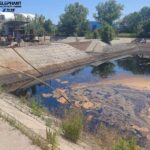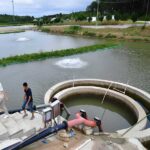
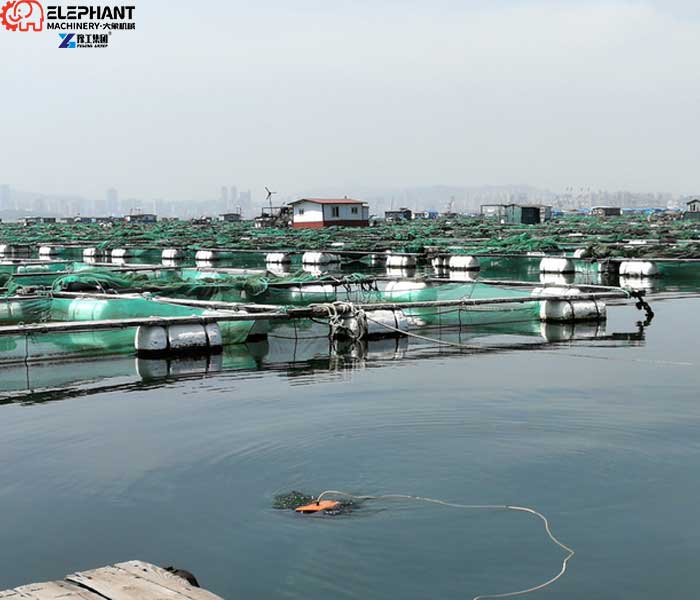
Shrimp ponds are highly sensitive aquaculture environments where water quality directly determines survival rate, growth speed, and disease resistance.
Over time, shrimp ponds accumulate:
- Uneaten feed
- Shrimp feces
- Biofloc sludge
- Organic sediment
- Anaerobic black mud layers
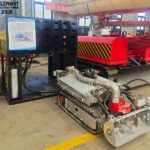
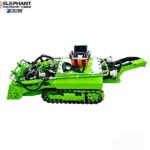
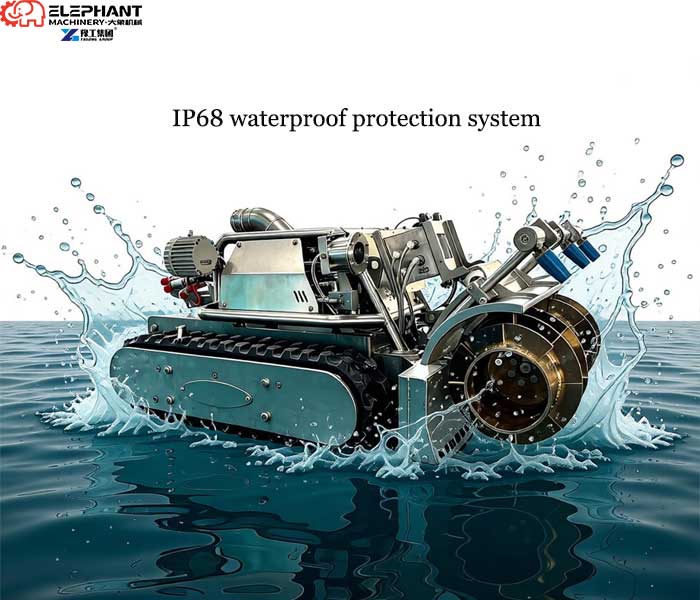
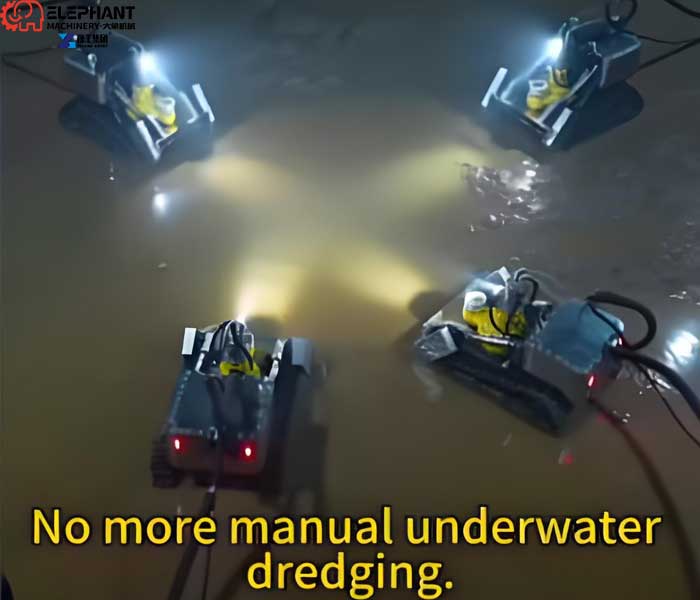
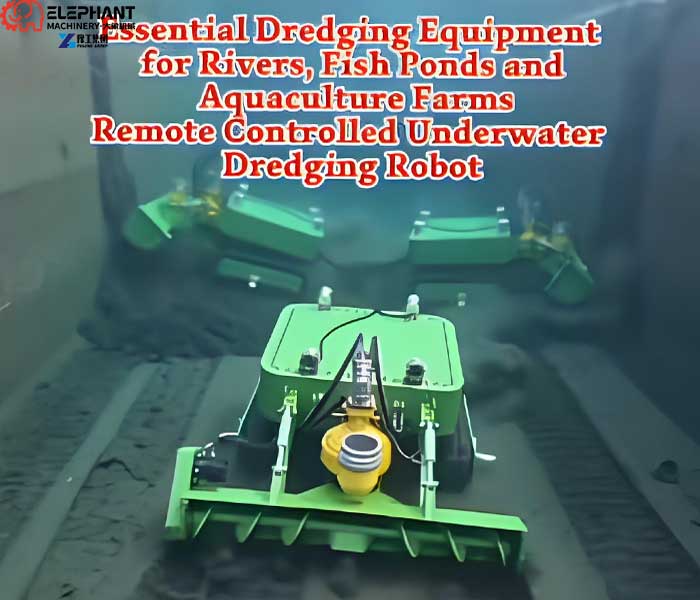
These deposits create toxic conditions such as ammonia spikes, hydrogen sulfide, and Vibrio bacteria growth, which can lead to mass shrimp mortality. The shrimp pond dredging robot is designed to solve this problem by providing precise, low-disturbance sludge removal without draining the pond or stopping production. It uses a crawler-based underwater dredging system to safely remove bottom sludge while maintaining stable water conditions for shrimp farming.
Shrimp Pond Dredging Robot Parameters
| Parameter | YG450 | YG500 | YG600 | YG700 | YG800 | YG900 | YG1200 |
| Robot Dimensions (mm) | ≤1700 × 450 × 450 | 1500 × 500 × 650 | 1500 × 600 × 650 | 1600 × 700 × 650 | 1600 × 850 × 700 | 1650 × 960 × 750 | 1900 × 1200 × 750 |
| Applicable Manhole / Access | ≥600 mm opening | ≥600 mm opening | ≥600 mm opening | ≥700 mm opening | ≥800 mm opening | ≥900 mm opening | Large culvert / open access |
| Dredging Width (mm) | 450 | 500 | 600 | 700 | 800 | 900 | Suitable for large culverts |
| Travel Speed (m/s) | 3–12 | 3–15 | 3–15 | 3–15 | 3–15 | 3–15 | 0–17 m/min |
| Pump Diameter (inch) | 3 | 3 | 3 | 4 | 4 | 4 | 4 or 6 |
| Pump Flow (m³/h) | 50 | 100 | 100 | 160 | 160 | 200 | 250 |
| Pump Head (m) | 0-30 | 0–30 | 0–30 | 0–25 | 0–25 | 0–25 | 0–30 (Horizontal: 100–150 m) |
| Hydraulic Station Dimensions (mm) | 2000 × 1100 × 1500 (recommended) | 2200 × 1200 × 1700 | 2200 × 1200 × 1700 | 2200 × 1200 × 1700 | 2200 × 1200 × 1700 | 2200 × 1200 × 1700 | 2120 × 1240 × 1200 |
| Main Motor Power (kW) | 11–15 kW | 18 | 18 | 22 | 22 | 22 | 45 kW (50 kW) / Diesel 76 kW (123 kW) |
| Hydraulic System Pressure (MPa) | 0–16 | 0–16 | 0–16 | 0–16 | 0–16 | 0–16 | Custom / high-pressure system |
| Particle Size Capacity (mm) | ≤10–20 mm (soft sludge) | 15 | 15 | 40 | 40 | 50 | 0–40 (customizable) |
| Winch Speed (r/min) | 0–10 | 0–10 | 0–10 | 0–10 | 0–10 | 0–10 | 0–10 |
| Pipe Length (m) | 20–30 optional | 30–50 optional | 30–50 optional | 30–50 optional | 30–50 optional | 30–50 optional | 30 m/pack, high-pressure resistant |
| Control System | Wireless Remote Control | Wireless Remote | Wireless Remote | Wireless Remote | Wireless Remote | Wireless Remote | Wireless Remote |
| Lighting System | Underwater LED ×2 | Underwater LED ×2 | Underwater LED ×2 | Underwater LED ×2 | Underwater LED ×2 | Underwater LED ×2 | Underwater LED ×2 |
Why Shrimp Ponds Need Professional Dredging Systems?
Unlike fish ponds, shrimp ponds are:
- Higher density farming systems
- More sensitive to oxygen fluctuations
- More dependent on biofloc balance
- Prone to toxic sludge layers
Main problems caused by sludge buildup:
- Sudden shrimp disease outbreaks (Vibrio, EMS/AHPND)
- High ammonia and nitrite levels
- Oxygen depletion at pond bottom
- Reduced feed conversion rate (FCR increase)
- Slow shrimp growth and uneven size
👉 In shrimp farming, bottom sludge management = survival rate control
Traditional Shrimp Pond Cleaning Methods (Problems)
1. Drain & Dry Method
- Stops production
- High water loss
- Time-consuming restart cycle
2. Manual Cleaning
- Very low efficiency
- High labor cost
- Dangerous working conditions
3. Excavator Cleaning
- Damages HDPE liner
- Cannot control turbidity
- Not suitable for active ponds
👉 These methods are not compatible with modern intensive shrimp farming.
How Shrimp Pond Dredging Robot Works?
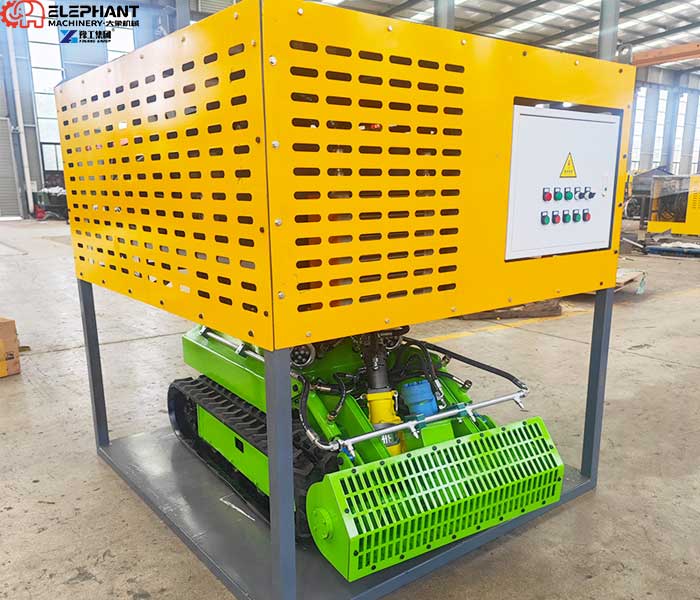
The system integrates four core modules:
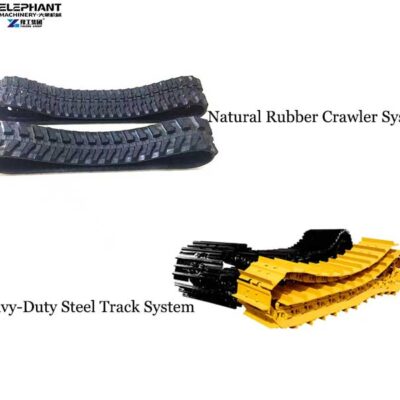
1. Low-Disturbance Crawler System
Rubber tracks ensure stable movement without damaging HDPE liners.
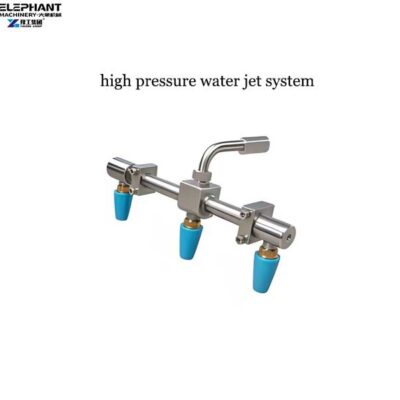
2. High-Precision Sludge Suction System
Removes anaerobic sludge layer directly from pond bottom.
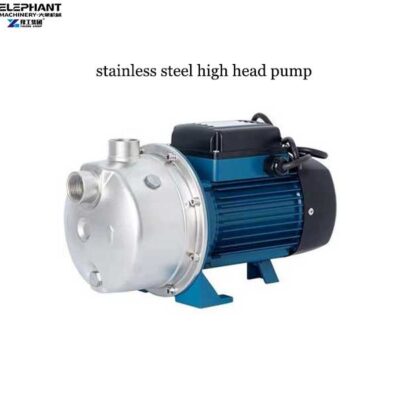
3. Anti-Clogging Pump System
Handles thick organic shrimp sludge and biofloc sediment.
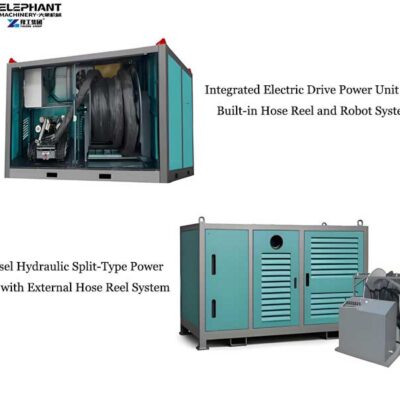
4. Remote Control Operation System
Allows operators to clean ponds safely without entering water.
Key Features of Shrimp Pond Cleaning Robot
1. Biofloc-Safe Cleaning Technology
Maintains water balance while removing harmful sludge layers.
2. High-Turbidity Control & Hydraulic Pumping System
Minimizes disturbance to shrimp during cleaning, while enabling stable long-distance hydraulic sludge transportation.
3. HDPE Liner Protection Crawler
Prevents damage to shrimp pond geomembrane systems.
4. High-Turbidity Control Design
Minimizes disturbance to shrimp during cleaning.
5. Heavy Organic Sludge Pump
Designed for shrimp waste + feed residue mixture.
6. Remote-Control Operation
Reduces labor risk and improves operational safety.
7. Continuous Operation Capability
Suitable for large commercial shrimp farms.
Applications of Shrimp Pond Dredging Robot
- Intensive shrimp farming ponds
- Biofloc shrimp aquaculture systems
- HDPE-lined shrimp ponds
- Earthen shrimp ponds
- Industrial shrimp farming projects
- Coastal shrimp farms
- Inland shrimp farming systems
- Semi-intensive aquaculture systems
ROI (Return on Investment for Shrimp Farms)
Shrimp farms typically suffer high losses due to water quality instability.
Traditional cleaning cost example:
- Labor + drainage cost: $20,000/year
- Production loss due to disease: $15,000/year
- Total loss: $35,000/year
Robot-based cleaning system:
- Operation cost: $4,000/year
- Maintenance: $1,500/year
- Total cost: $5,500/year
💰 Annual savings:
Up to $29,500 per farm
⏱ Payback period:
6–10 months
How to Choose the Right Model of Shrimp Pond Dredging Robot?
1. Pond size
- Small farms: 30–60 m³/h
- Medium farms: 60–120 m³/h
- Large industrial farms: 120–250 m³/h
2. Sludge type
- Biofloc systems → low disturbance model
- Heavy sludge → reinforced suction system
3. Farming system
- Intensive shrimp farms (high density)
- Semi-intensive farms
- Earthen vs HDPE-lined ponds
Why Choose Our Shrimp Pond Dredging Robot?
- Designed specifically for shrimp aquaculture conditions
- Proven sludge removal technology used in industrial dredging
- Compatible with HDPE-lined biofloc systems
- Factory direct supply with OEM customization
- Export experience in Southeast Asia, Middle East, Latin America
FAQ about Shrimp Farming Focused
1. Can it be used in biofloc shrimp ponds?
Yes, it is designed to maintain biofloc balance while removing excess sludge.
2. Will it affect shrimp survival?
No, it uses low-turbidity cleaning technology to avoid disturbing shrimp.
3. Can it remove black anaerobic sludge?
Yes, it is designed for deep bottom toxic sludge removal.
4. Does it require draining the pond?
No, cleaning is performed while the pond is fully operational.
5. Can it work in HDPE-lined shrimp ponds?
Yes, rubber crawler protects pond liners.
6. What type of sludge can it remove?
Shrimp waste, feed residue, organic sediment, and biofloc excess.
7. How often should shrimp ponds be cleaned?
Typically every 1–3 months depending on stocking density.
8. Is it suitable for high-density shrimp farming?
Yes, it is designed specifically for intensive aquaculture systems.
Improve Shrimp Survival Rate with Professional Sludge Removal System
We provide customized Shrimp Pond Cleaning Robots for intensive aquaculture farms worldwide.
👉 Request technical proposal
👉 Get model recommendation for your shrimp pond
👉 Receive quotation & working video within 24 hours