Automated Solution for Difficult Sludge Removal Applications
Sludge accumulation is a common challenge in wastewater treatment plants, biogas facilities, industrial tanks, and sedimentation systems.
Over time, thick sludge, organic deposits, and settled solids can reduce effective storage capacity, affect equipment performance, and increase maintenance costs.
Traditional cleaning methods often require manual labor, tank shutdowns, or large vacuum equipment. These methods become inefficient when dealing with:
- thick and compact sludge
- deep tanks
- confined spaces
- hazardous working environments
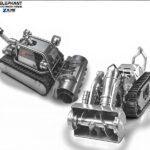
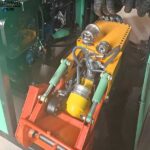
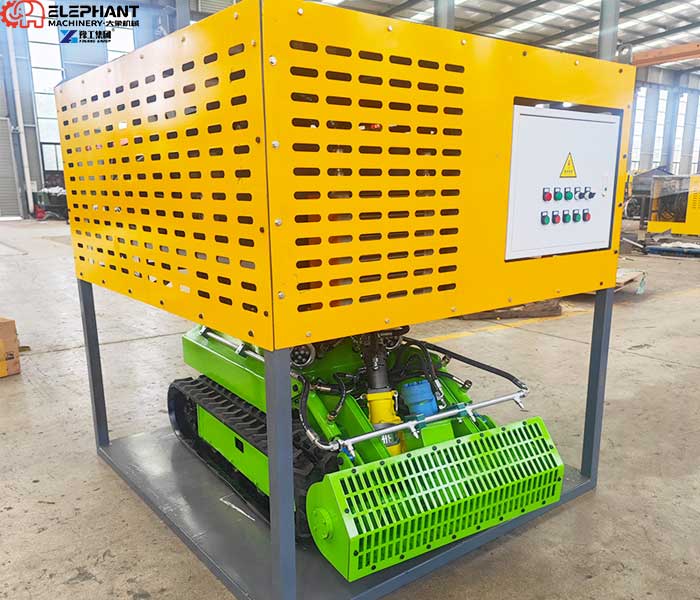
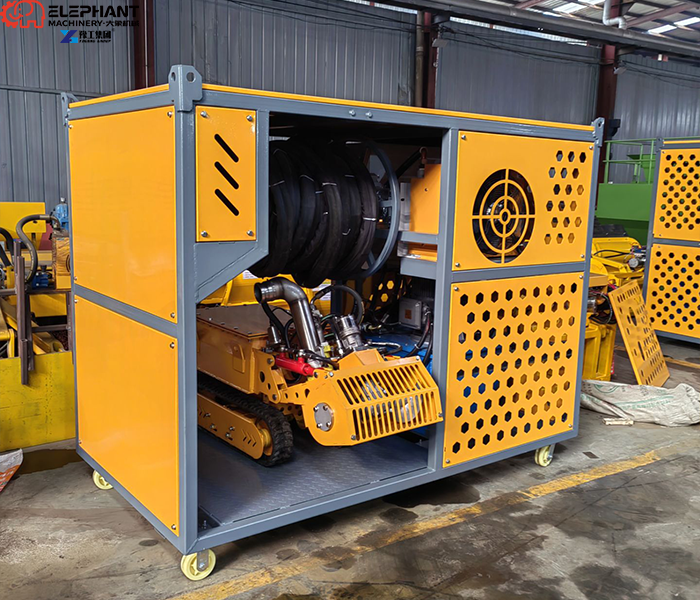
Elephant Machinery developed an advanced sludge removal robot that combines remote operation, crawler mobility, sludge breaking, and high-efficiency pumping technology to provide a safer and more efficient solution for industrial sludge removal.
Sludge Removal Robot Parameters
| Parameter | YG450 | YG500 | YG600 | YG700 | YG800 | YG900 | YG1200 |
| Robot Dimensions (mm) | ≤1700 × 450 × 450 | 1500 × 500 × 650 | 1500 × 600 × 650 | 1600 × 700 × 650 | 1600 × 850 × 700 | 1650 × 960 × 750 | 1900 × 1200 × 750 |
| Applicable Manhole / Access | ≥600 mm opening | ≥600 mm opening | ≥600 mm opening | ≥700 mm opening | ≥800 mm opening | ≥900 mm opening | Large culvert / open access |
| Dredging Width (mm) | 450 | 500 | 600 | 700 | 800 | 900 | Suitable for large culverts |
| Travel Speed (m/s) | 3–12 | 3–15 | 3–15 | 3–15 | 3–15 | 3–15 | 0–17 m/min |
| Pump Diameter (inch) | 3 | 3 | 3 | 4 | 4 | 4 | 4 or 6 |
| Pump Flow (m³/h) | 50 | 100 | 100 | 160 | 160 | 200 | 250 |
| Pump Head (m) | 0-30 | 0–30 | 0–30 | 0–25 | 0–25 | 0–25 | 0–30 (Horizontal: 100–150 m) |
| Hydraulic Station Dimensions (mm) | 2000 × 1100 × 1500 (recommended) | 2200 × 1200 × 1700 | 2200 × 1200 × 1700 | 2200 × 1200 × 1700 | 2200 × 1200 × 1700 | 2200 × 1200 × 1700 | 2120 × 1240 × 1200 |
| Main Motor Power (kW) | 11–15 kW | 18 | 18 | 22 | 22 | 22 | 45 kW (50 kW) / Diesel 76 kW (123 kW) |
| Hydraulic System Pressure (MPa) | 0–16 | 0–16 | 0–16 | 0–16 | 0–16 | 0–16 | Custom / high-pressure system |
| Particle Size Capacity (mm) | ≤10–20 mm (soft sludge) | 15 | 15 | 40 | 40 | 50 | 0–40 (customizable) |
| Winch Speed (r/min) | 0–10 | 0–10 | 0–10 | 0–10 | 0–10 | 0–10 | 0–10 |
| Pipe Length (m) | 20–30 optional | 30–50 optional | 30–50 optional | 30–50 optional | 30–50 optional | 30–50 optional | 30 m/pack, high-pressure resistant |
| Control System | Wireless Remote Control | Wireless Remote | Wireless Remote | Wireless Remote | Wireless Remote | Wireless Remote | Wireless Remote |
| Lighting System | Underwater LED ×2 | Underwater LED ×2 | Underwater LED ×2 | Underwater LED ×2 | Underwater LED ×2 | Underwater LED ×2 | Underwater LED ×2 |
Why Is Sludge Cleaning Difficult?
1. Thick Sludge Accumulation Reduces Tank Efficiency
Many industrial tanks continuously collect sediment during operation.
Typical deposits include:
- organic sludge
- biological solids
- sand particles
- industrial sediment
- wastewater residues
As sludge accumulates, it gradually reduces the usable volume of tanks and affects normal operation.
For facilities such as:
- wastewater treatment plants
- anaerobic digesters
- industrial settling tanks
regular sludge removal is necessary to maintain stable performance.
2. Confined Space Cleaning Creates Safety Risks
Many sludge storage tanks and digesters have limited access openings.
Traditional manual cleaning requires workers to enter these confined spaces, which may involve:
- poor ventilation
- toxic gases
- slippery surfaces
- difficult rescue conditions
A remote-controlled sludge removal robot eliminates the need for operators to directly enter dangerous areas.
The operator can monitor and control the robot from a safe position while the machine performs sludge removal inside the tank.
3. Ordinary Pumps Cannot Handle Heavy Settled Sludge
One common problem in sludge removal projects is that ordinary pumps are designed for liquid transfer rather than compact sediment.
Thick sludge may cause:
- suction failure
- pipeline blockage
- low cleaning efficiency
A complete sludge cleaning system requires both:
- sludge loosening capability
- powerful transportation capability
This is why Elephant Machinery integrates a mechanical sludge breaking system with a high-head pumping system.
How Does the Sludge Removal Robot Work?

The Elephant Machinery sludge cleaning robot uses a complete working process:
Crawler Movement
↓
Sludge Breaking & Mixing
↓
High-Efficiency Suction
↓
Pipeline Transportation
↓
External Sludge Discharge
Each component is designed to solve a specific sludge cleaning challenge.
Key Features of Elephant Sludge Removal Robot
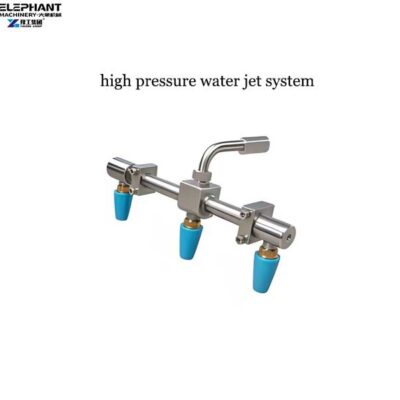
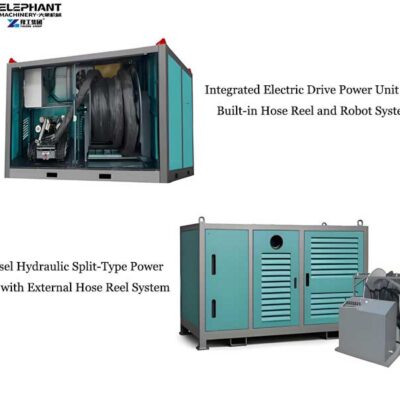
1.Remote-Controlled Operation for Safer Cleaning
Safety is one of the biggest advantages of robotic sludge cleaning.
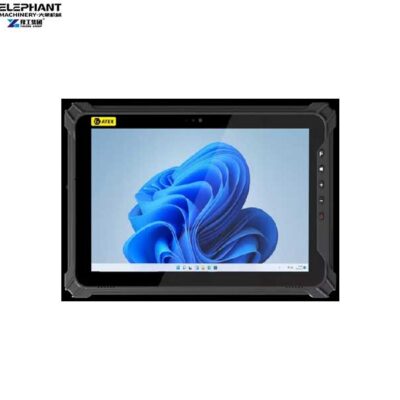
The operator controls the machine remotely without entering the tank.
Benefits include:
- Reduced confined-space risks
- Lower labor requirements
- Improved maintenance safety
- Continuous operation monitoring
This makes the system suitable for:
- wastewater tanks
- digesters
- industrial reservoirs
- underground tanks
2.Powerful Auger System for Thick Sludge Breaking
Unlike traditional suction equipment, the sludge cleaning robot is equipped with a front auger system.
The auger rotates to:
- break compact sludge layers
- mix settled material
- improve suction performance
- reduce pump blockage risks
This design is especially effective for handling:
- high-density sludge
- aged sediment
- sticky organic deposits
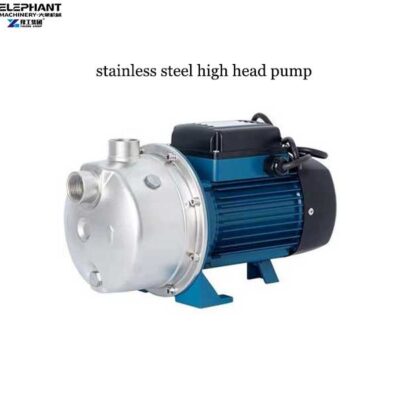
3.High-Head Pumping System for Long-Distance Sludge Transport
After sludge is loosened, the integrated pumping system transfers the material through discharge pipelines.
The system can be customized according to project requirements, including:
- pump capacity
- discharge distance
- sludge characteristics
- tank structure
Compared with ordinary pumps, the integrated system provides better performance when removing heavy settled sludge.
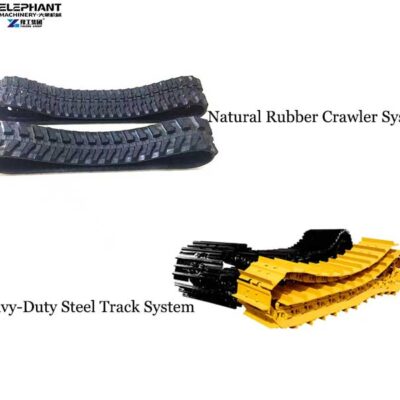
4.Crawler Design for Stable Movement on Soft Sediment
Tank bottoms and sludge environments often have unstable surfaces.
The crawler structure provides:
- strong ground contact
- stable movement
- reduced sinking risk
- better operation on muddy surfaces
The robot can move across uneven sludge layers while maintaining stable cleaning performance.
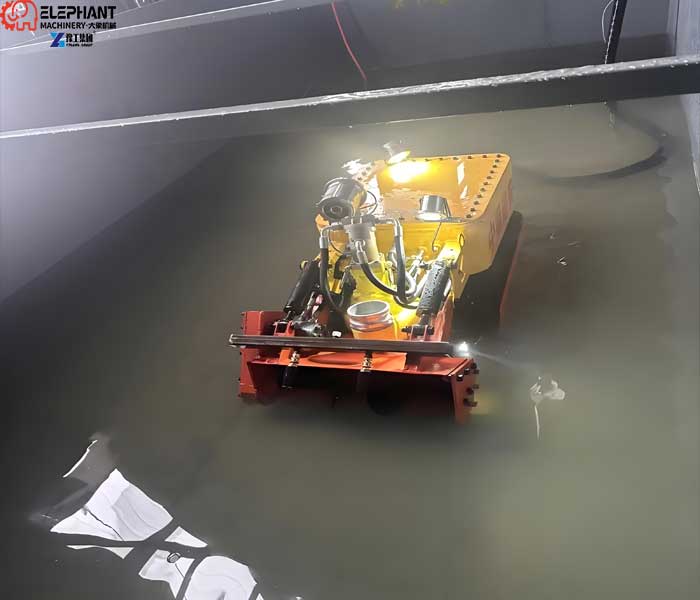
5.Waterproof Structure for Submerged Operation
Many sludge cleaning applications require equipment to work underwater.
The robot adopts a sealed structure designed for submerged environments.
Features include:
- waterproof electrical components
- protected drive system
- durable mechanical structure
- stable underwater operation
This allows the machine to work inside:
- sludge tanks
- digesters
- sedimentation basins


Applications of Sludge Removal Robot
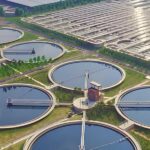
1. Wastewater Treatment Sludge Removal
Wastewater treatment facilities often contain:
- sedimentation tanks
- sludge storage tanks
- treatment basins
Accumulated sludge can affect treatment efficiency and increase maintenance requirements.
The robotic cleaning system helps remove settled sludge while reducing manual cleaning operations.
Suitable for:
- municipal wastewater plants
- industrial wastewater facilities
- sewage treatment systems
2. Industrial Wastewater Sludge Removal
Many industrial facilities generate wastewater containing high concentrations of organic and inorganic sludge.
Over time, sludge accumulates in:
industrial wastewater tanks
sludge storage tanks
settling basins
process tanks
The sludge removal robot helps extract thick sludge deposits without requiring complete tank shutdown.
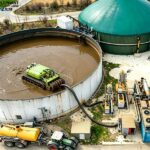
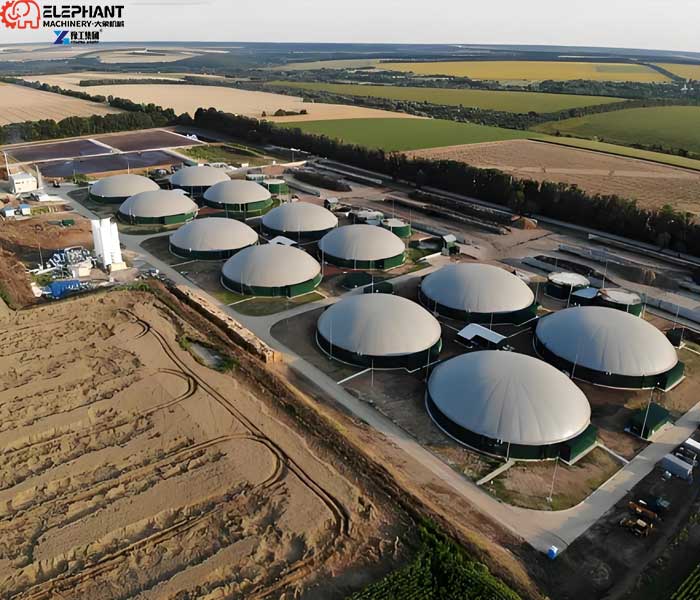
3. Biogas Plant Sludge Removal
Anaerobic digesters in biogas plants continuously process organic materials.
During long-term operation, heavy sediment may accumulate at the bottom of digesters and reduce effective capacity.
The sludge cleaning robot provides a safer solution for:
- anaerobic digester cleaning
- biogas tank sludge removal
- digestate tank cleaning
By removing settled sludge without manual entry, operators can improve maintenance efficiency and reduce downtime.
Related case: Biogas Plant Sludge Removal Project in Denmark
4. Oil Tank and Confined Space Sludge Removal
Oil storage and industrial tanks may accumulate heavy sludge deposits.
Manual cleaning is often expensive and requires strict safety procedures.
A remote-controlled sludge removal robot can reduce human exposure in difficult environments.

Sludge Removal Robot vs Traditional Cleaning Methods
| Manual cleaning | Safety risks, high labor cost | Remote operation without tank entry |
| Vacuum truck | Limited suction for compact sludge | Auger breaks and loosens sludge |
| Drain and excavation | Long downtime | Cleaning without full shutdown |
| Ordinary pump | Easy blockage | Integrated breaking and pumping system |
Why Choose Elephant Machinery Sludge Removal Robot?
1.Customized Dredging Solutions
Different sludge environments require different configurations.
Elephant Machinery provides customization based on:
- tank dimensions
- sludge thickness
- discharge distance
- working environment
2.Factory Direct Manufacturing
As a professional equipment manufacturer, Elephant Machinery provides:
- direct factory supply
- engineering support
- customized design
- international service
3.Designed for Difficult Sludge Problems
Our robotic cleaning technology is developed for challenging applications where traditional equipment cannot work efficiently.


Technical Specifications
| Operation Mode | Remote Control |
| Working Environment | Underwater / Sludge Environment |
| Movement System | Crawler Type |
| Cleaning Method | Auger Breaking + Pumping |
| Pump Capacity | Customized |
| Discharge Distance | Customized |
| Application | Tanks, Digesters, Wastewater Facilities, etc. |
Sludge Removal Robot in Elephant Dredging
Industrial sludge accumulation is a long-term challenge for wastewater facilities, biogas plants, and industrial tanks.
Traditional cleaning methods often involve high labor costs, safety risks, and long maintenance periods.
Elephant Machinery’s sludge removal robot provides a safer and more efficient solution through remote operation, powerful sludge breaking, and high-performance pumping technology.
Whether you need industrial sludge removal, anaerobic digester cleaning, or confined space tank cleaning, our team can provide a customized robotic solution.