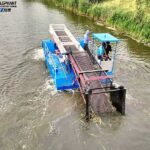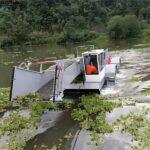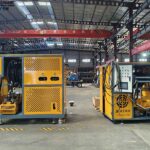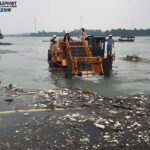
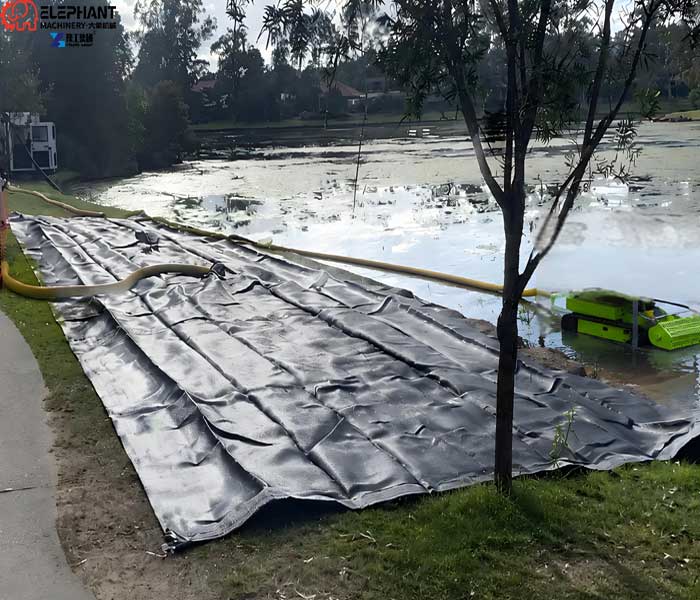
A few months ago, I received an inquiry from a South Korean environmental contractor through Google. After understanding the customer’s initial requirements, I found that their project was not a simple lake cleaning task but a challenging sediment removal from lakes project.
The customer was responsible for maintaining a public landscape lake in South Korea. Due to years of sediment accumulation, the lake had experienced serious problems, including reduced water depth, poor water circulation, unpleasant odors, and declining water quality.
After communicating with the customer in detail, I arranged our dredging robot product manager to analyze the working environment, sludge characteristics, and cleaning requirements. Based on the customer’s actual situation, our engineering team designed a customized robotic lake cleaner solution that perfectly solved their lake dredging problems.
Robotic Lake Cleaner Parameters
| Parameter | YG450 | YG500 | YG600 | YG700 | YG800 | YG900 | YG1200 |
| Robot Dimensions (mm) | ≤1700 × 450 × 450 | 1500 × 500 × 650 | 1500 × 600 × 650 | 1600 × 700 × 650 | 1600 × 850 × 700 | 1650 × 960 × 750 | 1900 × 1200 × 750 |
| Applicable Manhole / Access | ≥600 mm opening | ≥600 mm opening | ≥600 mm opening | ≥700 mm opening | ≥800 mm opening | ≥900 mm opening | Large culvert / open access |
| Dredging Width (mm) | 450 | 500 | 600 | 700 | 800 | 900 | Suitable for large culverts |
| Travel Speed (m/s) | 3–12 | 3–15 | 3–15 | 3–15 | 3–15 | 3–15 | 0–17 m/min |
| Pump Diameter (inch) | 3 | 3 | 3 | 4 | 4 | 4 | 4 or 6 |
| Pump Flow (m³/h) | 50 | 100 | 100 | 160 | 160 | 200 | 250 |
| Pump Head (m) | 0-30 | 0–30 | 0–30 | 0–25 | 0–25 | 0–25 | 0–30 (Horizontal: 100–150 m) |
| Hydraulic Station Dimensions (mm) | 2000 × 1100 × 1500 (recommended) | 2200 × 1200 × 1700 | 2200 × 1200 × 1700 | 2200 × 1200 × 1700 | 2200 × 1200 × 1700 | 2200 × 1200 × 1700 | 2120 × 1240 × 1200 |
| Main Motor Power (kW) | 11–15 kW | 18 | 18 | 22 | 22 | 22 | 45 kW (50 kW) / Diesel 76 kW (123 kW) |
| Hydraulic System Pressure (MPa) | 0–16 | 0–16 | 0–16 | 0–16 | 0–16 | 0–16 | Custom / high-pressure system |
| Particle Size Capacity (mm) | ≤10–20 mm (soft sludge) | 15 | 15 | 40 | 40 | 50 | 0–40 (customizable) |
| Winch Speed (r/min) | 0–10 | 0–10 | 0–10 | 0–10 | 0–10 | 0–10 | 0–10 |
| Pipe Length (m) | 20–30 optional | 30–50 optional | 30–50 optional | 30–50 optional | 30–50 optional | 30–50 optional | 30 m/pack, high-pressure resistant |
| Control System | Wireless Remote Control | Wireless Remote | Wireless Remote | Wireless Remote | Wireless Remote | Wireless Remote | Wireless Remote |
| Lighting System | Underwater LED ×2 | Underwater LED ×2 | Underwater LED ×2 | Underwater LED ×2 | Underwater LED ×2 | Underwater LED ×2 | Underwater LED ×2 |
Get the Right Model for Your Project

Project Challenges: Traditional Lake Cleaning Methods Could Not Meet Requirements
Before contacting Elephant Machinery, the customer had already considered several traditional cleaning methods. However, each method had obvious limitations.
1. Thick sludge and sediment were difficult to remove
The lake had accumulated a large amount of soft sludge mixed with organic matter, mud, and fine sediment over many years.
The customer explained:
“The sludge layer was very sticky. Ordinary pumps could not continuously remove the sediment because clogging happened frequently.”
Traditional suction equipment often struggles with high-density sludge because the material cannot flow smoothly through the pipeline.
The customer needed a machine that could effectively break, mix, and transport thick lake sludge instead of simply pumping water.
2. The lake environment could not be damaged during operation
Because the project was located in a public area, the customer had strict requirements:
- No large-scale excavation
- No draining of the lake
- Minimal disturbance to aquatic environments
- Low noise operation
Using excavators or large dredging vessels would have damaged the surrounding landscape and increased project costs.
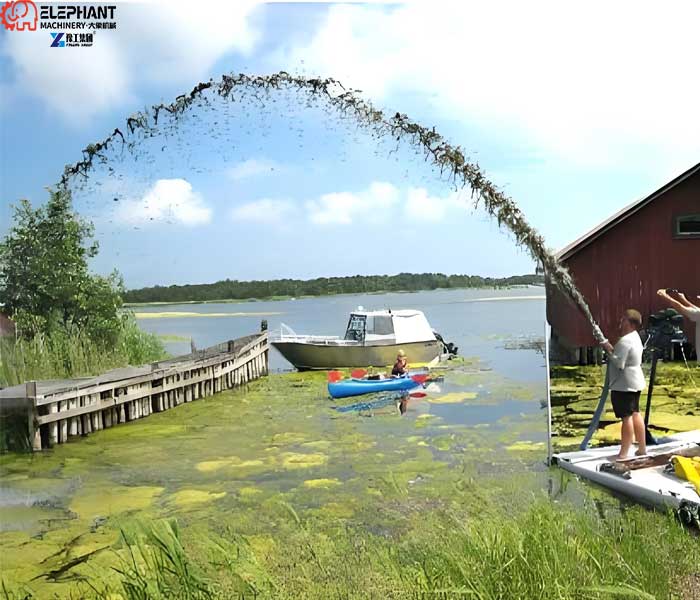
The customer was looking for an environmentally friendly lake dredging equipment solution that could operate directly on the water surface.
3. Safety risks for workers
Traditional lake cleaning usually requires workers to operate boats or enter dangerous areas manually.
The customer was concerned about:
- Slippery lake conditions
- Unstable sediment areas
- Long working hours near water
They wanted an unmanned solution that could reduce labor risks.
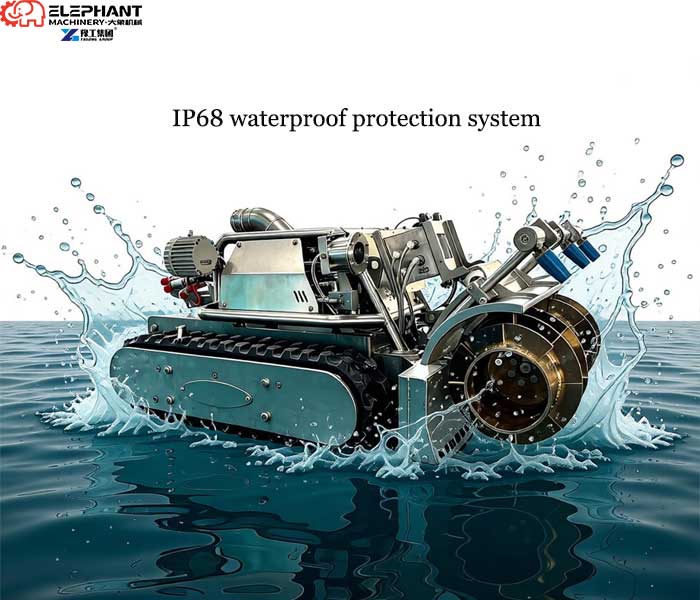

Elephant Machinery Customized Robotic Lake Cleaner Solution
After reviewing the customer’s requirements, Elephant Machinery’s product manager developed a customized solution based on the working conditions.
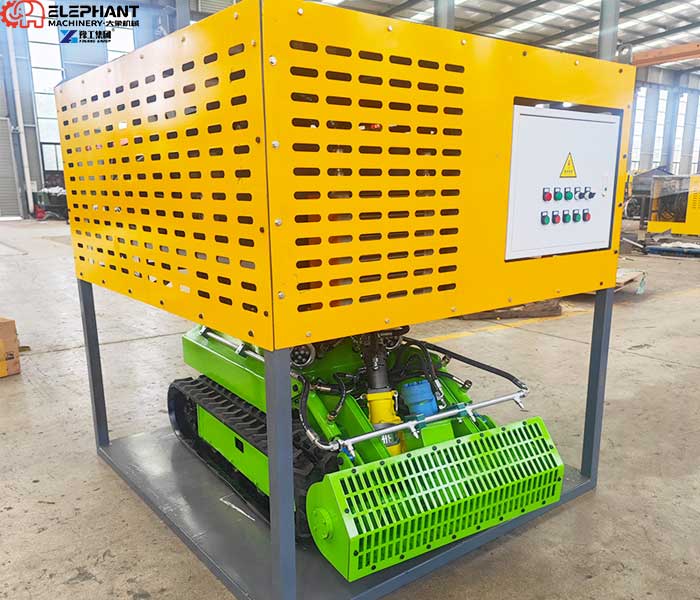
The recommended equipment was a crawler-type robotic lake cleaner designed for underwater sludge removal and environmental dredging projects.
Solution 1: Powerful Sludge Breaking System for Sticky Sediment
For the customer’s problem of thick and compact sludge, our engineers equipped the machine with a hydraulic-driven auger system.
During operation:
Breaking → Mixing → Suction → Transportation
The rotating auger first breaks hard sediment and mixes it evenly with water. Then the high-efficiency slurry pump continuously transfers the sludge through the pipeline.
This design solved the customer’s biggest concern — frequent clogging during sludge removal.
Compared with traditional pumps, the underwater dredging robot can handle:
- Thick sludge
- Organic sediment
- Lake bottom deposits
- Mud-water mixtures
This greatly improved cleaning efficiency.
Solution 2: Remote Control Operation Without Entering the Lake
To improve safety, Elephant Machinery equipped the robotic lake cleaner with a remote-control system.
Operators can control the machine from the shore and monitor the cleaning process without entering the water.
Benefits include:
- Reduced labor requirements
- Safer operation
- Better visibility during cleaning
- Flexible movement in different lake areas
For this Korean project, the customer especially appreciated this feature because the lake was open to the public.
They could perform lake cleaning work without affecting visitors.
Solution 3: Crawler Design for Stable Movement on Soft Lake Bottom
One major challenge of lake dredging is that ordinary equipment can easily sink, lose mobility, or disturb the lake bottom when operating on soft sediment.
For this South Korea lake cleaning project, our product manager selected a rubber crawler track design based on the customer’s working conditions.
Compared with traditional wheeled equipment, the rubber crawler system provides a larger contact area with the lake bottom, reducing ground pressure and allowing the robotic lake cleaner to move smoothly on soft and muddy surfaces.
The rubber crawler tracks provide:
- Low ground pressure to prevent sinking in soft sludge areas
- Stable movement on muddy lake bottoms with excellent traction
- Better adaptability to uneven sediment layers
- Reduced damage to the surrounding lake environment
During actual operation, the machine moved smoothly across areas with different sediment thicknesses, maintaining stable cleaning performance while minimizing disturbance to the lake bottom.s.
Solution 4: Customized Pumping and Pipeline Configuration
Based on the customer’s lake size and transportation distance, Elephant Machinery customized the pumping system.
The solution included:
- Suitable pump capacity selection
- Proper discharge pipeline length
- Optimized sludge transportation distance
This ensured continuous operation without unnecessary energy consumption.
The customer did not need oversized equipment, which helped reduce investment and operating costs.
Customer Feedback After Using Elephant Machinery Robotic Lake Cleaner
After receiving the equipment, the Korean customer completed installation and started trial operation.
During the first cleaning project, the customer shared their actual experience with us.
They mentioned that the biggest improvement was the continuous sludge removal capability.
Previously, they needed to stop frequently because the sludge blocked the pumping system. However, after using Elephant Machinery’s lake sludge removal robot, the machine could continuously work on the lake bottom.
The customer said:
“The machine performed better than we expected. The sludge was removed smoothly, and the remote control operation made the whole process much safer.”
They were also impressed by the mobility of the crawler system.
According to their feedback:
- The robot moved steadily even in muddy areas.
- Operators could control the cleaning direction easily.
- The lake surface remained clean without large construction disturbance.
The customer added that the equipment helped them complete the project with fewer workers compared with traditional cleaning methods.


Why Choose Elephant Machinery Robotic Lake Cleaner?
This South Korea project demonstrates how modern robotic technology can improve lake maintenance efficiency.
Compared with traditional dredging methods, Elephant Machinery’s robotic lake cleaner provides:
1.Safe Unmanned Operation
Remote control technology allows operators to clean lakes without entering dangerous environments.
2.Efficient Sludge Removal
The combination of auger mixing technology and powerful pumping systems allows continuous removal of thick sediment.
3.Environment-Friendly Cleaning
No need to drain the lake or use large excavation equipment, reducing environmental impact.
4.Customized Engineering Support
Every lake has different conditions. Elephant Machinery provides customized solutions according to:
- Sludge type
- Lake depth
- Working area
- Transportation distance
- Cleaning requirements
Conclusion: A Reliable Robotic Solution for Modern Lake Cleaning
For this South Korean customer, the biggest challenge was not simply removing sludge, but finding a safe, efficient, and environmentally friendly method.
Through customized engineering design, Elephant Machinery provided a complete robotic lake cleaner solution that solved problems related to sticky sludge, difficult access areas, and worker safety.
Today, more environmental contractors are choosing intelligent dredging equipment to improve efficiency and reduce operational risks.
Elephant Machinery will continue developing advanced remote controlled dredging robots and environmental dredging solutions for lakes, rivers, reservoirs, and wastewater systems worldwide.