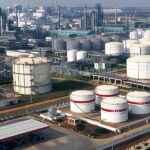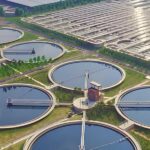


Water storage tanks are essential infrastructure for municipal water supply, industrial processing, fire protection systems, and commercial buildings. However, even in clean water systems, sediment, rust particles, and biological growth gradually accumulate over time.
Traditional cleaning methods often require confined space entry, tank drainage, and manual sludge removal, which increases safety risks and operational downtime.
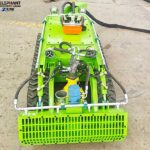
The water tank cleaning robot provides a safe, efficient, and no-man-entry solution for removing sludge and deposits from water tanks while maintaining system integrity and water quality.
Water Tank Cleaning Robot Parameters
| Parameter | YG450 | YG500 | YG600 | YG700 | YG800 | YG900 | YG1200 |
| Robot Dimensions (mm) | ≤1700 × 450 × 450 | 1500 × 500 × 650 | 1500 × 600 × 650 | 1600 × 700 × 650 | 1600 × 850 × 700 | 1650 × 960 × 750 | 1900 × 1200 × 750 |
| Applicable Manhole / Access | ≥600 mm opening | ≥600 mm opening | ≥600 mm opening | ≥700 mm opening | ≥800 mm opening | ≥900 mm opening | Large culvert / open access |
| Dredging Width (mm) | 450 | 500 | 600 | 700 | 800 | 900 | Suitable for large culverts |
| Travel Speed (m/s) | 3–12 | 3–15 | 3–15 | 3–15 | 3–15 | 3–15 | 0–17 m/min |
| Pump Diameter (inch) | 3 | 3 | 3 | 4 | 4 | 4 | 4 or 6 |
| Pump Flow (m³/h) | 50 | 100 | 100 | 160 | 160 | 200 | 250 |
| Pump Head (m) | 0-30 | 0–30 | 0–30 | 0–25 | 0–25 | 0–25 | 0–30 (Horizontal: 100–150 m) |
| Hydraulic Station Dimensions (mm) | 2000 × 1100 × 1500 (recommended) | 2200 × 1200 × 1700 | 2200 × 1200 × 1700 | 2200 × 1200 × 1700 | 2200 × 1200 × 1700 | 2200 × 1200 × 1700 | 2120 × 1240 × 1200 |
| Main Motor Power (kW) | 11–15 kW | 18 | 18 | 22 | 22 | 22 | 45 kW (50 kW) / Diesel 76 kW (123 kW) |
| Hydraulic System Pressure (MPa) | 0–16 | 0–16 | 0–16 | 0–16 | 0–16 | 0–16 | Custom / high-pressure system |
| Particle Size Capacity (mm) | ≤10–20 mm (soft sludge) | 15 | 15 | 40 | 40 | 50 | 0–40 (customizable) |
| Winch Speed (r/min) | 0–10 | 0–10 | 0–10 | 0–10 | 0–10 | 0–10 | 0–10 |
| Pipe Length (m) | 20–30 optional | 30–50 optional | 30–50 optional | 30–50 optional | 30–50 optional | 30–50 optional | 30 m/pack, high-pressure resistant |
| Control System | Wireless Remote Control | Wireless Remote | Wireless Remote | Wireless Remote | Wireless Remote | Wireless Remote | Wireless Remote |
| Lighting System | Underwater LED ×2 | Underwater LED ×2 | Underwater LED ×2 | Underwater LED ×2 | Underwater LED ×2 | Underwater LED ×2 | Underwater LED ×2 |
Why Water Tank Cleaning Is a Critical Maintenance Requirement?
Even in sealed or well-maintained water storage systems, contamination naturally occurs due to long-term water stagnation and material degradation.
Common issues include:
- Sediment and fine particle accumulation
- Rust and corrosion from internal tank walls
- Biofilm and algae formation
- Sludge buildup at tank bottom
If not properly managed, these issues may lead to:
- Reduced water quality and clarity
- Blockage of pumps and pipelines
- Increased maintenance frequency
- Health and safety risks in potable water systems
- Reduced effective storage capacity
Regular cleaning is therefore essential to ensure stable water supply performance.
What Is a Water Tank Cleaning Robot?
A water tank cleaning robot is a remote-controlled sludge removal system designed for cleaning water storage tanks without requiring human entry or complete tank drainage.
It is specifically engineered for confined or partially confined water environments, where safety and water quality must be strictly maintained.
Unlike manual cleaning, the robot performs underwater sludge removal while keeping the tank operational or minimally disrupted.
Core Functions:
- Sludge and sediment removal from tank bottom
- Low-turbidity cleaning to protect water quality
- Remote-controlled operation from outside the tank
- Continuous sludge extraction via pipeline system
Key Challenges in Water Tank Cleaning Applications
Water tank environments present unique cleaning challenges compared to wastewater or industrial sludge systems.
1. Water Quality Sensitivity
Cleaning must avoid secondary contamination, especially in drinking water systems.
2. Limited Access Points
Many tanks only have small manholes or restricted entry openings.
3. Confined Space Risks
Oxygen deficiency and enclosed structures make manual entry hazardous.
4. Need for Minimal Downtime
Water supply systems often cannot afford long shutdown periods.
These constraints make traditional cleaning methods inefficient and risky.
How the Water Tank Cleaning Robot Works?

The system is designed for controlled underwater operation with stable sludge extraction capability.
Working Process:
Crawler Deployment System
↓
Stable Movement on Tank Bottom
↓
Low-Turbulence Sludge Agitation
↓
Hydraulic / Mechanical Sludge Loosening
↓
High-Efficiency Suction Pump Extraction
↓
External Pipeline Discharge
System Explanation:
- Crawler System ensures stable movement on slippery or sediment-covered surfaces
- Agitation System loosens settled sludge without disturbing water quality excessively
- Suction System extracts sludge efficiently without manual handling
- Discharge Pipeline transfers sludge outside the tank for safe disposal
This enables continuous cleaning without full drainage in many cases.
Custom Engineering for Water Tank Cleaning Robots
Because water tanks vary widely in structure and usage, customization is critical to performance.
Our water tank cleaning robot systems can be configured based on:
Tank Structure
- Underground water tanks
- Elevated water storage tanks
- Industrial water reservoirs
Sludge Condition
- Light sediment
- Rust particles
- Biological sludge and algae layers
Water Sensitivity Level
- Drinking water systems (low-turbidity requirement)
- Industrial water systems (standard cleaning)
Operational Constraints
- Limited manhole access
- Narrow tank entrances
- Partial water presence operation
Discharge Requirements
- Short-distance drainage
- Long-distance sludge pumping systems
Key Advantages of Water Tank Cleaning Robot
The system provides a safer and more controlled alternative to manual tank cleaning.
1. No-Man-Entry Operation
Eliminates confined space entry risks and improves worker safety.
2. Low Turbidity Cleaning
Designed to minimize disturbance to water quality during operation.
3. Minimal System Downtime
Can operate with partial water levels in many cases.
4. High Efficiency Sludge Removal
Effectively removes sediment, rust, and biofilm layers.
5. Suitable for Sensitive Water Systems
Ideal for potable water storage and regulated water supply systems.
Applications of Water Tank Cleaning Robot

This system is designed specifically for water storage environments where cleanliness and safety are critical.
- Municipal drinking water storage tanks
- Industrial clean water reservoirs
- Fire protection water tanks
- Commercial building water systems
- Hospital and public facility water storage
- Food-grade water storage systems
Each application requires controlled cleaning to maintain water safety standards.
Why Choose Our Water Tank Cleaning Robot Solution?
We provide engineered cleaning systems designed specifically for water tank environments with high safety and hygiene requirements.
- Customized crawler and pump configurations
- Low-turbidity cleaning technology
- Suitable for confined space operation
- OEM/ODM customization available
- Export experience for municipal and industrial projects
Our focus is not just cleaning performance, but also water safety protection and operational reliability.
FAQ about Water Tank Cleaning Robot
Can the robot clean drinking water tanks safely?
Yes. The system is designed for low-turbidity cleaning to minimize water contamination.
Does the tank need to be fully drained?
Not always. In many cases, partial water levels are sufficient for operation.
Is confined space entry required?
No. The system is designed for no-man-entry operation.
Can it remove sludge and rust deposits?
Yes. It is designed to handle sediment, rust particles, and biological sludge.
How is sludge removed from the tank?
Sludge is extracted through a suction system and discharged via external pipelines.
Can it work in small or narrow tanks?
Yes. The system can be customized for limited access openings.
Is it suitable for municipal water systems?
Yes. It is widely used in municipal and industrial water storage applications.
Conclusion
Water tank maintenance is a critical requirement for ensuring water quality, system reliability, and long-term operational safety. Traditional cleaning methods are increasingly limited by safety risks and operational disruption.
The water tank cleaning robot provides a modern, controlled, and efficient solution for removing sludge and sediment without confined space entry, making it ideal for municipal, industrial, and commercial water storage systems.
By adopting a customized robotic cleaning solution, facilities can significantly improve safety, reduce downtime, and maintain consistent water quality standards.