Industry Challenges in Wastewater Sludge Management

Municipal wastewater treatment plants, sewage pumping stations (within treatment facilities), clarifiers, and sludge tanks operate under continuous hydraulic load and long-term sediment accumulation.
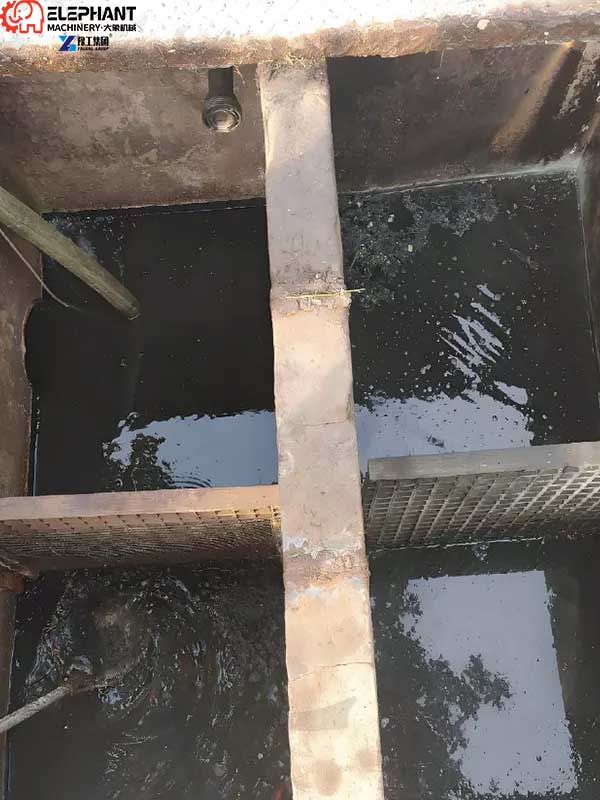
Over time, sludge, sand, and suspended solids gradually build up inside sedimentation tanks, clarifiers, and treatment basins, leading to reduced treatment efficiency, equipment overload, and unstable water quality performance. Some wastewater tanks may contain unpleasant odors and hazardous gases generated during sludge decomposition, making manual cleaning operations challenging and unsafe.
Traditional cleaning methods often require tank shutdown, manual entry, or heavy equipment, creating safety risks and operational disruption.
Elephant Machinery provides remote-controlled dredging robot solutions that enable continuous sludge removal without draining tanks or interrupting wastewater treatment processes.

Key challenges include:
- Difficulty handling high-density sludge layers
- Sludge accumulation in wastewater treatment plants
- Reduced efficiency of clarifiers and sedimentation tanks
- High-risk confined tank environments
- Shutdown-based cleaning increasing operational cost
Why Traditional Cleaning Methods Fail?
Conventional cleaning methods such as manual entry, vacuum trucks, or shutdown dredging suffer from major limitations:
- Requires full plant shutdown
- High safety risk in toxic tank environments
- Inefficient in deep sedimentation sludge layers
- Limited cleaning effectiveness in large tanks
- High long-term maintenance cost
👉 As a result, wastewater treatment operators are shifting toward continuous, non-entry sludge removal systems..
Technical Solution: Remote-Controlled Wastewater Sludge Removal Robot System
Elephant Machinery provides an advanced tank dredging robot system specifically designed for wastewater treatment plants, clarifiers, and sludge tanks.
The system is deployed directly into operating tanks without requiring excavation or complete shutdown.
Once inside the tank, the tracked dredging robot performs a continuous three-stage cleaning process:
Step 1: High-pressure sludge loosening
High-pressure water jets break down compacted sludge layers in clarifiers and sedimentation tanks.
Step 2: Mechanical cutting & homogenization
An integrated auger system crushes dense sludge deposits and improves pumpability.
Step 3: Continuous suction & discharge
A high-capacity pumping system transports sludge directly to external discharge lines.
👉 This closed-loop system ensures efficient and stable sludge removal in active treatment plants.


Key Advantages of the Wastewater Sludge Removal Robot
Designed for wastewater treatment tanks, clarifiers, and sludge basins, the dredging robot combines remote operation, efficient sludge extraction, and strong sediment handling capability to achieve safer and more continuous cleaning performance.
1. Remote-Controlled Non-Entry Operation
- Wireless remote control enables operators to clean tanks from a safe location
- Real-time camera monitoring supports accurate operation in confined areas
- Reduces the need for personnel to enter sludge tanks and hazardous environments
Benefit: Safer sludge removal with reduced worker exposure.
2. Continuous Sludge Removal Performance
- High-capacity suction and discharge system supports continuous sludge extraction
- Designed for sedimentation tanks, clarifiers, and sludge basins
- Maintains stable operation in high-density sludge conditions
Benefit: Improves cleaning efficiency while reducing maintenance interruptions.
3. Strong Sludge Processing Capability
- Handles sediment particles up to 40 mm
- Suitable for compacted sludge and long-term sediment accumulation
- Combined loosening, mixing, and pumping system improves sludge transport efficiency
Benefit: Effective removal of difficult sludge deposits that are challenging for conventional cleaning methods.
4. Operational Benefits for Wastewater Treatment Plants
- No need to drain tanks before sludge removal
- Allows cleaning during normal wastewater treatment operation
- Reduces manual labor requirements and maintenance costs
- Minimizes downtime and improves long-term facility reliability
Application Scenarios
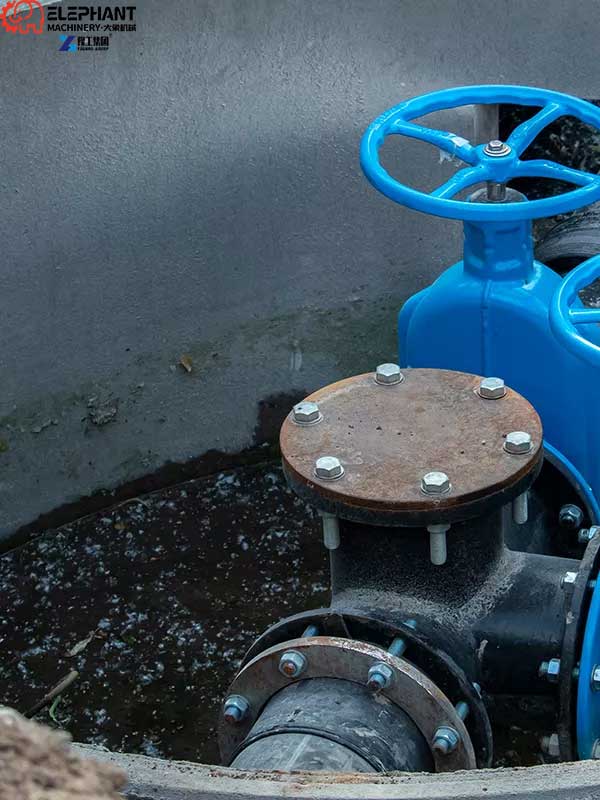
- Municipal wastewater treatment plants
- Industrial wastewater treatment facilities
- Clarifiers and sedimentation tanks
- Sludge storage tanks
- Water treatment basins

Conclusion
The Elephant Machinery wastewater treatment dredging robot system provides a safe, efficient, and continuous solution for sludge removal in treatment plants and clarifiers.
It eliminates manual entry risks while improving sludge handling efficiency and ensuring stable wastewater treatment performance.