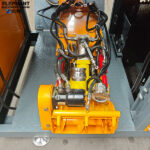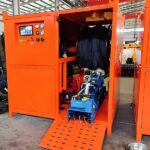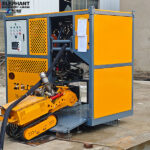
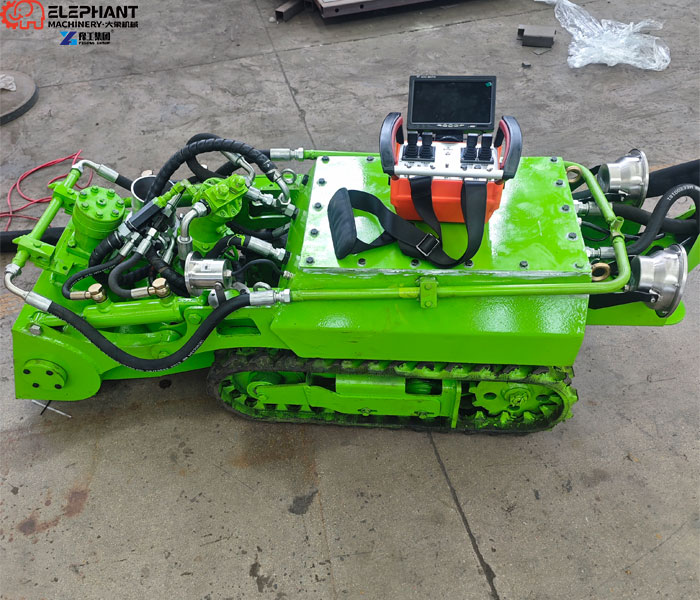
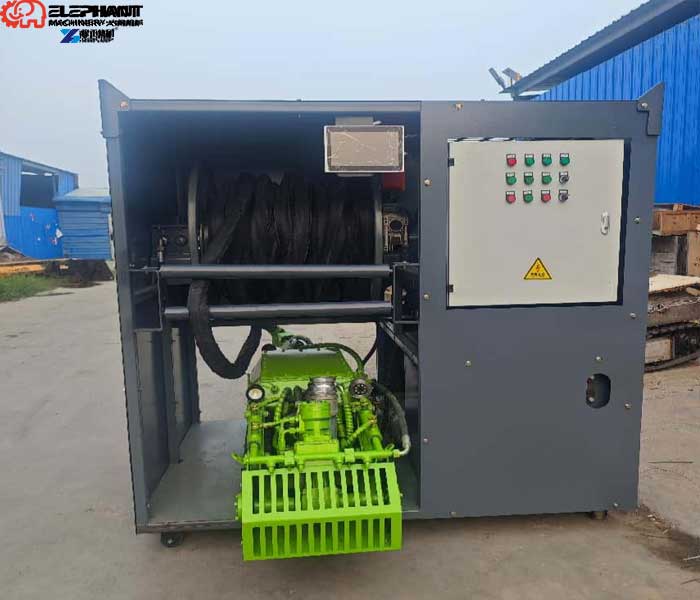
A 1-meter-diameter drainage pipe in Italy required an efficient solution for removing approximately 0.5 meters of accumulated sediment. With limited access through an 800 mm side manhole and partially compacted deposits, the customer needed a compact dredging robot capable of loosening sediment, preparing pumpable slurry, and transporting it out of the pipe.
In March 2026, the customer contacted Elephant Dredging and purchased a YG600 drainage pipe cleaning robot. After receiving the machine, the customer reported excellent cleaning performance during use.
Project Requirements: 1-Meter Drainage Pipe with Compact Sediment
The Italian customer needed to remove accumulated sediment from an enclosed drainage pipe approximately 20 meters long.
| Project Location | Italy |
| Application | Enclosed drainage pipe desilting |
| Pipe Diameter | Approximately 1,000 mm |
| Pipe Length | Approximately 20 m |
| Side Access Opening | 800 mm diameter |
| Sediment Thickness | Approximately 0.5 m |
| Sediment Condition | Partially compacted |
| Equipment | YG600 Dredging Robot |
| Cleaning Method | Breaking, water mixing and slurry pumping |
The 800 mm side access opening provided a practical entry point for the YG600, which has a machine width of approximately 600 mm. This configuration allowed the equipment to enter the drainage pipe without requiring a larger access opening.
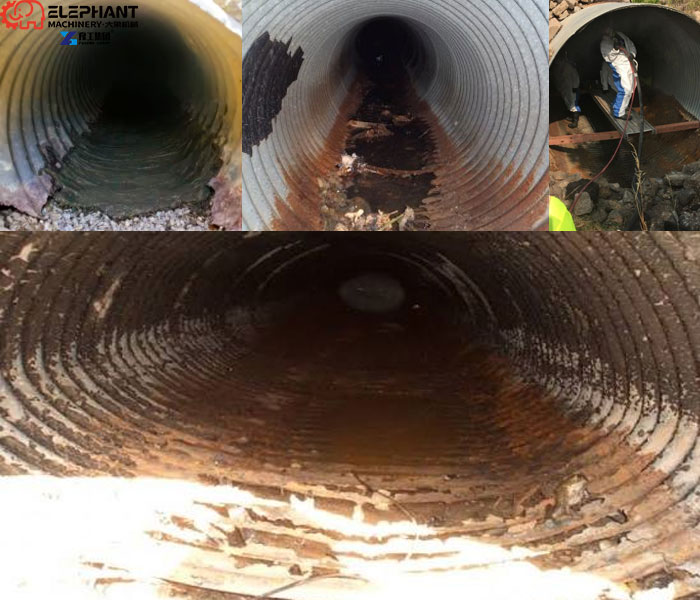
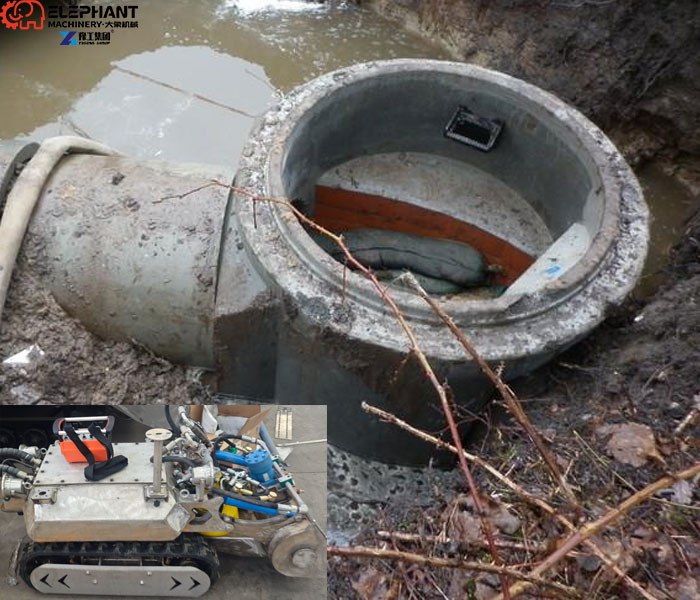
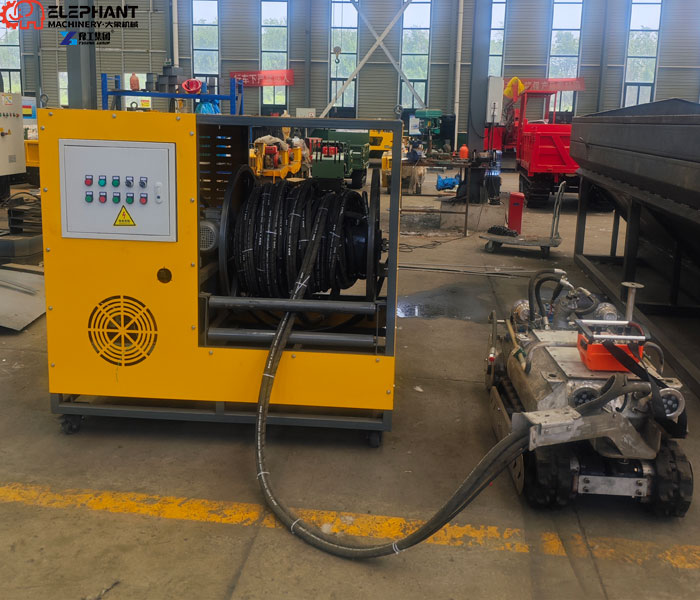
YG600 Dredging Robot for Enclosed Drainage Pipe Cleaning
Based on the pipe dimensions, access conditions, and sediment characteristics, Elephant Dredging recommended the YG600 dredging robot with a sediment loosening system and slurry transfer pump.
The customized configuration included:
- Compact crawler design: Suitable for entering the drainage pipe through the available access opening.
- Breaking and water jet system: Loosens partially compacted sediment and helps mix deposits with water.
- Hydraulic transfer pump: Transports the prepared slurry out of the pipe.
- Remote-controlled operation: Allows the operator to control the cleaning process from outside the drainage structure.
The equipment selection focused on matching the available entry space and the sediment handling requirements rather than relying on pipe diameter alone.
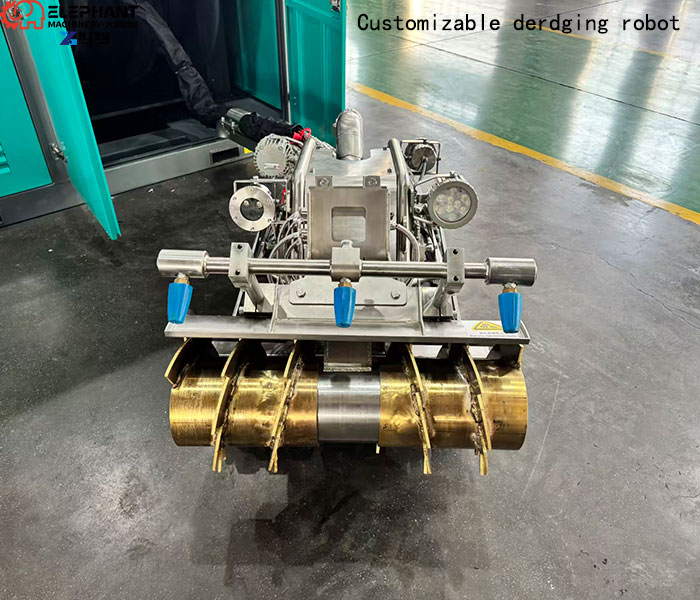
Cleaning Process: Break, Mix and Pump
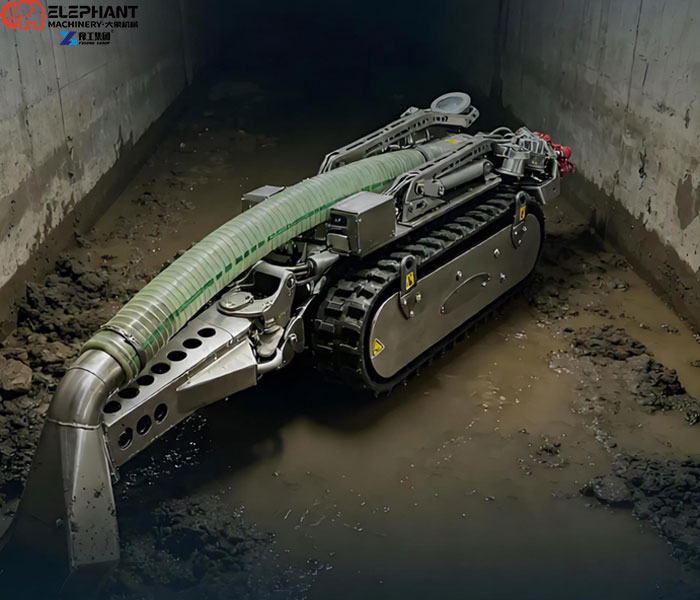
The project required more than simply loosening accumulated sediment. Because some deposits were partially compacted, the material needed to be mixed with water to achieve a pumpable consistency.
The cleaning process followed three main steps:
1. Break and Loosen Compacted Sediment
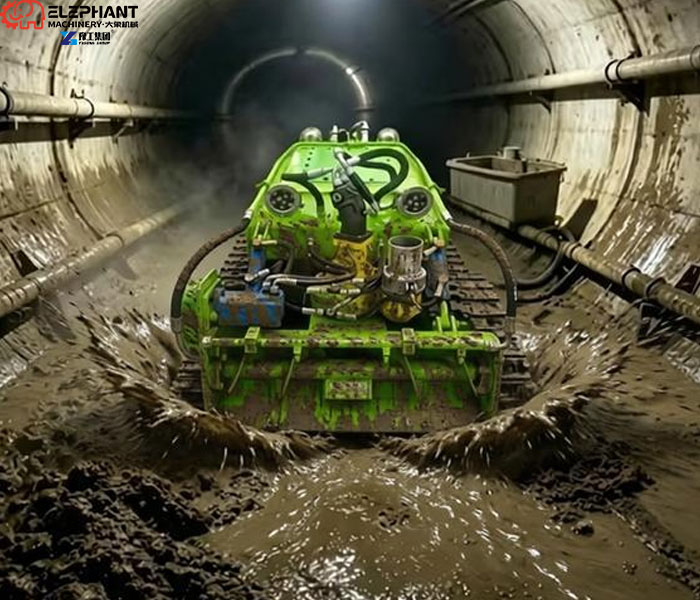
The robot uses its breaking and water jet configuration to loosen the accumulated sediment. This helps reduce the resistance of partially compacted deposits and prepares the material for further handling.
2. Mix Sediment with Water
Water is added as necessary to improve the fluidity of the sediment. The objective is to produce a slurry that can be handled by the transfer pump.
The required water volume depends on sediment composition, moisture content, and the actual operating conditions inside the pipe.
3. Pump the Slurry Out of the Pipe
Once the sediment is sufficiently mixed, the hydraulic transfer pump transports the slurry through the discharge system.
This process combines mechanical sediment loosening, water-assisted mixing, and hydraulic pumping into one coordinated cleaning operation.
Customer Feedback After Receiving the Machine
After purchasing the YG600 dredging robot in March 2026, the Italian customer received the equipment and tested it for the drainage pipe cleaning application.
The customer reported that the machine performed very well and expressed satisfaction with the cleaning results.
Translated and polished customer feedback:
“We are very satisfied with the machine. It worked very well for our drainage pipe cleaning project. The equipment helped us handle the accumulated sediment effectively, and we are happy with the result.”
Why Choose Elephant Dredging for Drainage Pipe Desilting?
Drainage pipe cleaning projects require equipment selected according to the actual working environment. Pipe diameter, access openings, sediment conditions, and slurry discharge requirements all affect the suitable robot configuration.
Elephant Dredging provides customized dredging robot solutions for sediment removal in enclosed drainage structures and other challenging cleaning environments.
For your project, send us the following information:
- Drainage pipe diameter and length
- Access opening dimensions
- Sediment thickness and material condition
- Required slurry discharge distance
- Site photos or videos
Our team can evaluate the working conditions and recommend a suitable dredging robot configuration.
Contact Elephant Dredging for a Customized Drainage Pipe Cleaning Solution.