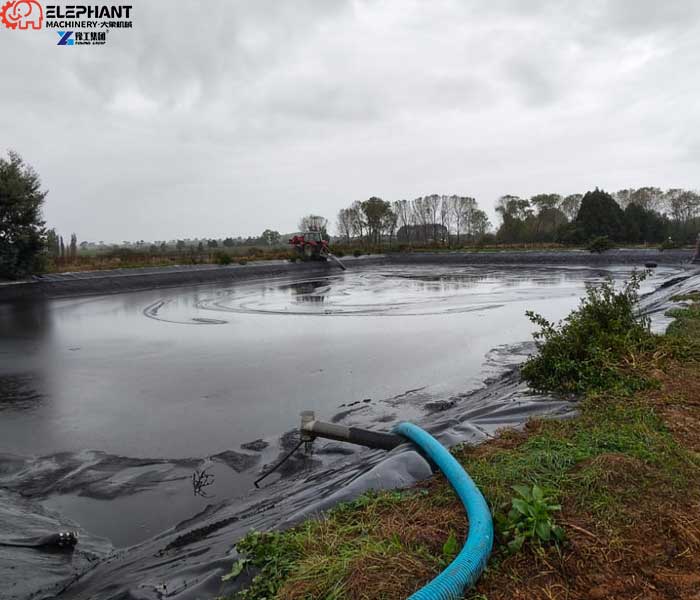
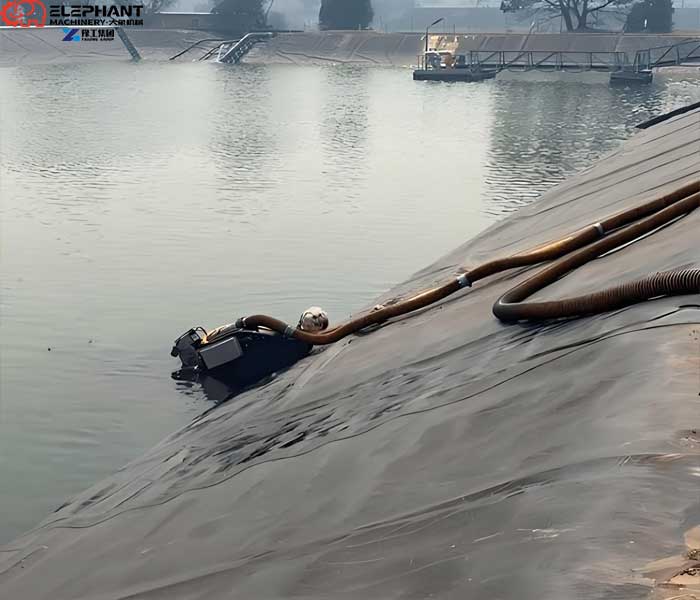
For mining companies operating lined tailings ponds, protecting the HDPE liner during sludge removal is one of the most important considerations before choosing dredging equipment.
HDPE geomembrane liners are widely used in tailings storage facilities (TSFs) to prevent leakage, protect groundwater, and improve environmental safety. However, the liner surface can be vulnerable to damage from heavy equipment, sharp components, and excessive ground pressure during cleaning operations.
Many mine operators have the same concern:
Can a dredging robot remove accumulated sludge without damaging the HDPE liner?
The answer depends on the equipment design. A properly engineered tailings pond dredging robot uses specialized crawler systems, movement control technology, and low-pressure operation methods to safely clean sludge while maintaining liner integrity.
Why HDPE Liner Protection Matters During Tailings Pond Cleaning?
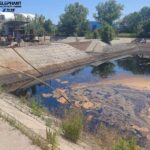
Over time, mining operations generate large amounts of fine particles, mineral residues, and sludge that settle at the bottom of tailings ponds. Excessive sediment accumulation can reduce storage capacity and affect the efficiency of the tailings management system.
However, cleaning a lined tailings pond creates a unique challenge.
Unlike natural soil-bottom ponds, an HDPE-lined pond requires careful equipment selection because:
- The liner surface must remain intact after cleaning.
- Heavy machinery may create excessive pressure points.
- Metal tracks or sharp edges may scratch the geomembrane.
- Traditional excavation methods may require draining the pond, increasing downtime and cost.
Therefore, HDPE liner protection becomes a key factor when selecting a mining sludge removal solution.
A suitable cleaning system should not only remove sludge effectively but also minimize mechanical impact on the liner surface.
Risks of Traditional Sludge Removal Methods for HDPE Liners
Steel Track Equipment
Traditional crawler equipment often uses steel tracks designed for rough terrain applications. Although strong and durable, steel tracks may create higher contact pressure and introduce a risk of liner abrasion.
Potential issues include:
- Direct friction between steel components and the liner
- Increased surface pressure
- Risk of scratches during movement
For sensitive applications such as lined tailings pond cleaning, steel crawler systems may require additional protection measures.
Excavator-Based Cleaning
Excavators are commonly used for sediment removal, but they are not always suitable for lined ponds.
Challenges include:
- Limited access to deep sludge areas
- High ground pressure
- Difficulty operating directly on geomembrane surfaces
- Requirement for pond drainage in many cases
For active mining facilities, draining a tailings pond can interrupt operations and increase project costs.
Rubber Track Design for HDPE Liner Protection
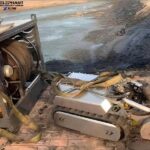
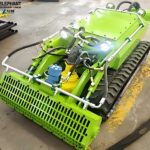
One of the most important features of a modern tailings pond dredging robot is the use of a rubber crawler track system.
Compared with traditional steel tracks, rubber tracks provide:
Lower Ground Pressure
The flexible rubber contact surface distributes the machine weight more evenly, reducing pressure concentration on the HDPE liner.
Reduced Liner Damage Risk
The smooth rubber surface minimizes direct abrasion and helps protect the geomembrane during robot movement.
Better Mobility on Soft Sludge
Tailings ponds often contain soft sediment layers. Rubber tracks provide stable traction and allow the robot to move safely across muddy surfaces.
This design makes a remote-controlled dredging robot suitable for applications where liner protection is a priority.
Customized Limit Control System for Safe Operation
In addition to rubber tracks, movement control is another important factor in protecting lined tailings ponds.
A customized limit control system can restrict the robot’s operating range and prevent unnecessary movement beyond the designated working area.
The system helps:
- Control robot travel distance
- Maintain stable operation zones
- Reduce repeated friction on specific liner areas
- Improve overall cleaning safety
By combining rubber crawler tracks with customized movement limitation, the dredging robot can operate efficiently while reducing potential risks to the HDPE liner.
How a Dredging Robot Removes Sludge Without Damaging the Liner?
A professional mining sludge removal robot uses a complete working system rather than relying on mechanical excavation.
The typical process includes:
1. Remote-Controlled Movement
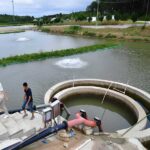
Operators control the robot from a safe location without entering hazardous tailings pond areas.
2. Sludge Loosening
The cutting or agitation system breaks up compacted sludge deposits.
3. Slurry Pumping
The integrated slurry pump transports the loosened material through a discharge pipeline.
4. Controlled Cleaning Operation
The crawler system and limit control ensure stable movement while protecting the lined pond surface.
This approach provides a safer alternative for tailings pond dredging where environmental protection and operational safety are critical.
Benefits of Using a Dredging Robot for Lined Tailings Ponds
A properly designed dredging robot offers several advantages for mining operations:
No Pond Drainage Required
The robot can work directly in the pond, reducing downtime and avoiding complex dewatering procedures.
Safer Sludge Removal
Remote operation eliminates the need for workers to enter hazardous sludge environments.
Protects Tailings Pond Liners
Rubber tracks and controlled movement reduce the risk of HDPE liner damage.
Flexible Application
The system can be customized for different sludge types, pond sizes, and pumping distances.
Continuous Operation
Mining sites can perform regular sludge management instead of relying on occasional large-scale cleaning projects.
Applications of HDPE Liner Protection Technology
The liner protection design is suitable for various industrial applications, including:
- Mining tailings ponds
- Tailings storage facilities (TSFs)
- Mineral processing plants
- Slurry storage ponds
- Industrial wastewater ponds
- Chemical residue storage areas
Wherever a geomembrane liner is installed, protecting the lining system is essential for long-term environmental safety.
FAQ About HDPE Liner Protection During Tailings Pond Dredging
Can a dredging robot work on HDPE lined tailings ponds?
Yes. A properly designed dredging robot can operate on HDPE-lined ponds by using rubber tracks, low-pressure movement systems, and controlled operation methods.
Will rubber tracks damage the HDPE liner?
Rubber tracks create a softer contact surface compared with steel tracks. When properly designed and operated, they significantly reduce the risk of scratching or damaging the liner.
Can sludge be removed without draining the tailings pond?
Yes. Remote-controlled dredging robots can remove accumulated sludge underwater without completely emptying the pond.
What factors affect liner protection during dredging?
Important factors include track design, equipment weight, ground pressure, movement control, sludge conditions, and operator control methods.
Conclusion
Protecting the HDPE liner is one of the biggest challenges in tailings pond cleaning. Traditional equipment may create risks due to high pressure and direct contact with the liner surface.
A customized dredging robot with rubber crawler tracks and limit control technology provides a safer and more efficient solution for mining companies. It enables effective sludge removal while maintaining the integrity of the HDPE geomembrane liner.
For mining operations looking for a reliable tailings pond dredging solution, liner protection should always be considered as a key part of equipment selection.