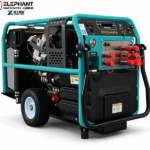
400–2,000 m³/h Pumping Capacity | All-Terrain Tracked Mobility | Remote-Controlled Operation
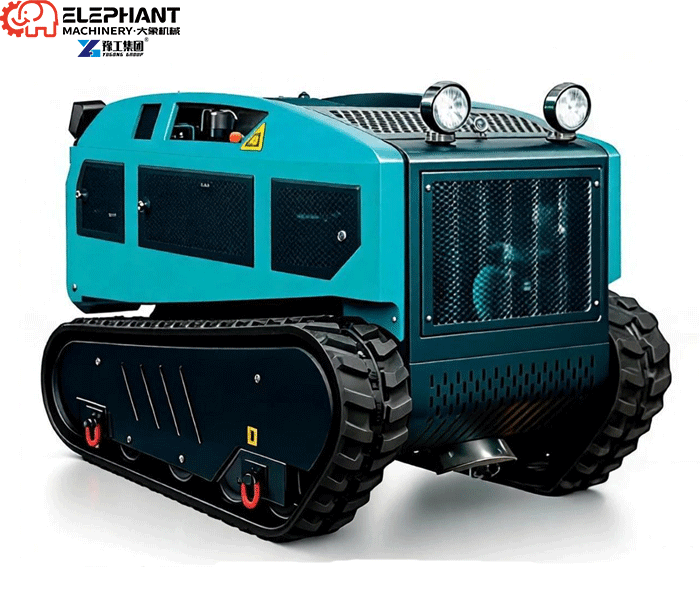
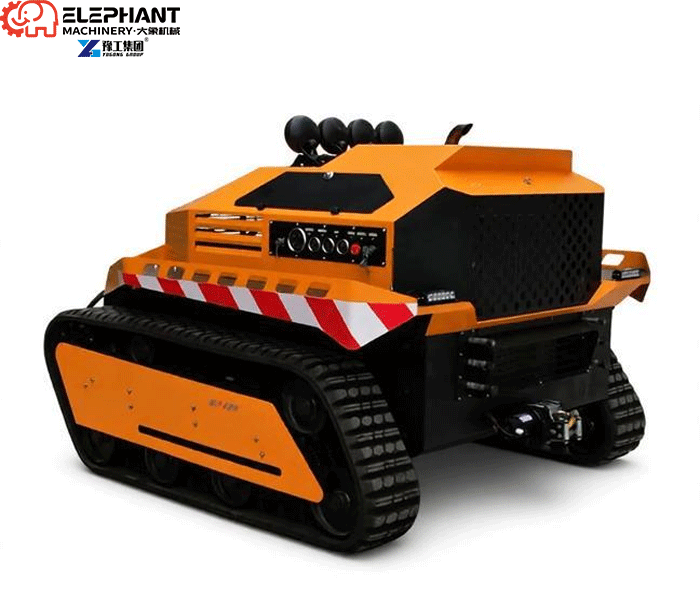
When heavy rainfall or unexpected flooding affects tunnels, underground garages, construction sites, or industrial facilities, removing large volumes of water quickly can be challenging. Conventional pumps may be difficult to transport and position in areas with muddy ground, narrow access routes, or deep water.
The Flood Drainage Robot combines a tracked mobile platform, hydraulic pumping system, and remote-controlled operation to handle demanding emergency drainage tasks. With eight configurations offering pumping capacities from 400 to 2,000 m³/h, it provides flexible water removal solutions for different site conditions. Selected configurations also supply hydraulic power to compatible auxiliary equipment.
Flood Drainage Robot Models and Technical Specifications
Elephant dredging provides eight configurations under the same hydraulic system, allowing customers to select different pumping capacities, machine sizes, power options, and operating parameters.
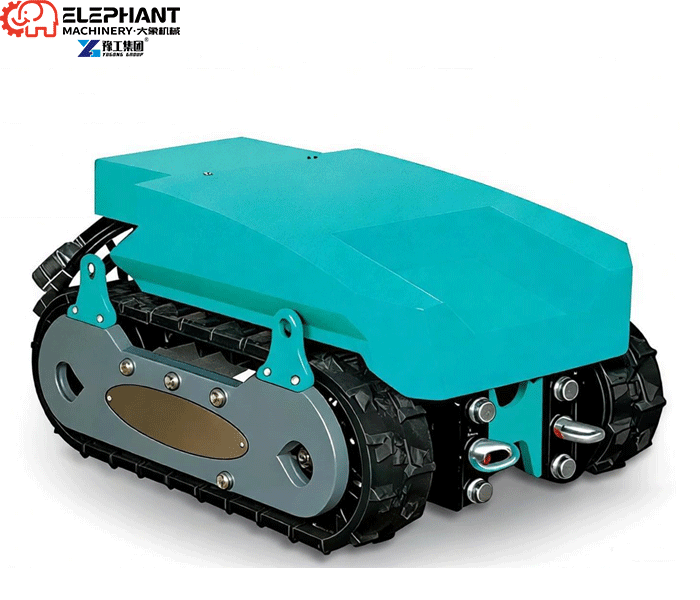
Compact Models: YG400 and YG1000
These two models feature compact dimensions and lower machine weights, making them suitable for projects where transportation space and equipment positioning are important considerations.
| Parameter | YG400 | YG1000 |
|---|---|---|
| Pumping Capacity (m³/h) | 400 | 1,000 |
| Max. Head (m) | 13 | 10 |
| Flow Rate (L/min) | 80 | 120 |
| Dimensions (mm) | 760 × 580 × 370 | 1249 × 935 × 552 |
| Working Pressure (bar) | 150 | 250 |
| Outlet Diameter (mm) | 200 | 300 |
| Weight (kg) | 160 | 385 |
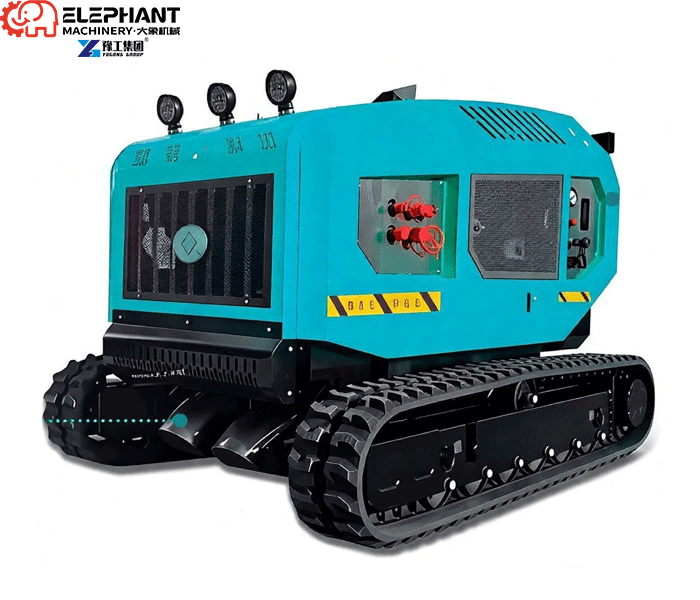
PE/DE Models: YG400PE–YG2000DE
These models offer different engine power ratings, pumping capacities, and specified wading depths to meet a wider range of emergency drainage requirements.
| Parameter | YG400PE | YG600PE | YG600DE | YG800DE | YG1200DE | YG2000DE |
|---|---|---|---|---|---|---|
| Pumping Capacity (m³/h) | 400 | 600 | 600 | 800 | 1,200 | 2,000 |
| Max. Head (m) | 13 | 20 | 20 | 20 | 20 | 20 |
| Power (hp) | 27 | 40 | 36 | 53.7 | 96 | 110 |
| Wading Depth (mm) | 450 | 700 | 700 | 650 | 750 | 750 |
| Dimensions (mm) | 1500 × 1000 × 1000 | 1800 × 1200 × 1295 | 1800 × 1260 × 1315 | 2200 × 1570 × 1500 | 2500 × 1850 × 1710 | 2500 × 1850 × 1710 |
| Outlet Diameter (mm) | 200 | 250 | 250 | 2 × 200 | 2 × 250 | 2 × 300 |
| Weight (kg) | 546 | 1,000 | 1,100 | 1,650 | 2,900 | 2,950 |
Get the Right Model for Your Project
Key Features of the Flood Drainage Robot
1. High-Capacity Hydraulic Pumping System
The integrated hydraulic pumping system delivers a pumping capacity of 400–2,000 m³/h, depending on the model. It is designed for removing large volumes of accumulated water in emergency situations.
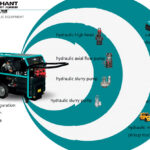
In addition to pumping, selected configurations provide three or four sets of hydraulic power outputs for compatible auxiliary equipment. This allows the machine to support additional hydraulic operations when required.
2. All-Terrain Tracked Mobility
Flooded sites often have muddy ground, uneven surfaces, slopes, and obstacles that make equipment transportation difficult.
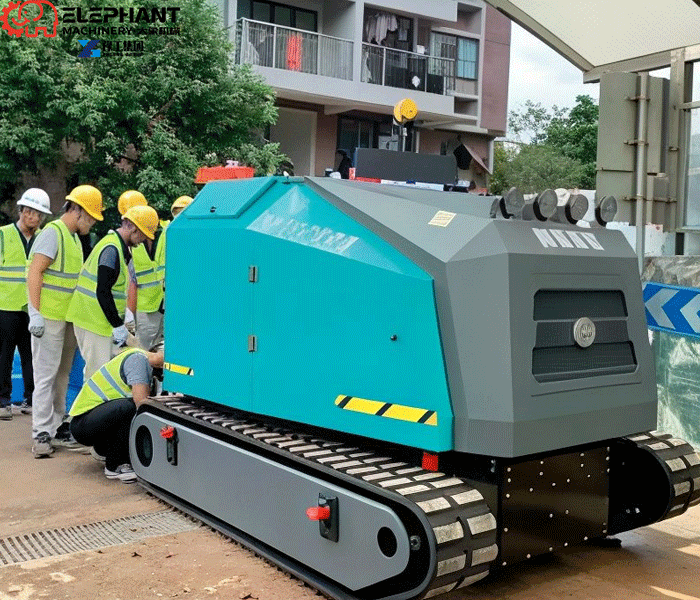
The specially designed tracked undercarriage helps the robot move across challenging terrain and approach water accumulation areas. Selected configurations also support stair climbing under suitable site conditions.
Its compact models are easier to transport, while larger models provide higher pumping capacity for more demanding drainage tasks.
3. Remote-Controlled Operation
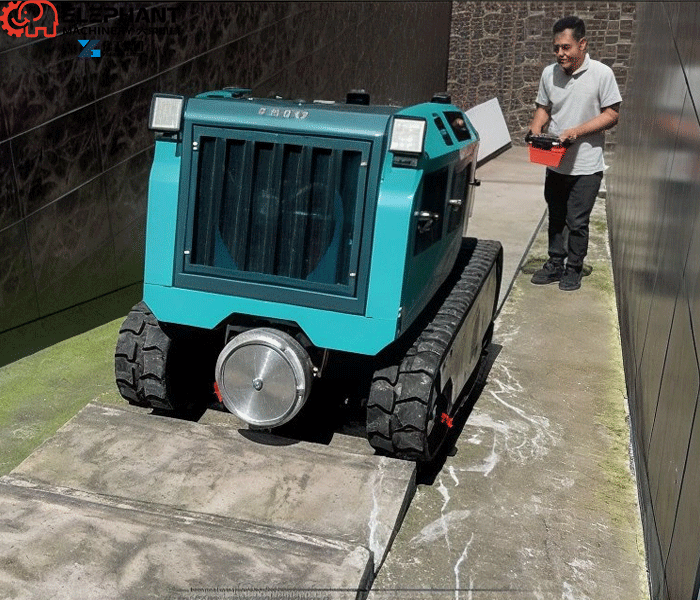
The remote operating system allows operators to control the robot’s movement and pumping operations from a suitable position.
This reduces the need for personnel to enter flooded areas to position or operate the equipment, making it particularly useful in tunnels, underground garages, and other difficult-access environments.
4. Different Wading Depths and Pump Configurations
The six PE/DE models offer specified wading depths ranging from 450 to 750 mm, allowing customers to compare configurations according to site water levels and access conditions.
Selected models are also equipped with a lifting function for the submersible pump, helping adjust the pump position for different operating conditions.
5. Flexible Engine and Hydraulic Configurations
The model range includes different power configurations from 27 to 110 hp for the PE/DE models. Gasoline and diesel options are available according to equipment configuration.
Selected models also offer features such as adjustable hydraulic flow, water wading alarms, double-engine power, and DPF regeneration.
Main Advantages of Flood Drainage Robot
| Customer Requirements | Elephant Flood Drainage Robot |
|---|---|
| Large-scale emergency water removal | Pumping capacity up to 2,000 m³/h |
| Muddy or uneven access routes | All-terrain tracked mobility |
| Restricted or hazardous flooded areas | Remote-controlled operation |
| Additional hydraulic equipment | Multiple hydraulic power outputs on selected models |
| Different water levels | Wading depths up to 750 mm on specified models |
| Different project requirements | Eight configurations to choose from |
| Convenient transportation | Compact options and different machine sizes |
Applications of Flood Drainage Robots
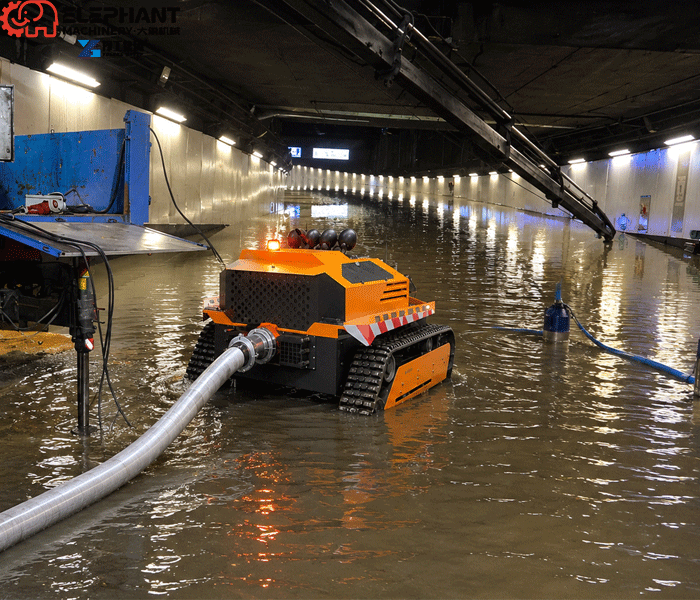
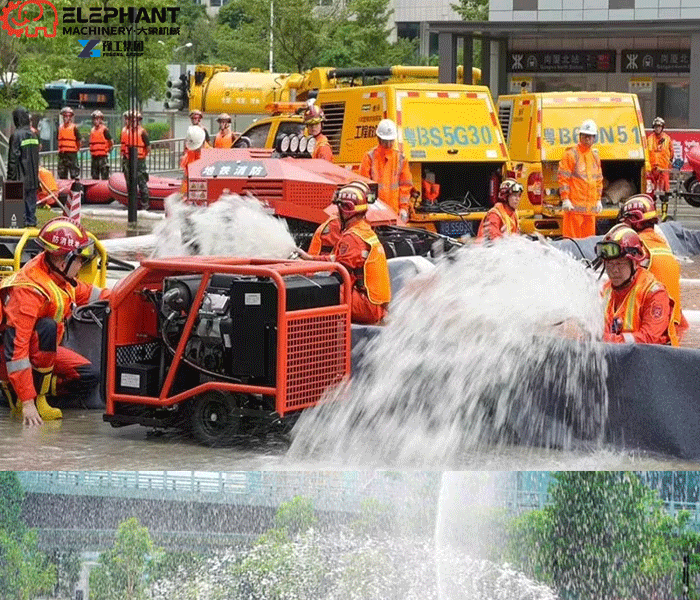
- Tunnel and Underground Passage Drainage: Remove accumulated water from tunnels and underground passages where access is restricted and conventional pumping equipment can be difficult to position.
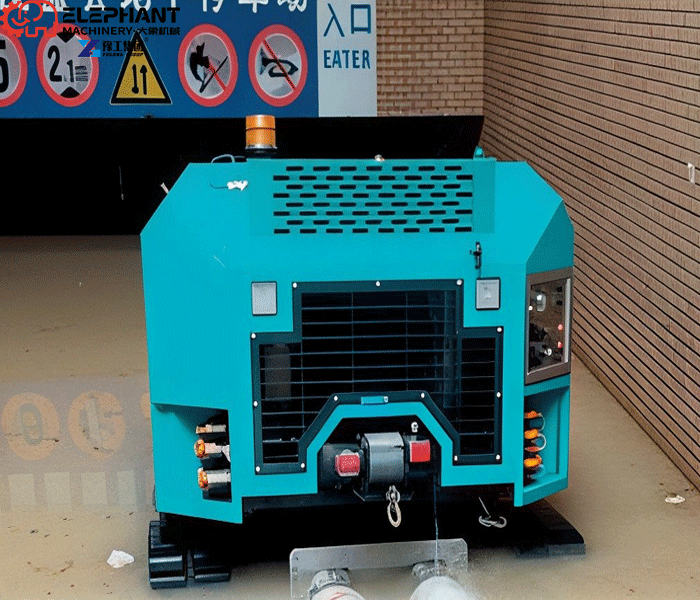
- Underground Garage Flood Removal: Provide mobile pumping capability for underground parking garages and basement areas affected by heavy rainfall or unexpected flooding.
- Urban Flood Emergency Response: Support emergency water removal from flooded roads, low-lying areas, and other urban locations requiring high-capacity drainage.
- Construction Sites and Mining Areas:Remove accumulated water from excavations, working platforms, and low-lying construction or mining areas.
- Industrial Facility Drainage:Handle water accumulation in industrial workshops, facilities, and infrastructure during heavy rainfall or drainage system failures.
Customer Case: Indonesian Government Contractor Chooses YG1000 Flood Drainage Robot
During Indonesia’s rainy season, heavy rainfall frequently causes flooding, especially in underground garages where water drainage can be difficult to manage. Flooded parking areas disrupt residents’ daily lives and make it challenging to restore normal access and use.
To improve emergency drainage operations, an Indonesian government contractor purchased the YG1000 Flood Drainage Robot from Elephant dredging.
With a pumping capacity of 1,000 m³/h, the YG1000 provides high-capacity water removal for demanding drainage tasks. Its tracked mobility helps it access challenging working areas, while remote-controlled operation allows operators to control the machine from a safer position without needing to work directly in flooded areas.
After using the equipment, the customer gave positive feedback, particularly praising its fast drainage performance and convenient, safer remote-controlled operation.
The flood drainage robots have also delivered excellent performance in real-world applications across Southeast Asia, South Asia, Australia, and Latin American countries such as Mexico and Chile.
How to Choose the Right Flood Drainage Robot?
Choosing the right model depends on the drainage volume, site accessibility, water depth, and required pumping arrangement.
- Pumping capacity: Choose according to the amount of water that needs to be removed and the required drainage time.
- Machine dimensions and weight: Consider access width, transportation arrangements, and available operating space.
- Maximum head: Match the pump’s maximum head to the required water discharge height and pipeline arrangement.
- Wading depth: For PE/DE models, compare the specified wading depth with the site’s water conditions.
- Power and hydraulic outputs: Consider the required engine configuration and whether additional compatible hydraulic equipment needs to be powered.
Contact Elephant dredging with your project details to get a suitable model recommendation.
FAQ about Flood Drainage Robot
1. What is the maximum pumping capacity of the flood drainage robot?
The largest model, YG2000DE, offers a rated pumping capacity of 2,000 m³/h. Other models provide capacities from 400 to 1,200 m³/h.
2. Can the flood drainage robot move through muddy or uneven terrain?
Yes. Its tracked undercarriage is designed for all-terrain mobility, helping the machine travel across muddy and uneven working surfaces. Selected configurations also support stair climbing under suitable conditions.
3. Can the machine be operated remotely?
Yes. The remote operating system allows operators to control the robot’s movement and pumping operations from a suitable position without needing to stay beside the machine.
4. What is the maximum wading depth?
The specified wading depths of the PE/DE models range from 450 to 750 mm. The exact value depends on the selected model.
5. Can the robot provide hydraulic power to other equipment?
Yes. Selected configurations feature three or four hydraulic power outputs that can supply power to compatible auxiliary equipment.
6. What is the difference between YG400, YG1000, and the PE/DE models?
All eight models use the same hydraulic system but have different configurations. YG400 and YG1000 feature compact dimensions and lower machine weights, while the PE/DE models offer different engine power ratings, specified wading depths, and pumping capacities up to 2,000 m³/h.
7. How do I choose the right model?
The selection depends on required pumping capacity, maximum head, site accessibility, water depth, and transportation requirements. Send Elephant dredging your project conditions to receive a suitable recommendation.
Get a Quote for Your Flood Drainage Robot
Need a mobile pumping solution for tunnels, underground garages, construction sites, or emergency flood response?
Elephant dredging offers eight flood drainage robot configurations with pumping capacities from 400 to 2,000 m³/h, tracked mobility, remote-controlled operation, and flexible hydraulic options.
Contact Elephant dredging today with your required pumping capacity and working conditions. Our team will help you select the right flood drainage robot for your project.
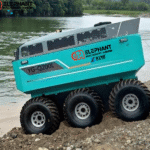
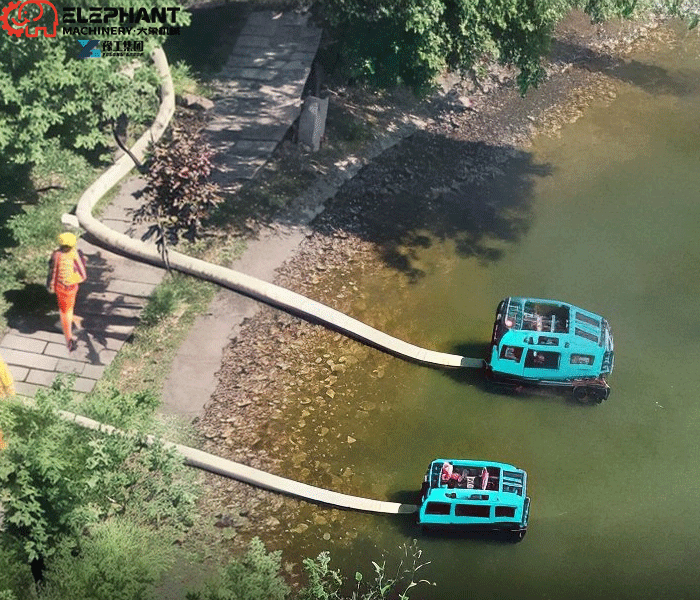
For drainage projects involving both land and water operations, explore our Amphibious Drainage Robot, featuring a six-wheel-drive amphibious chassis, high-capacity pumping system, and remote-controlled operation. In addition to emergency flood drainage, Elephant dredging also provides professional dredging robots for removing sludge and sediment from lakes, ponds, reservoirs, and industrial tanks.