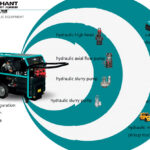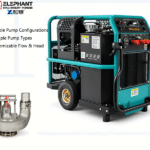
Multiple Pump Types | Pumping Capacities from 75 to 1,000 m³/h | Hydraulic Power Unit Driven
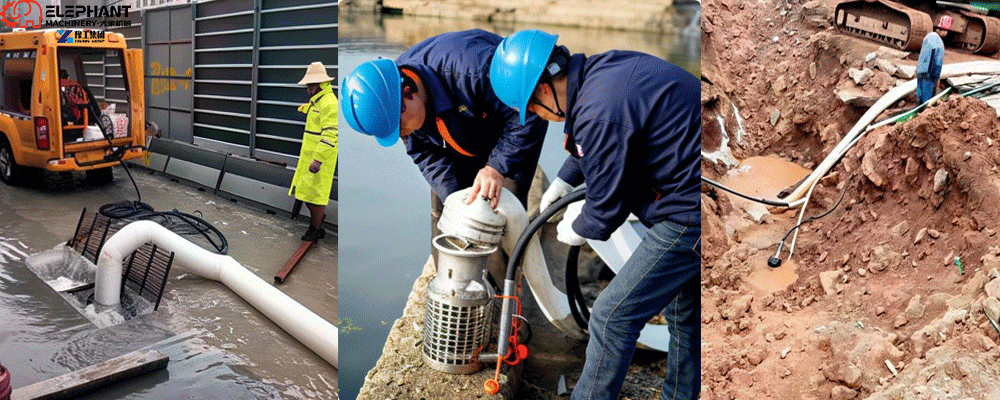
Elephant hydraulic drainage pumps are designed for emergency flood control, construction dewatering, municipal drainage, and muddy water removal. Powered by an external hydraulic power unit, these pumps provide flexible water removal solutions for different water conditions, pumping capacities, and discharge requirements.
Our product range includes hydraulic slurry pumps, axial flow pumps, mixed-flow pumps, and high-head pumps. With different pumping capacities, maximum heads, and hydraulic flow requirements, customers can select a suitable pump for their specific working conditions.
Types of Hydraulic Drainage Pumps
Different drainage applications require different pump structures and performance characteristics. Elephant offers four types of hydraulic drainage pumps for various water removal requirements.
1. Hydraulic Slurry Pump
A hydraulic slurry pump is designed for pumping muddy water, slurry, and water containing sand, sediment, and other solid particles.
Its lightweight aluminum housing, compact structure, and cylindrical handle make it convenient to carry, transport, install, and remove. The quick-connect vertical design also makes equipment setup and maintenance easier.
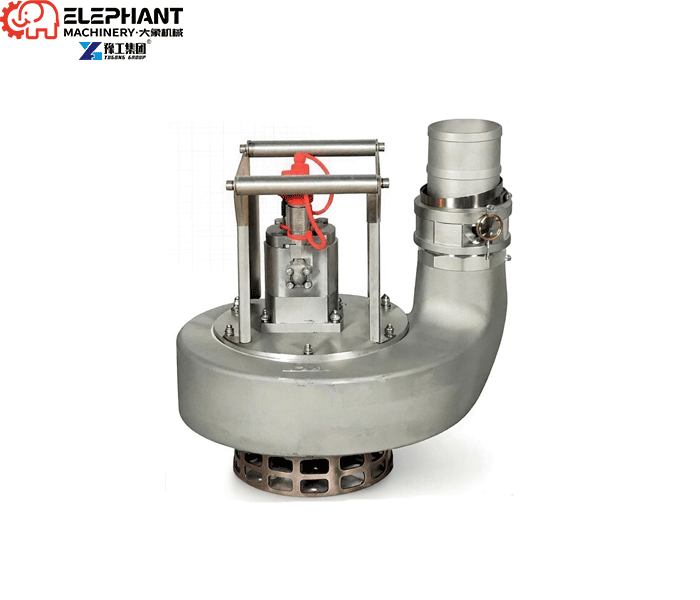
Key Features:
- Handles muddy water and solid particles up to 15–32 mm, depending on the model.
- Lightweight aluminum housing for easier transportation.
- Vertical quick-connect design for convenient installation and removal.
- Cylindrical handle for easier handling.
- Efficient hydraulic operation with relatively low energy consumption.
Typical Applications:
- Construction pit drainage
- River and pond sediment removal
- Muddy water and slurry pumping
- Industrial drainage containing solid particles
2. Hydraulic Axial Flow Pump
A hydraulic axial flow pump uses an axial-flow impeller to move large volumes of water. It is suitable for high-volume drainage operations where substantial water flow is required.
Its ear-shaped handle and lightweight structure make transportation and deployment more convenient. The vertical quick-connect design also allows easier installation and removal.
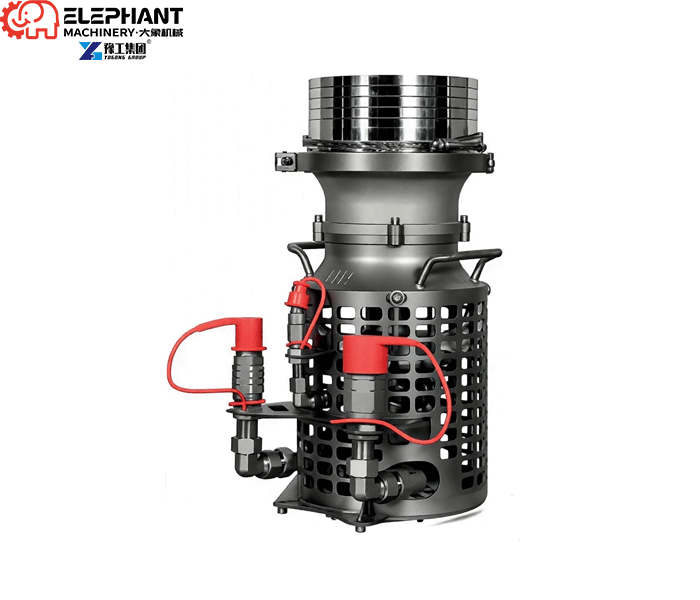
Key Features:
- Axial-flow impeller for high-volume water transfer.
- Pumping capacities from 500 to 1,000 m³/h.
- Lightweight design with an easy-to-carry handle.
- Stainless steel housing for durability.
- Quick-connect structure for convenient installation and removal.
Typical Applications:
- Urban flood control
- Road and low-lying area drainage
- Large construction site dewatering
- Emergency high-volume water removal
3. Hydraulic Mixed-Flow Pump
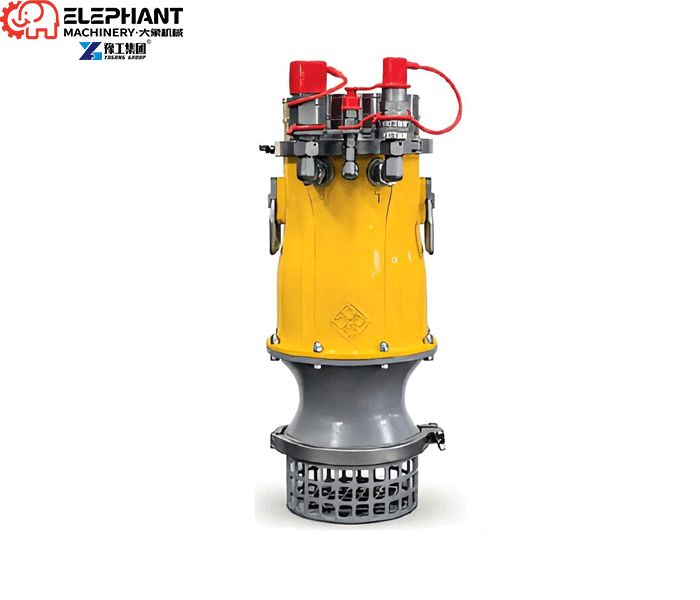
A hydraulic mixed-flow pump combines axial and centrifugal flow characteristics to provide a balance between pumping capacity and head.
The MFP450-50 features a compact structure, portable handle, and wear-resistant construction. Multiple pumps can also be arranged in series to increase the water delivery distance when the hydraulic system and operating conditions are suitable.
Key Features:
- High pumping capacity and efficient drainage.
- Suitable for series operation of multiple pumps.
- Flexible configuration for longer water delivery distances.
- Stainless steel components in key areas.
- Wear-resistant and corrosion-resistant construction.
- Compact design for lifting, transportation, and rapid deployment.
Typical Applications:
- Emergency flood drainage
- Municipal water removal
- Construction dewatering
- Water transfer over longer distances
4. Hydraulic High-Head Pump
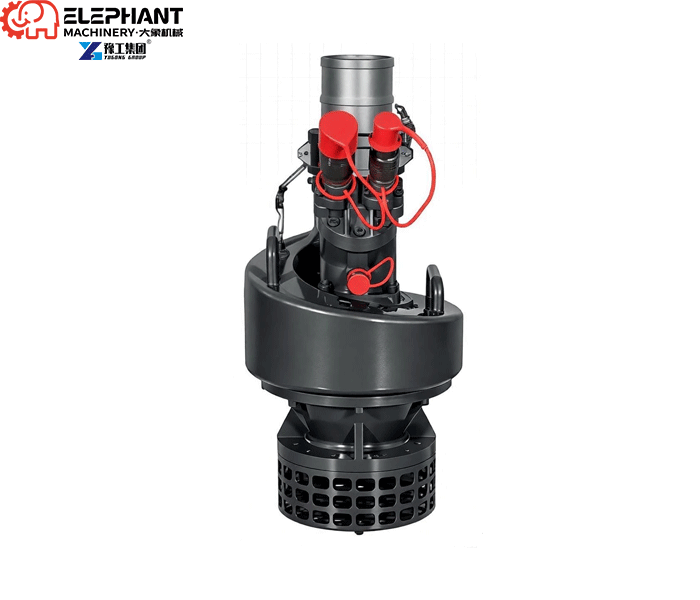
A hydraulic high-head pump is designed for applications requiring greater pumping head or water transfer to higher discharge points.
It uses a spiral centrifugal impeller structure to generate higher discharge pressure. The vertical quick-connect design makes installation and removal convenient, while its lightweight aluminum housing supports easier transportation.
Key Features:
- Spiral centrifugal impeller for high-head pumping.
- Maximum head of up to 70 m, depending on the model.
- Lightweight aluminum housing.
- Vertical quick-connect design for easier installation and removal.
- Efficient hydraulic operation.
Typical Applications:
- Deep excavation drainage
- High-level water discharge
- Long-distance water transfer
- Construction and emergency drainage
Get the Right Model for Your Project
Hydraulic Drainage Pump Models and Specifications
Elephant offers several hydraulic drainage pump models with different pumping capacities, maximum heads, hydraulic flow requirements, and outlet sizes.
Hydraulic Slurry Pump Specifications
| Model | TP75-30 | TP100-30 | TP200-40 | TP300-40 |
|---|---|---|---|---|
| Max. Capacity (m³/h) | 75 | 100 | 240 | 300 |
| Max. Head (m) | 24 | 28 | 25 | 27 |
| Weight (kg) | 11 | 17 | 26 | 35 |
| Dimensions (mm) | 205×280×395 | 450×330×430 | 481×378×442 | 575×585×460 |
| Max. Working Pressure (bar) | 110 | 250 | 255 | 255 |
| Max. Particle Size (mm) | 15 | 25 | 25 | 32 |
| Outlet Diameter (mm) | 75 | 75 | 100 | 150 |
| Hydraulic Flow Rate (L/min) | 26–34 | 26–34 | 27–40 | 27–40 |
Hydraulic Axial Flow Pump Specifications
| Model | AFP500-80 | AFP600-80 | AFP1000-110 |
|---|---|---|---|
| Max. Capacity (m³/h) | 500 | 600 | 1,000 |
| Max. Head (m) | 32 | 24 | 22 |
| Weight (kg) | 22 | 38 | 64 |
| Dimensions (mm) | 235×290×410 | 285×325×575 | 370×415×700 |
| Max. Working Pressure (bar) | 320 | 320 | 320 |
| Max. Particle Size (mm) | 30 | 30 | 30 |
| Outlet Diameter (mm) | 200 | 250 | 300 |
| Hydraulic Flow Rate (L/min) | 40–100 | 80–120 | 105–115 |
Hydraulic Mixed-Flow Pump Specifications
| Model | MFP450-50 |
|---|---|
| Max. Capacity (m³/h) | 450 |
| Max. Head (m) | 16 |
| Weight (kg) | 30 |
| Dimensions (mm) | 325×258×540 |
| Max. Working Pressure (bar) | 300 |
| Max. Particle Size (mm) | 30 |
| Outlet Diameter (mm) | 200 |
| Hydraulic Flow Rate (L/min) | 50–60 |
Hydraulic High-Head Pump Specifications
| Model | HTP260-80 | HTP300-120 |
|---|---|---|
| Max. Capacity (m³/h) | 260 | 300 |
| Max. Head (m) | 50 | 70 |
| Weight (kg) | 37 | 28 |
| Dimensions (mm) | 300×365×570 | 300×365×530 |
| Max. Working Pressure (bar) | 260 | 320 |
| Max. Particle Size (mm) | 20 | 20 |
| Outlet Diameter (mm) | 100 | 100 |
| Hydraulic Flow Rate (L/min) | 30–80 | 80–125 |
The specifications above are based on the supplied product data. Actual performance depends on operating conditions, hydraulic output, pipeline resistance, and pump configuration.
Hydraulic Power Unit for Drainage Pumps
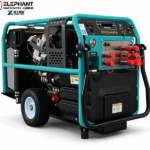
Elephant hydraulic drainage pumps are driven by an external hydraulic power unit rather than an integrated electric motor or engine. This configuration allows customers to select a suitable power source according to the working environment and pumping requirements.
Available hydraulic power unit options include:
- Gasoline Hydraulic Power Units: Suitable for mobile outdoor operations and emergency drainage.
- Diesel Hydraulic Power Units: An alternative for applications requiring diesel engine drive.
- Electric Hydraulic Power Units: Suitable for sites with a stable electricity supply.
The hydraulic power unit must provide sufficient hydraulic flow and working pressure for the selected pump. Each pump model has its own hydraulic flow requirements, so the power unit and pump should be matched before operation.
Explore our Hydraulic Power Units for available engine and motor options.
Hydraulic Drainage Solutions for Different Applications
Elephant also provides complete hydraulic drainage configurations combining hydraulic power units with different drainage pumps.
Available solutions cover portable water removal, medium-capacity drainage, high-volume emergency pumping, and slurry removal. Customers can select a suitable configuration based on pumping capacity, maximum head, water conditions, and site accessibility.
Explore our Hydraulic Drainage Solutions to compare complete power unit and pump combinations.
Applications of Hydraulic Drainage Pumps
Elephant hydraulic drainage pumps can be used in various water removal and pumping operations:
- Emergency Flood Control: Removing accumulated water from flooded roads, underground garages, and low-lying areas.
- Municipal Drainage: Supporting urban waterlogging control and municipal emergency operations.
- Construction Dewatering: Removing water from foundation pits, excavation sites, and construction areas.
- River and Pond Cleaning: Pumping muddy water, sediment, and slurry with suitable pump models.
- Industrial Drainage: Handling process water and water containing solid particles, depending on pump type and material compatibility.
How to Choose the Right Hydraulic Drainage Pump?
Selecting the right hydraulic drainage pump requires more than comparing rated pumping capacity. Consider these five factors:
- Water Conditions: Determine whether the pump will handle relatively clean water, muddy water, slurry, sand, or other solid particles.
- Pumping Capacity: Estimate the required water volume per hour and the time available for drainage.
- Pumping Head: Consider the vertical lifting height and pipeline resistance between the water source and discharge point.
- Hydraulic Requirements: Check the pump’s required hydraulic flow rate and working pressure.
- Power Unit Compatibility: Ensure the hydraulic power unit can provide sufficient output for the selected pump under actual operating conditions.
For a complete drainage setup, the pump and hydraulic power unit should be selected as a matched system rather than as separate products.
Why Choose Elephant Hydraulic Drainage Pumps?
Elephant offers four types of hydraulic drainage pumps for different water conditions and pumping requirements. From lightweight slurry pumps to high-volume axial flow pumps and high-head models, customers can choose equipment according to their project requirements.
With compatible hydraulic power units and complete drainage solutions available, Elephant helps customers select suitable pumping equipment and power configurations for different drainage applications.
Looking for a hydraulic drainage pump for your project? Contact Elephant with your required pumping capacity, pumping head, water conditions, and application. Our team can help you select a suitable pump and hydraulic power unit combination.
FAQ about Hydraulic Drainage Pump
1. What is a hydraulic drainage pump?
A hydraulic drainage pump uses hydraulic power from an external power unit to drive its pumping mechanism. It is used for removing water, muddy water, and other suitable liquids in drainage and dewatering operations.
2. What is the difference between a hydraulic slurry pump and an axial flow pump?
A hydraulic slurry pump is designed for handling muddy water and liquids containing solid particles. An axial flow pump is mainly used for transferring large volumes of water. The appropriate type depends on the water conditions, pumping head, and drainage requirements.
3. What is the difference between an axial flow pump and a mixed-flow pump?
An axial flow pump is designed primarily for high-volume water transfer, while a mixed-flow pump combines axial and centrifugal flow characteristics to balance pumping capacity and head. The choice depends on the required flow rate and discharge conditions.
4. Which hydraulic drainage pump is suitable for high-head applications?
A hydraulic high-head pump is suitable for applications requiring greater lifting height or water transfer to higher discharge points. Elephant’s HTP260-80 and HTP300-120 models have maximum heads of 50 m and 70 m, respectively.
5. Does a hydraulic drainage pump need a separate power unit?
Yes. These hydraulic drainage pumps require a compatible external hydraulic power unit to provide the hydraulic flow and pressure needed for operation.
6. How do I match a hydraulic power unit with a drainage pump?
Check the pump’s required hydraulic flow rate and working pressure, then compare them with the power unit’s available output. Pumping capacity, maximum head, and actual pipeline conditions should also be considered.
7. Can one hydraulic power unit drive two drainage pumps?
Some hydraulic power units have dual-circuit outputs and can supply two compatible pumps. However, the available hydraulic flow and pressure must be sufficient for the selected pumps. When two pumps operate simultaneously, their actual performance depends on the power unit’s total output and hydraulic circuit configuration.