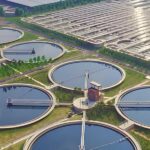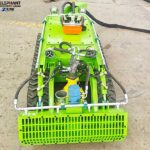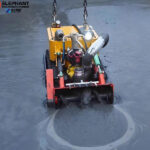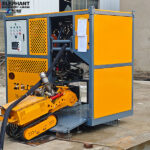
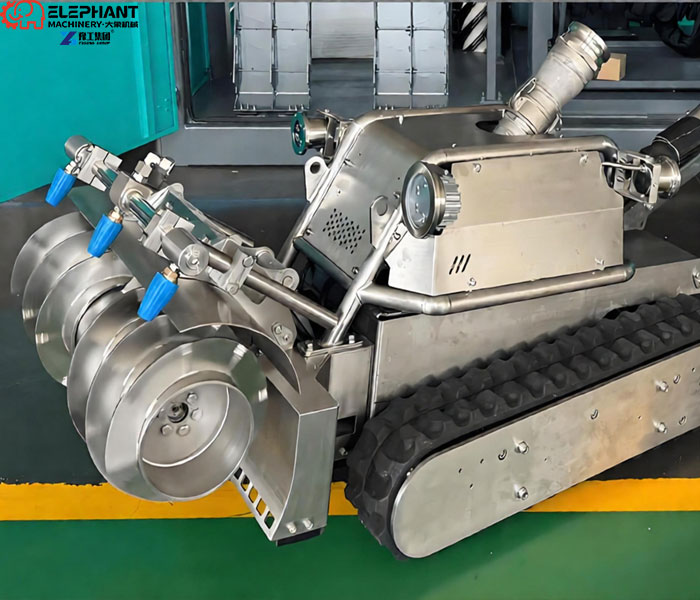
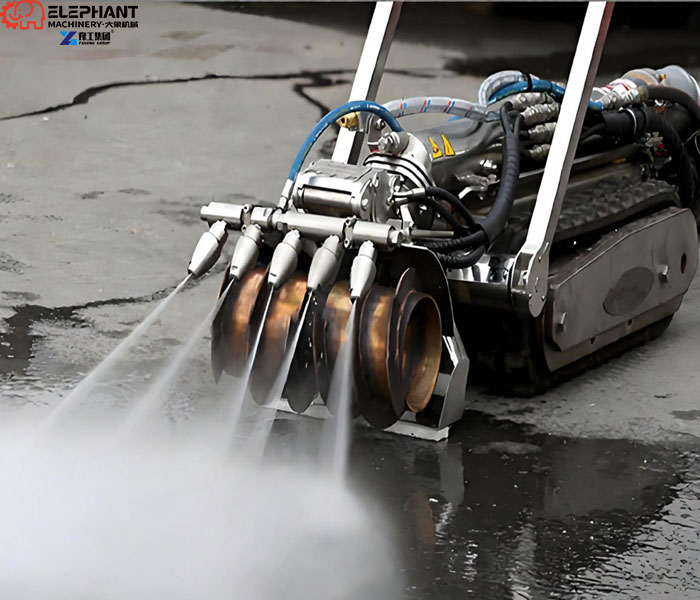
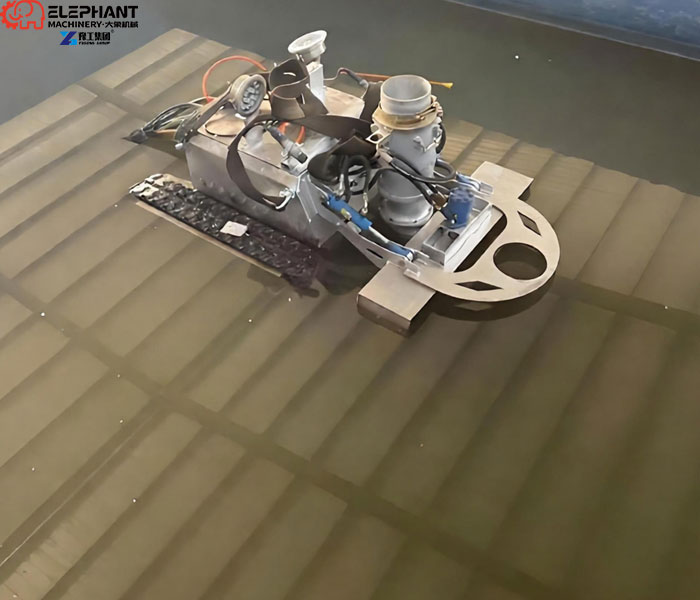
A clarifier sludge removal robot is designed to remove accumulated sludge from the bottom of wastewater clarifiers without requiring personnel to enter the tank.
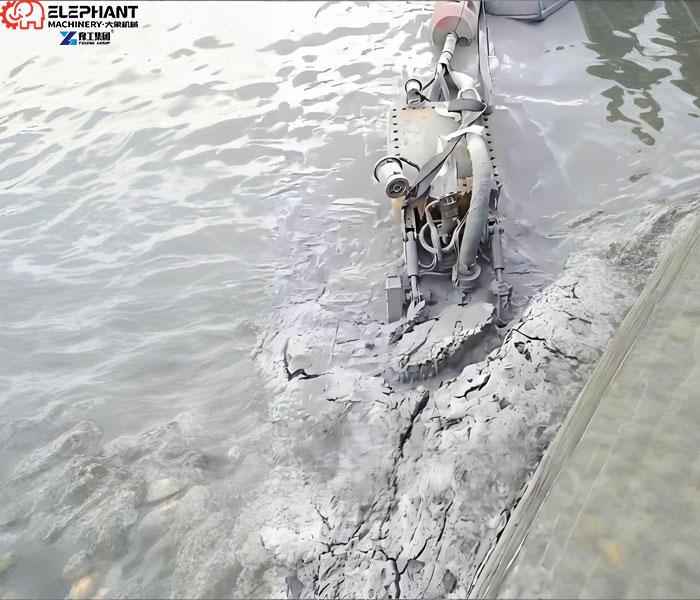
Settled sludge can become thick, uneven, and difficult to pump, reducing effective tank capacity and increasing maintenance requirements. The dredging robot combines remote-controlled movement, sludge loosening, and slurry pumping for suitable clarifier cleaning applications.
Its configuration can be customized according to clarifier dimensions, access openings, sludge properties, and discharge distance.
Clarifier Sludge Removal Robot Parameters
| Parameter | YG450 | YG500 | YG600 | YG700 | YG800 | YG900 | YG1200 |
| Robot Dimensions (mm) | ≤1700 × 450 × 450 | 1500 × 500 × 650 | 1500 × 600 × 650 | 1600 × 700 × 650 | 1600 × 850 × 700 | 1650 × 960 × 750 | 1900 × 1200 × 750 |
| Applicable Manhole / Access | ≥600 mm opening | ≥600 mm opening | ≥600 mm opening | ≥700 mm opening | ≥800 mm opening | ≥900 mm opening | Large culvert / open access |
| Dredging Width (mm) | 450 | 500 | 600 | 700 | 800 | 900 | Suitable for large culverts |
| Travel Speed (m/s) | 3–12 | 3–15 | 3–15 | 3–15 | 3–15 | 3–15 | 0–17 m/min |
| Pump Diameter (inch) | 3 | 3 | 3 | 4 | 4 | 4 | 4 or 6 |
| Pump Flow (m³/h) | 50 | 100 | 100 | 160 | 160 | 200 | 250 |
| Pump Head (m) | 0-30 | 0–30 | 0–30 | 0–25 | 0–25 | 0–25 | 0–30 (Horizontal: 100–150 m) |
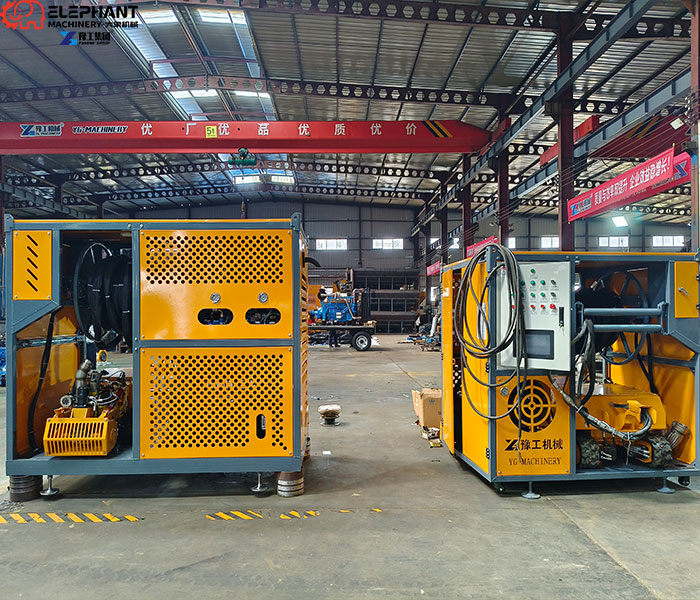
| Hydraulic Station Dimensions (mm) | 2000 × 1100 × 1500 (recommended) | 2200 × 1200 × 1700 | 2200 × 1200 × 1700 | 2200 × 1200 × 1700 | 2200 × 1200 × 1700 | 2200 × 1200 × 1700 | 2120 × 1240 × 1200 |
| Main Motor Power (kW) | 11–15 kW | 18 | 18 | 22 | 22 | 22 | 45 kW (50 kW) / Diesel 76 kW (123 kW) |
| Hydraulic System Pressure (MPa) | 0–16 | 0–16 | 0–16 | 0–16 | 0–16 | 0–16 | Custom / high-pressure system |
| Particle Size Capacity (mm) | ≤10–20 mm (soft sludge) | 15 | 15 | 40 | 40 | 50 | 0–40 (customizable) |
| Winch Speed (r/min) | 0–10 | 0–10 | 0–10 | 0–10 | 0–10 | 0–10 | 0–10 |
| Pipe Length (m) | 20–30 optional | 30–50 optional | 30–50 optional | 30–50 optional | 30–50 optional | 30–50 optional | 30 m/pack, high-pressure resistant |
| Control System | Wireless Remote Control | Wireless Remote | Wireless Remote | Wireless Remote | Wireless Remote | Wireless Remote | Wireless Remote |
| Lighting System | Underwater LED ×2 | Underwater LED ×2 | Underwater LED ×2 | Underwater LED ×2 | Underwater LED ×2 | Underwater LED ×2 | Underwater LED ×2 |
Get the Right Model for Your Project
Why Use a Robot for Clarifier Sludge Removal?
Clarifier cleaning often involves the following challenges:
- Thick or compacted sludge on the tank floor
- Uneven sludge accumulation
- Restricted access for conventional equipment
- Exposure risks associated with manual tank entry
- Long-distance sludge discharge requirements
A remote-controlled dredging robot helps reduce manual entry requirements and provides a flexible method for removing accumulated sludge in suitable conditions.
How Does the Clarifier Sludge Removal Robot Work?
1. Remote-Controlled Movement
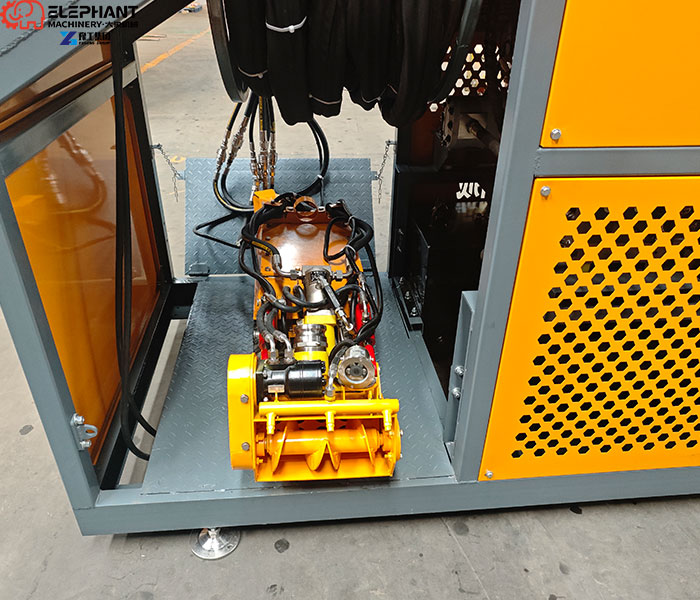
The crawler system allows the robot to move across suitable tank-floor surfaces and approach accumulated sludge. Operators control the equipment from outside the tank.
2. Sludge Loosening
When sludge is too thick for direct pumping, the system may be equipped with:
- High-pressure water jet
- Cutter or auger head
- Customized sludge loosening components
These options help mobilize selected deposits and improve pumpability.
3. Slurry Pumping
After the sludge becomes sufficiently fluid, the slurry is transferred through a discharge pipeline.
Pumping performance depends on:
- Sludge concentration and viscosity
- Pipeline length and diameter
- Vertical elevation
- Solid particle content
- Pump configuration
Sludge must have suitable fluidity for pumping. Water mixing or mechanical loosening may be necessary for thick deposits.
Key Benefits for Clarifier Cleaning
- Reduced manual entry: Remote operation can reduce personnel exposure to contaminated or confined areas.
- Flexible sludge removal: Suitable for selected settled sludge and compacted deposits when the correct loosening system is used.
- Customized access: Robot dimensions can be designed according to the clarifier’s access opening.
- Adaptable pumping: The pumping system can be selected according to sludge properties and discharge requirements.
- Non-drainage potential: In suitable conditions, sludge may be removed without fully draining the tank. This requires site and process assessment.
Clarifier Applications
The robot may be used for:
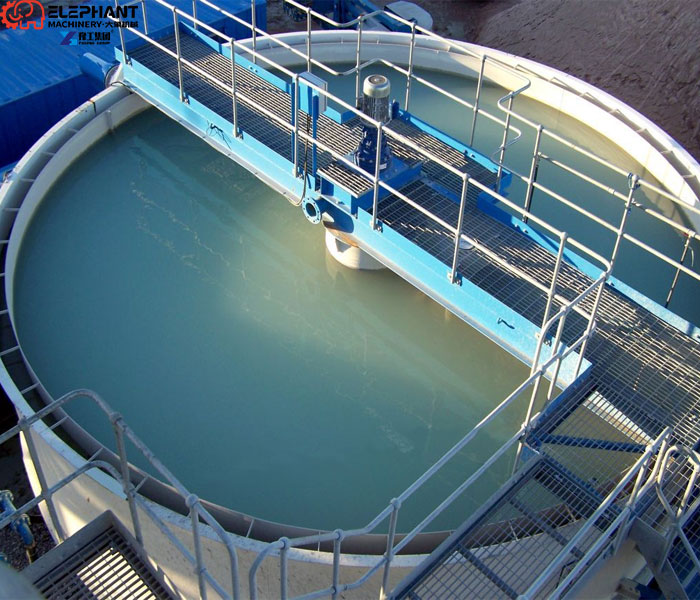
- Primary clarifier sludge removal
- Secondary clarifier cleaning
- Industrial wastewater clarifiers
- Settled sludge removal from treatment basins
- Clarifiers with restricted access
Suitability depends on the tank structure, sludge characteristics, water level, and operating conditions.
How to Select the Right Robot?
Before equipment selection, customers should provide:
| Project Information | Purpose |
|---|---|
| Clarifier dimensions | Determine working range |
| Access opening | Select suitable robot size |
| Sludge thickness and composition | Choose pumping and loosening equipment |
| Water depth | Confirm operating requirements |
| Discharge distance | Design the pumping system |
| Tank floor condition | Evaluate crawler mobility |
For corrosive or potentially hazardous environments, material compatibility, safety requirements, and applicable certifications must be reviewed separately. For complex treatment facilities, the equipment configuration should be evaluated as part of a complete wastewater sludge removal solution
Customized Clarifier Sludge Removal System
The system may be customized according to the project, including:
- Robot dimensions
- Pump capacity
- Cutter, auger, or water jet
- Discharge pipeline arrangement
- Control and power configuration
- Material selection
A site assessment is recommended to confirm whether the sludge can be pumped directly or requires additional preparation.
FAQ about Clarifier Sludge Removal Robot
1.Can the robot remove compacted clarifier sludge?
It may use a water jet, cutter, or auger head to loosen selected compacted sludge. The suitable method depends on the material properties.
2.Can the robot work without fully draining the tank?
In suitable conditions, yes. The feasibility depends on the treatment process, water level, sludge conditions, and site safety requirements.
3.Does the robot require personnel to enter the clarifier?
The robot is designed for remote-controlled operation from outside the tank. Additional personnel may be required for lifting, setup, safety supervision, and pipeline handling.
4.Can the system be customized?
Yes. Robot size, pumping capacity, sludge loosening equipment, and discharge arrangements can be evaluated according to project requirements.
Conclusion
A clarifier sludge removal robot provides a remote-controlled solution for removing settled sludge from suitable wastewater clarifiers and treatment basins.
By combining crawler movement, sludge loosening, and slurry pumping, the system can address deposits that are difficult to remove using conventional methods.
The final configuration should be selected according to clarifier access, sludge properties, water depth, and discharge requirements.