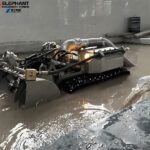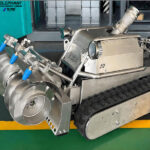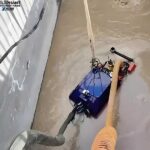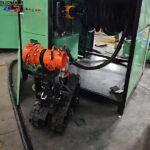
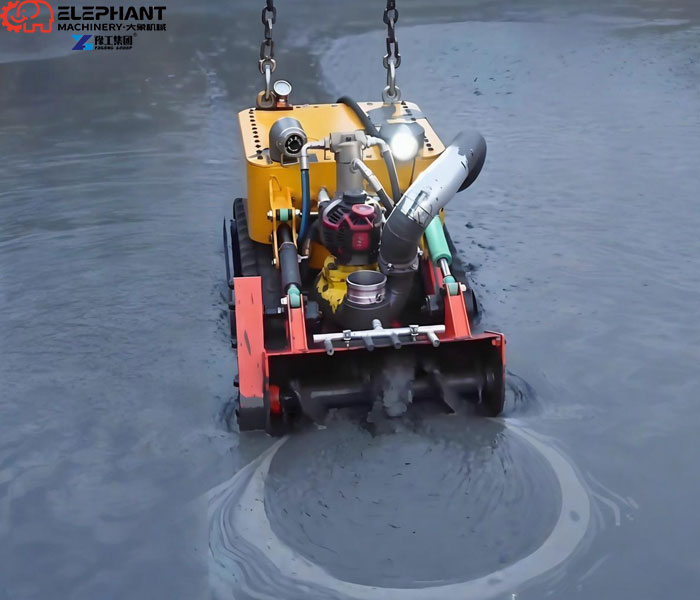
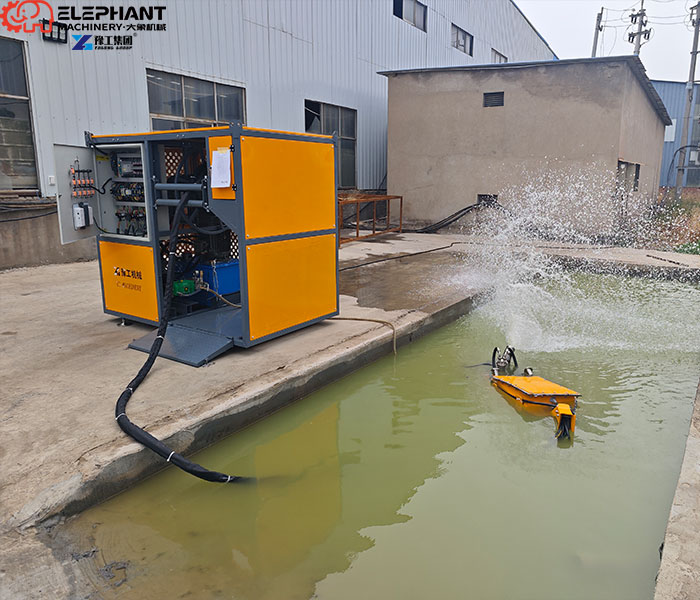
Draining a wastewater tank before cleaning can interrupt operations, require additional labor, and increase maintenance downtime. For facilities that need to keep water in the tank, wastewater tank sludge removal without draining may be a practical alternative when site conditions and equipment configuration are suitable.
A remote-controlled dredging robot can work underwater to loosen accumulated sludge and transfer it through a pumping system. However, successful cleaning depends on more than the robot itself. Tank access, sludge condition, water depth, and discharge requirements must be evaluated before the project begins.
Wastewater Tank Sludge Removal Robot Parameters
| Parameter | YG450 | YG500 | YG600 | YG700 | YG800 | YG900 | YG1200 |
| Robot Dimensions (mm) | ≤1700 × 450 × 450 | 1500 × 500 × 650 | 1500 × 600 × 650 | 1600 × 700 × 650 | 1600 × 850 × 700 | 1650 × 960 × 750 | 1900 × 1200 × 750 |
| Applicable Manhole / Access | ≥600 mm opening | ≥600 mm opening | ≥600 mm opening | ≥700 mm opening | ≥800 mm opening | ≥900 mm opening | Large culvert / open access |
| Dredging Width (mm) | 450 | 500 | 600 | 700 | 800 | 900 | Suitable for large culverts |
| Travel Speed (m/s) | 3–12 | 3–15 | 3–15 | 3–15 | 3–15 | 3–15 | 0–17 m/min |
| Pump Diameter (inch) | 3 | 3 | 3 | 4 | 4 | 4 | 4 or 6 |
| Pump Flow (m³/h) | 50 | 100 | 100 | 160 | 160 | 200 | 250 |
| Pump Head (m) | 0-30 | 0–30 | 0–30 | 0–25 | 0–25 | 0–25 | 0–30 (Horizontal: 100–150 m) |
| Hydraulic Station Dimensions (mm) | 2000 × 1100 × 1500 (recommended) | 2200 × 1200 × 1700 | 2200 × 1200 × 1700 | 2200 × 1200 × 1700 | 2200 × 1200 × 1700 | 2200 × 1200 × 1700 | 2120 × 1240 × 1200 |
| Main Motor Power (kW) | 11–15 kW | 18 | 18 | 22 | 22 | 22 | 45 kW (50 kW) / Diesel 76 kW (123 kW) |
| Hydraulic System Pressure (MPa) | 0–16 | 0–16 | 0–16 | 0–16 | 0–16 | 0–16 | Custom / high-pressure system |
| Particle Size Capacity (mm) | ≤10–20 mm (soft sludge) | 15 | 15 | 40 | 40 | 50 | 0–40 (customizable) |
| Winch Speed (r/min) | 0–10 | 0–10 | 0–10 | 0–10 | 0–10 | 0–10 | 0–10 |
| Pipe Length (m) | 20–30 optional | 30–50 optional | 30–50 optional | 30–50 optional | 30–50 optional | 30–50 optional | 30 m/pack, high-pressure resistant |
| Control System | Wireless Remote Control | Wireless Remote | Wireless Remote | Wireless Remote | Wireless Remote | Wireless Remote | Wireless Remote |
| Lighting System | Underwater LED ×2 | Underwater LED ×2 | Underwater LED ×2 | Underwater LED ×2 | Underwater LED ×2 | Underwater LED ×2 | Underwater LED ×2 |
Get the Right Model for Your Project
Can You Remove Sludge from a Wastewater Tank Without Draining?
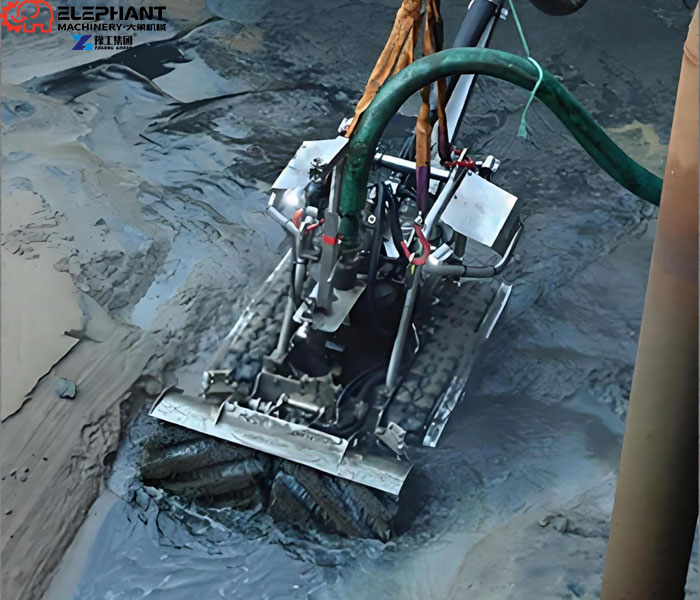
In suitable conditions, sludge can be removed while the tank remains filled or partially filled. A remote-controlled dredging robot enters the tank, moves across the bottom, and removes accumulated sludge without requiring operators to enter the tank.
This approach may help facilities reduce the need for complete tank drainage. However, it does not guarantee continuous operation in every wastewater facility.
Before cleaning, the following conditions should be assessed:
- Tank water depth and internal layout
- Robot access and operating space
- Sludge thickness and concentration
- Required pumping distance
- Compatibility with the tank’s operating process
The final cleaning method should be selected according to the actual site conditions.
How Does the Robot Remove Sludge Underwater?
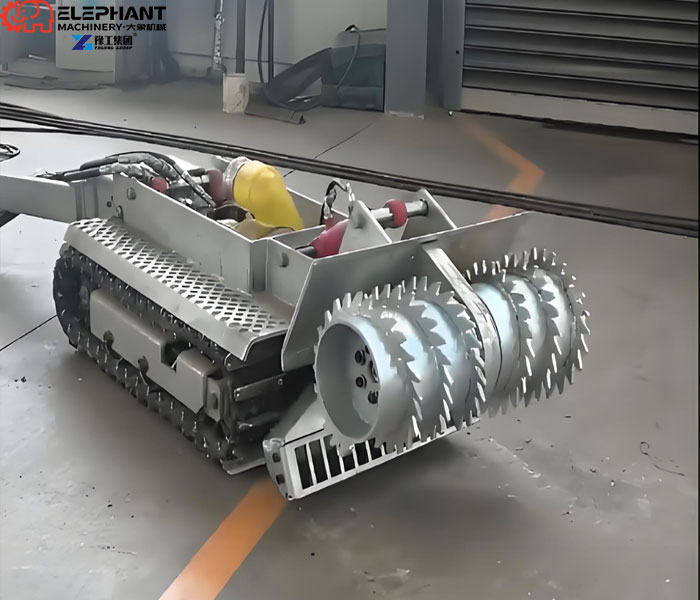
The robot uses a simple Break → Add Water if Needed → Pump process. A cutting head or auger loosens compacted sludge, while additional water may be introduced to improve slurry flow. A hydraulic transfer pump then transports the prepared slurry through a discharge pipeline.
The actual configuration depends on sludge thickness, solid content, and pumping requirements.
What Types of Sludge Can Be Removed?
Not all wastewater sludge behaves the same way during cleaning.
Soft, pumpable sludge may require a different configuration from thick deposits or compacted sediment. Sand, gravel, and other solid particles can also affect the pumping process.
Before selecting equipment, consider:
- Sludge thickness
- Moisture content
- Solid concentration
- Degree of compaction
- Particle size
For difficult deposits, a cutting head or high-pressure water jet may help loosen the material. The pumping system must still be suitable for the resulting slurry.
A site assessment is essential when sludge properties are uncertain.
Can the Tank Continue Operating During Cleaning?
One reason facilities consider sludge removal without draining is to reduce disruption to their operations.
However, whether a tank can remain in service depends on its role in the treatment process, water flow, sludge accumulation, and cleaning method.
The equipment supplier should work with the facility operator to determine:
- Whether the tank can remain partially or fully filled
- Whether the robot can operate without interfering with the process
- Where removed sludge will be discharged
- Whether any temporary operational adjustments are required
Remote-controlled operation can reduce the need for personnel to enter the tank, but it does not remove the need for appropriate site safety procedures.
How Is Sludge Transferred Out of the Tank?
Removing sludge from the tank is only one part of the cleaning system. The slurry must also be transferred to a suitable collection or treatment location.
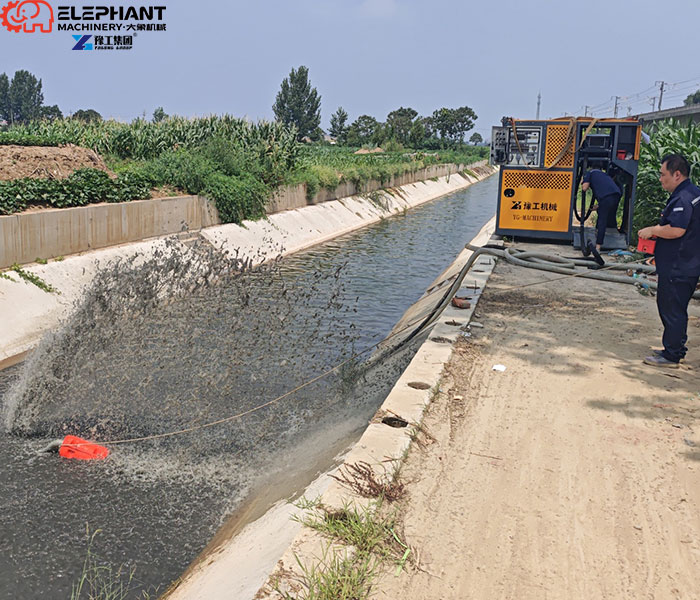
The required pumping configuration depends on:
- Horizontal pumping distance
- Vertical lifting height
- Sludge consistency
- Pipeline diameter
- Discharge location
A suitable system should be evaluated as a complete combination of robot, transfer pump, hose, and discharge arrangement.
Long pumping distances or high lifting requirements may affect the achievable flow rate and equipment selection.
What Should You Check Before Choosing a Robot?
The right configuration depends on the tank and the material being removed.
Before requesting a quotation, prepare:
| Tank length and width | Determines the working area |
| Access opening size | Confirms whether the robot can enter |
| Water depth | Helps assess operating conditions |
| Sludge thickness | Affects loosening and pumping |
| Sludge concentration | Influences slurry flow |
| Particle size | Helps evaluate pumping compatibility |
| Pumping distance | Determines transfer requirements |
| Discharge height | Affects pump selection |
| Available power | Helps determine the power configuration |
| Drainage restrictions | Defines the cleaning approach |
Providing photographs, drawings, and operating details can help the supplier evaluate the application more accurately.
Remote-Controlled Sludge Removal for Wastewater Tanks
A remote-controlled dredging robot may provide an alternative to complete tank drainage when sludge has accumulated in wastewater tanks, sedimentation tanks, or industrial water facilities.
YG offers dredging robot configurations including the YG450, YG900, and YG1200. Model selection depends on access conditions, required capacity, sludge properties, and the pumping system.
For applications involving thick sludge, restricted access, or long-distance slurry transfer, equipment configuration should be reviewed according to the actual site requirements.
Contact YG with your tank dimensions, sludge condition, access size, and pumping distance to discuss a suitable sludge removal solution.
FAQ
Can a wastewater tank be cleaned without draining it?
In suitable conditions, a remote-controlled dredging robot can remove sludge while water remains in the tank. Feasibility depends on water depth, sludge properties, access, and operating requirements.
Does the sludge need to be mixed with water before pumping?
Not always. If the sludge is too thick or compacted for efficient pumping, additional water or mechanical loosening may be required. The amount depends on the material and system configuration.
Can the robot remove compacted sludge?
Depending on the model and configuration, cutting heads, augers, or high-pressure water jets may help loosen compacted sludge. The actual capability must be assessed for the specific material.
Does sludge removal without draining eliminate downtime?
Not necessarily. The approach may reduce the need for complete drainage, but operational adjustments or temporary shutdowns may still be required depending on the facility.
Can the sludge removal system be customized?
Yes. Robot dimensions, pumping configuration, hose arrangement, and control systems can be evaluated according to tank access, sludge conditions, and discharge requirements.