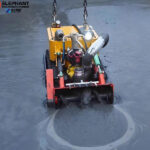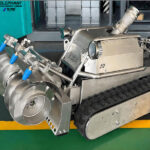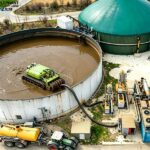
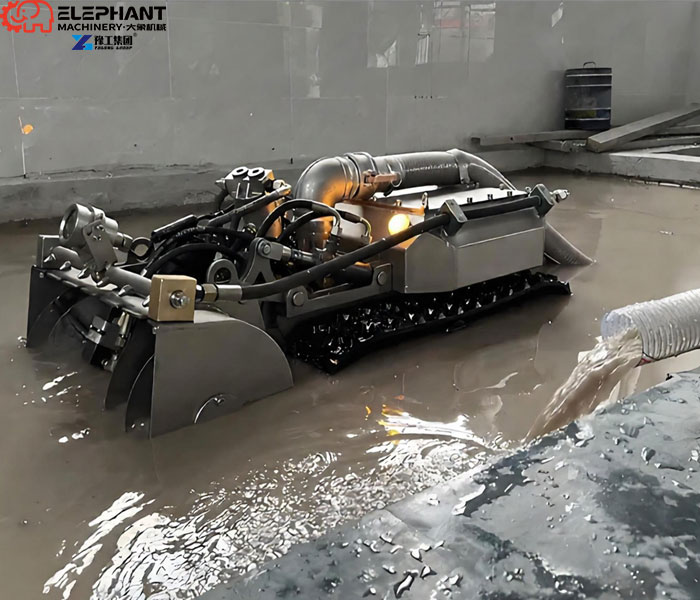
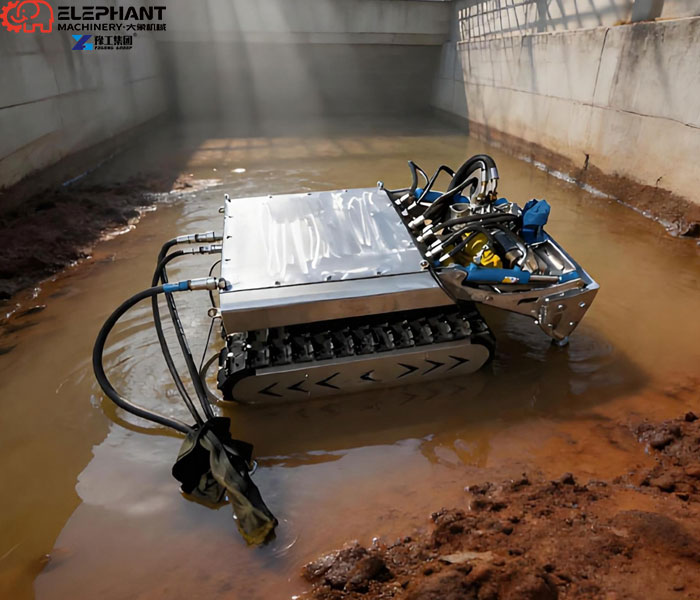
Removing accumulated sludge from wastewater tanks can be difficult when the tank is deep, access is limited, or shutting down the tank is impractical. A remote-controlled sludge removal robot can help operators remove settled sludge while reducing the need for manual entry.
However, choosing the right sludge removal robot for a wastewater tank is not simply a matter of selecting the largest model. Robot dimensions, tank access, sludge characteristics, pumping distance, and operating conditions all affect the final configuration.
This guide explains the key factors to check before selecting a wastewater tank sludge removal robot.
Wastewater Tanks Sludge Removal Robot Parameters
| Parameter | YG450 | YG500 | YG600 | YG700 | YG800 | YG900 | YG1200 |
| Robot Dimensions (mm) | ≤1700 × 450 × 450 | 1500 × 500 × 650 | 1500 × 600 × 650 | 1600 × 700 × 650 | 1600 × 850 × 700 | 1650 × 960 × 750 | 1900 × 1200 × 750 |
| Applicable Manhole / Access | ≥600 mm opening | ≥600 mm opening | ≥600 mm opening | ≥700 mm opening | ≥800 mm opening | ≥900 mm opening | Large culvert / open access |
| Dredging Width (mm) | 450 | 500 | 600 | 700 | 800 | 900 | Suitable for large culverts |
| Travel Speed (m/s) | 3–12 | 3–15 | 3–15 | 3–15 | 3–15 | 3–15 | 0–17 m/min |
| Pump Diameter (inch) | 3 | 3 | 3 | 4 | 4 | 4 | 4 or 6 |
| Pump Flow (m³/h) | 50 | 100 | 100 | 160 | 160 | 200 | 250 |
| Pump Head (m) | 0-30 | 0–30 | 0–30 | 0–25 | 0–25 | 0–25 | 0–30 (Horizontal: 100–150 m) |
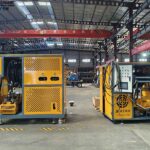
| Hydraulic Station Dimensions (mm) | 2000 × 1100 × 1500 (recommended) | 2200 × 1200 × 1700 | 2200 × 1200 × 1700 | 2200 × 1200 × 1700 | 2200 × 1200 × 1700 | 2200 × 1200 × 1700 | 2120 × 1240 × 1200 |
| Main Motor Power (kW) | 11–15 kW | 18 | 18 | 22 | 22 | 22 | 45 kW (50 kW) / Diesel 76 kW (123 kW) |
| Hydraulic System Pressure (MPa) | 0–16 | 0–16 | 0–16 | 0–16 | 0–16 | 0–16 | Custom / high-pressure system |
| Particle Size Capacity (mm) | ≤10–20 mm (soft sludge) | 15 | 15 | 40 | 40 | 50 | 0–40 (customizable) |
| Winch Speed (r/min) | 0–10 | 0–10 | 0–10 | 0–10 | 0–10 | 0–10 | 0–10 |
| Pipe Length (m) | 20–30 optional | 30–50 optional | 30–50 optional | 30–50 optional | 30–50 optional | 30–50 optional | 30 m/pack, high-pressure resistant |
| Control System | Wireless Remote Control | Wireless Remote | Wireless Remote | Wireless Remote | Wireless Remote | Wireless Remote | Wireless Remote |
| Lighting System | Underwater LED ×2 | Underwater LED ×2 | Underwater LED ×2 | Underwater LED ×2 | Underwater LED ×2 | Underwater LED ×2 | Underwater LED ×2 |
Get the Right Model for Your Project
1. Check the Tank Access Size First
Before considering robot capacity, determine how the robot will enter the tank.
Measure:
- Manhole or entrance width and height
- Stairway or access opening dimensions
- Internal passages and obstructions
- Available space for the robot and hoses
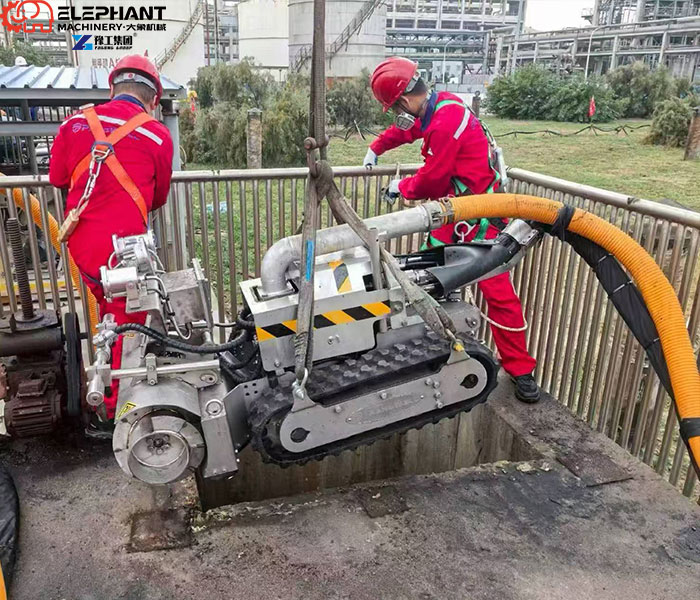
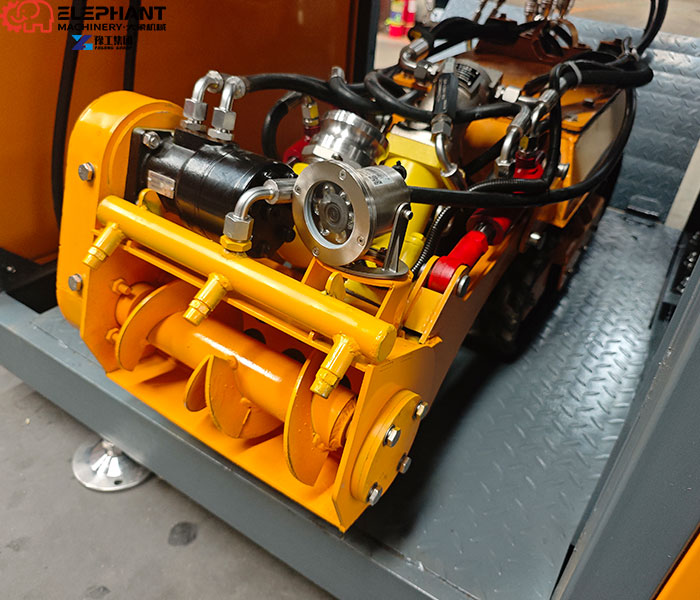
A compact robot may be required when the tank has a narrow manhole or restricted entrance. For example, the YG450 has a compact structure and can be configured for limited-access wastewater tanks.
The robot must not only fit through the entrance but also have enough working space to move and turn inside the tank.
2. Evaluate Sludge Thickness and Condition
Sludge properties directly affect the cleaning method and pumping system.
Consider:
- Sludge thickness
- Moisture content
- Sludge concentration
- Degree of compaction
- Sand, gravel, or other solid particles
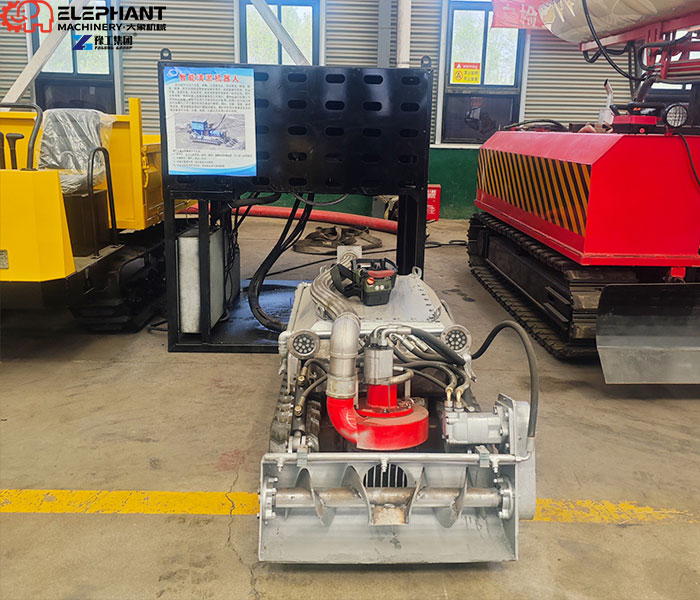
Soft, pumpable sludge can usually be transferred more easily. Thick or compacted deposits may require a cutting head, auger, or high-pressure water jet to loosen the material before pumping.
For this reason, sludge removal capacity should be evaluated together with sludge condition, rather than by pump capacity alone.
3. Consider Particle Size
Wastewater tanks may contain more than fine biological sludge. Sand, sediment, scale, and other solid particles can accumulate at the bottom.
If coarse particles are present, check the allowable particle size of the pumping system and the configuration of the robot’s suction and transfer system.
This is particularly important for industrial wastewater tanks, sedimentation tanks, and other facilities where heavier solids may settle with the sludge.
4. Calculate the Required Pumping Distance
The robot removes sludge from the tank, but the material still needs to be transferred to a designated collection or treatment area.
Therefore, determine:
- Horizontal pumping distance
- Vertical lifting height
- Discharge location
- Required flow rate
- Pipeline diameter and routing
A robot with sufficient dredging capacity may still be unsuitable if its transfer pump cannot handle the required distance or head.
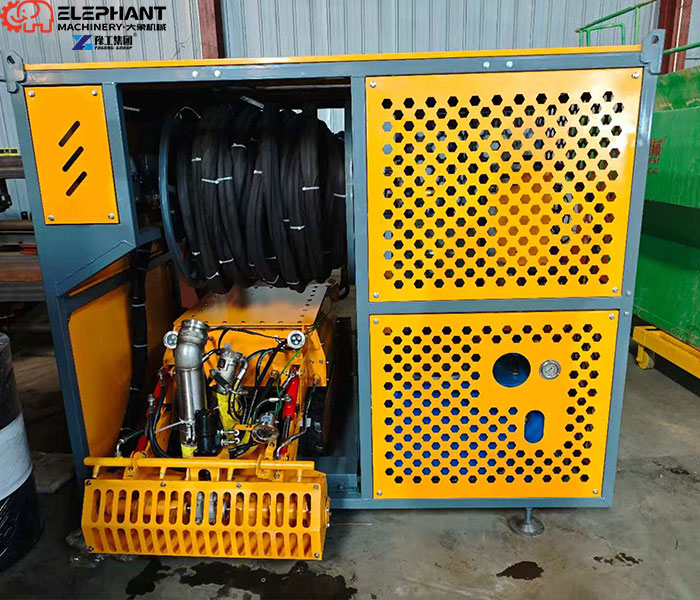
For larger wastewater tanks or long-distance discharge, the hydraulic transfer pump and pipeline configuration should be evaluated as part of the complete system.
5. Match Robot Dimensions to Tank Dimensions
Tank size affects both the required working area and the appropriate robot configuration.
For larger tanks, consider:
- Tank length and width
- Bottom layout
- Sludge accumulation area
- Robot travel distance
- Required operating time
The goal is not necessarily to select the largest wastewater tank cleaning robot. A suitable model should provide enough traction, working capacity, and pumping performance while remaining practical for the tank environment.
For different site conditions, YG can configure models such as the YG450, YG900, and YG1200 according to access limitations and required sludge removal capacity.
6. Choose the Right Power and Control System
Power supply is another important consideration.
Depending on the application, a sludge removal robot may use:
- Electric power
- Diesel power
- Hydraulic power
- Remote-controlled operation
Remote control is particularly useful when operators need to work outside the tank. The operator can control the robot’s movement and sludge removal functions without entering the tank.
For wastewater facilities, this can simplify operations where confined-space access is difficult or undesirable.
7. Decide Whether the Tank Can Be Drained
This question should be answered before selecting the equipment.
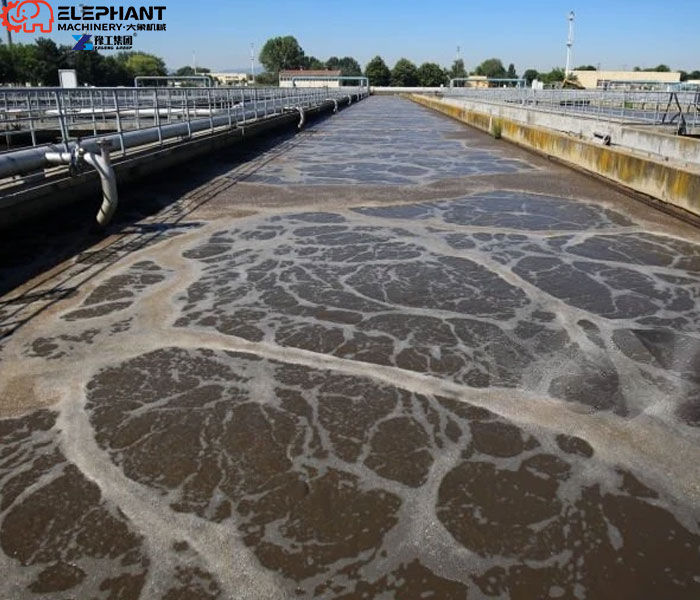
If a wastewater tank can be completely drained and taken offline, conventional mechanical cleaning may be possible.
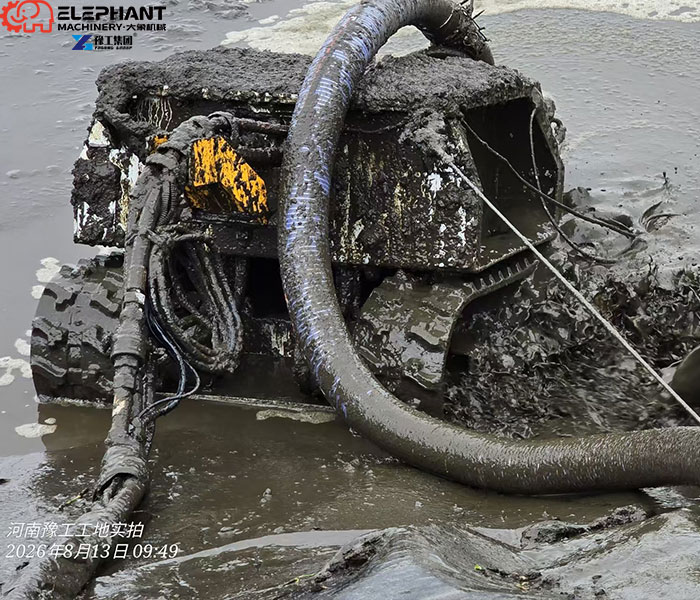
However, some facilities need to maintain continuous operation or minimize downtime. In these situations, a remote-controlled sludge removal robot for wastewater tanks can provide an alternative approach by working inside the tank without requiring full drainage.
The actual feasibility depends on water depth, sludge condition, access, tank layout, and the robot configuration.
8. Compare Robot Models by Application, Not Just Capacity
A simple capacity comparison is not enough when selecting a sludge removal robot.
| Tank access | Can the robot enter through the available opening? |
| Tank depth | Is the robot suitable for the operating depth? |
| Sludge condition | Soft, thick, compacted, or mixed with solids? |
| Particle size | Can the pumping system handle the solids? |
| Pumping distance | What are the horizontal distance and lifting height? |
| Tank dimensions | Can the robot efficiently cover the sludge accumulation area? |
| Robot size | Does the model fit the access and working space? |
| Power | Electric, diesel, or hydraulic configuration? |
| Drainage | Can the tank be taken offline and drained? |
| Customization | Are dimensions, pump, hoses, or control systems adjustable? |
9. Why Site Information Matters?
A professional recommendation should be based on actual site conditions rather than tank volume alone.
Before selecting a model, provide the equipment supplier with:
- Tank dimensions
- Access opening dimensions
- Water depth
- Estimated sludge thickness
- Sludge type and concentration
- Approximate particle size
- Pumping distance and discharge height
- Available power supply
- Photos or drawings of the tank
This information helps determine whether a standard configuration is suitable or whether the sludge removal robot needs to be customized.
Choose a Sludge Removal Robot Based on the Complete System
The right wastewater tank sludge removal robot is determined by the relationship between the tank, sludge, access conditions, robot, and pumping system.
A compact robot may be the right choice for a restricted-access tank, while a larger model may be more appropriate for high-volume sludge removal. Thick or compacted sludge may also require additional cutting or water-jet functions before pumping.
For wastewater tanks, clarifiers, sedimentation tanks, and industrial sludge applications, YG can evaluate the site conditions and recommend a suitable configuration, including models such as the YG450, YG900, and YG1200.
Send us your tank dimensions, access size, sludge condition, and pumping distance to discuss a suitable sludge removal robot configuration.
FAQ about Sludge Removal Robot
1.Can a sludge removal robot work in a wastewater tank without draining it?
In suitable conditions, a remote-controlled robot can remove sludge while the tank remains filled. Feasibility depends on water depth, sludge condition, access, and the specific robot configuration.
2.How do I choose the right sludge removal robot?
Start with the tank access size, depth, sludge thickness, particle size, pumping distance, and available power. These factors determine the appropriate robot size and pumping configuration.
3.Can the robot handle thick or compacted sludge?
Yes, depending on the configuration. Cutting heads, augers, and high-pressure water jets can be used to loosen difficult sludge before it is pumped out.
4.Can the sludge removal robot be customized?
Yes. Robot dimensions, pumping capacity, hose configuration, control systems, and other components can be configured according to the wastewater tank and operating conditions.