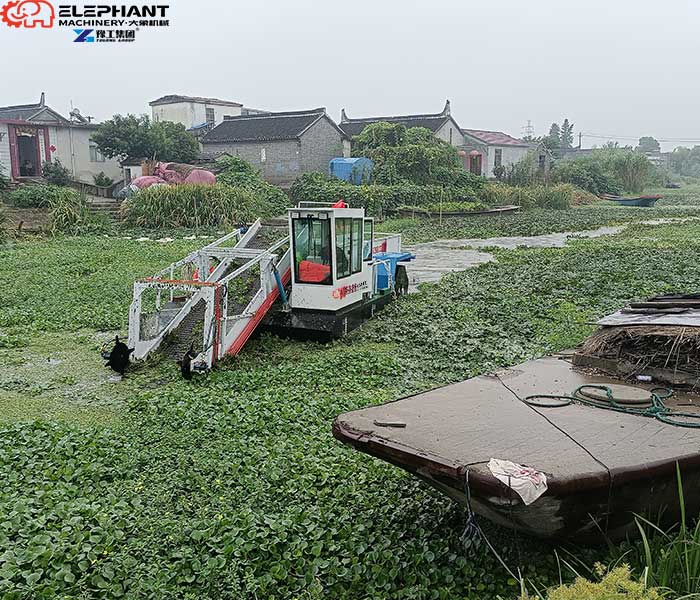
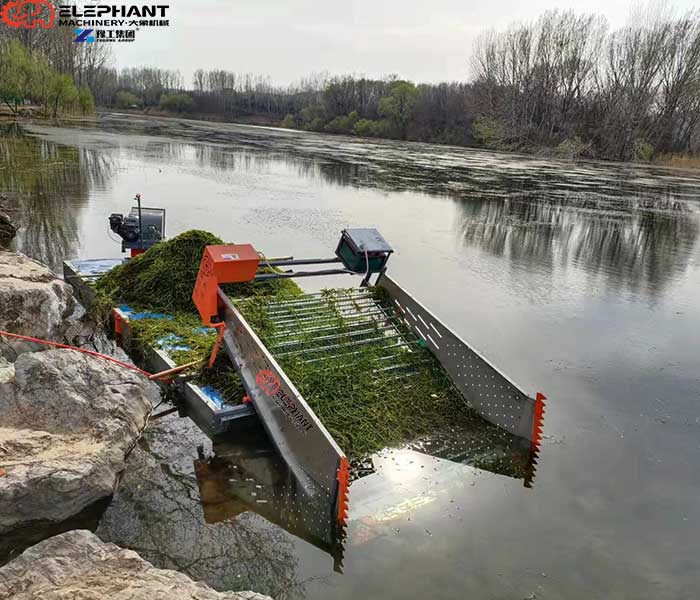
In many lakes, rivers, reservoirs, and irrigation channels, aquatic vegetation is growing faster than ever. Species such as water hyacinth, hydrilla, and floating algae can quickly cover large water surfaces and disrupt normal water systems.
Once the vegetation spreads, operators often face several serious issues:
- Water flow becomes restricted in canals and drainage systems
- Oxygen levels drop, causing fish deaths and ecosystem imbalance
- Navigation and recreational activities are blocked
- Manual removal becomes slow, expensive, and unsafe
- Chemical treatment may cause secondary pollution
In many cases, traditional methods like manual cutting or small lake weed cutters are no longer practical for large-scale projects. This creates a strong demand for a more efficient and continuous solution.
That is where an aquatic weed harvester becomes essential.
Aquatic Weed Harvester
| Parameter | Model A | Model B |
| Total Length of Hull | 16 m | 8.5 m |
| Hull Length | 9 m | 6 m |
| Hull Width | 3.4 m | 2.8 m |
| Hull Height | 1.0 m | 0.8 m |
| No-load Draft | 0.3–0.4 m | 0.3–0.4 m |
| Load Draft | 0.4–0.6 m | 0.4–0.5 m |
| Collecting Depth | ≤2 m | ≤1.8 m |
| Collecting Width | ≤2.2 m | ≤2 m |
| Loading Capacity | 14–15 m³ | 2–3 T |
| Engine Power | 90 kW | 39 kW |
| Sailing Speed | 5–20 km/h | 5–20 km/h |
| Work Speed | 3–5 km/h | 3–5 km/h |
| Endurance | 12 h | 12 h |
| Drive Mode | Bilateral wheel | Bilateral wheel |
| Discharge Height | ≤4 m | ≤3 m |
| Working Capacity | 1000–6000 m²/h | 1000–2000 m²/h |
What Is an Aquatic Weed Harvester?
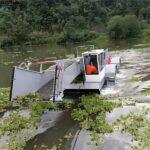
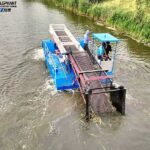
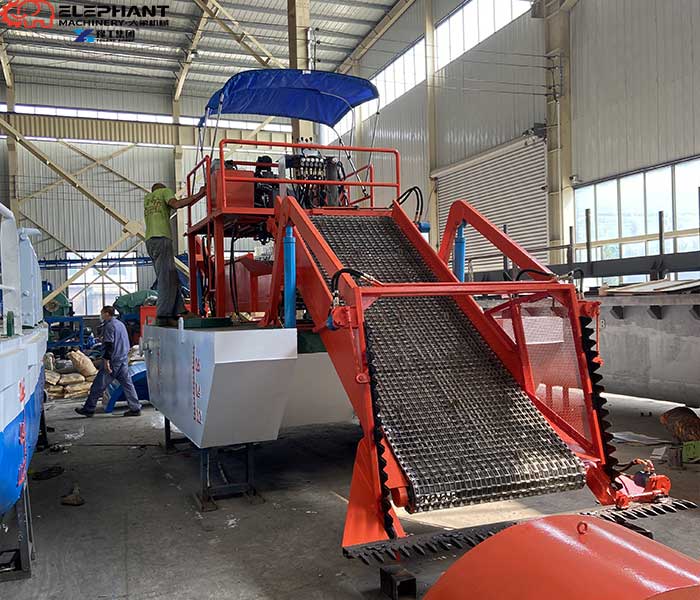
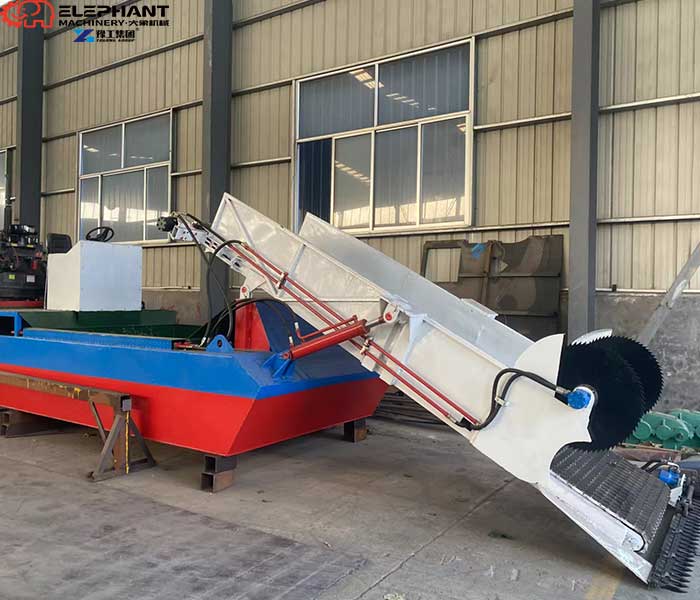
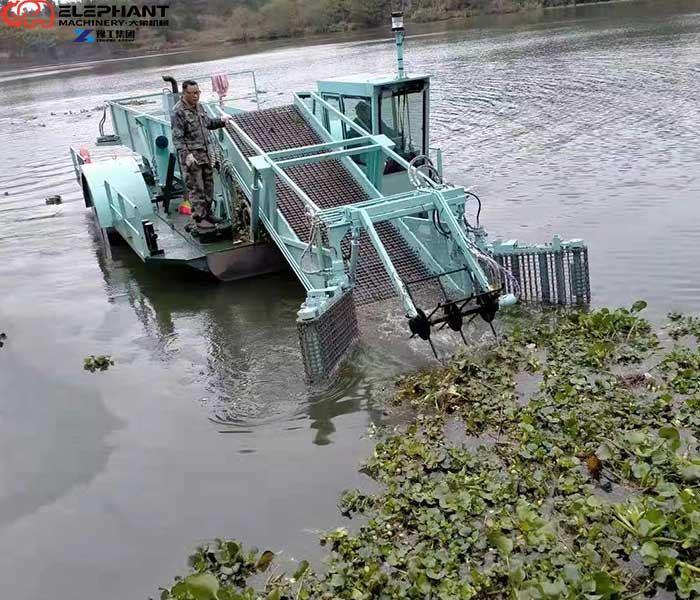
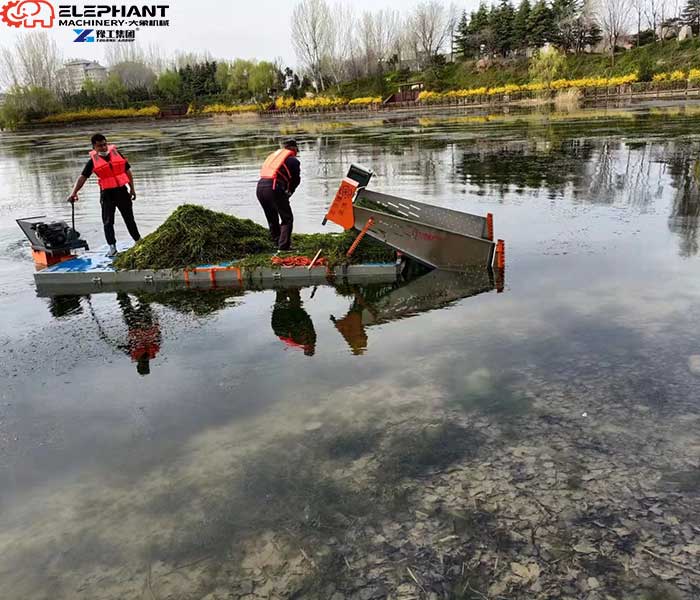
An aquatic weed harvester is a floating mechanical system designed to cut and collect unwanted aquatic plants directly from water surfaces.
It is widely used as a practical solution for:
- lake weed removal
- water hyacinth control
- floating vegetation harvesting
- canal and river surface cleaning
Unlike simple cutting tools, the machine integrates cutting, collecting, and transporting functions in one system, allowing continuous operation on water.
Depending on configuration, it may also be referred to as:
- lake weed harvester machine
- aquatic weed removal boat
- motorized lake weed cutter
- mechanical weed harvester for lakes
Key Features and Advantages of Aquatic Weed Harvester Machine
1. Efficient Continuous Harvesting Operation
The machine is designed for uninterrupted working on water. It can continuously cut and collect floating weeds, significantly improving productivity compared to manual or semi-mechanical methods.
2. Strong Capability for Dense Vegetation
It performs well in areas heavily covered with:
- water hyacinth mats
- hydrilla and submerged plants
- thick floating weed layers
- mixed aquatic vegetation zones
Even large-scale infestations can be managed efficiently.
3. Integrated Cutting and Collection System
Cut vegetation is automatically transported into onboard storage through a conveyor system. This eliminates the need for separate collection boats and reduces labor requirements.
4. Flexible Operation Options
Depending on project needs, the equipment can be:
- manually operated (motorized lake weed cutter)
- remotely controlled (remote controlled aquatic harvester)
This makes it suitable for both small ponds and large lake environments.
5. Stable Floating Platform Design
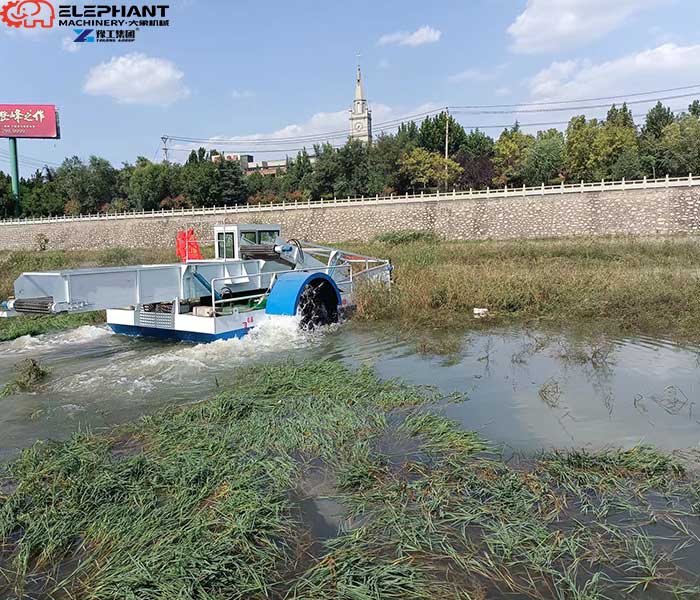
The hull structure is designed for stability in different water conditions, allowing smooth operation in:
- calm lakes
- rivers with mild current
- shallow or deep water areas
Main Application of Aquatic Weed Harvester
It is widely used in environmental and water management projects such as:
1.Lake and Reservoir Management
Helps restore water quality and maintain ecological balance by removing excessive vegetation.
2.River and Canal Cleaning
Improves water flow and prevents blockages in irrigation and drainage systems.
3.Water Hyacinth Removal Projects
Highly effective for controlling invasive species that spread rapidly across water surfaces.
4.Municipal Water Maintenance
Used in urban water systems, parks, and tourism lakes for long-term maintenance.
5.Coastal and Seaweed Cleaning
In some configurations, it can also assist in nearshore seaweed removal operations.
Why Choose a Mechanical Aquatic Weed Harvester?
Compared with traditional methods, the benefits are clear:
- Significantly higher working efficiency
- Continuous operation without frequent interruption
- Lower long-term labor cost
- Safer operation with reduced human exposure to water hazards
- Environmentally friendly physical removal method
- Suitable for large-scale water surface coverage
For contractors and municipalities, it provides a more stable and predictable maintenance solution.
Aquatic Weed Harvester vs Other Methods
Compared with basic tools such as lake weed cutters or manual mowing systems, the harvester offers a complete workflow:
- Cutting + collection + transport in one machine
- No secondary cleanup required
- Much higher daily processing capacity
Compared with chemical treatment methods, it avoids water pollution risks and preserves ecological balance, making it more suitable for long-term environmental management.
FAQ – Aquatic Weed Harvester
1. What types of aquatic plants can it remove?
It can handle common invasive and floating plants such as water hyacinth, hydrilla, duckweed, and other surface vegetation.
2. Is it suitable for large lakes?
Yes. It is designed for continuous operation in large water bodies and can cover wide surface areas efficiently.
3. Does it only cut weeds or also collect them?
It both cuts and collects vegetation. The onboard conveyor system stores the harvested material for easy unloading.
4. Can it operate in shallow water areas?
Yes. The floating structure allows operation in both shallow and deeper water zones.
5. What happens to the collected weeds?
They can be transported to shore for composting, biomass use, or landfill disposal depending on project requirements.
Final Summary
An aquatic weed harvester is a practical and efficient solution for modern water vegetation management. It provides continuous cutting and collection of aquatic plants, helping restore lake health, improve water flow, and reduce long-term maintenance costs.
For environmental contractors, municipalities, and irrigation authorities, it is a reliable investment for sustainable waterway management.