
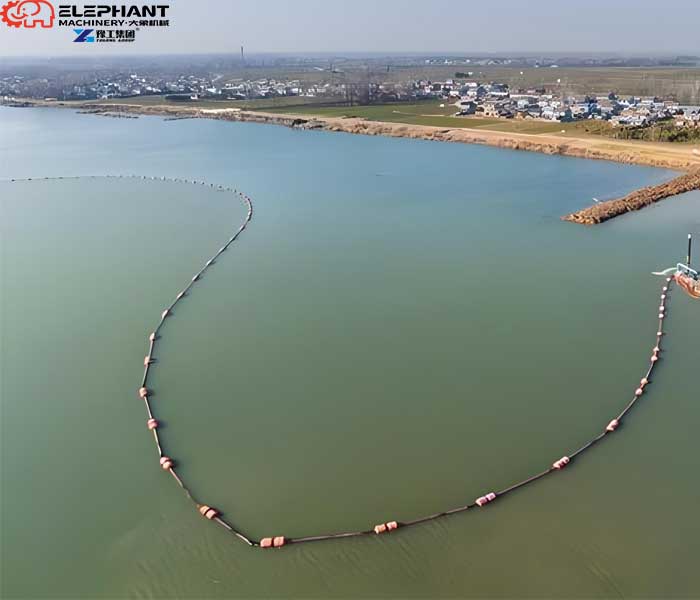
Many natural and man-made lakes in Ireland are experiencing long-term ecological degradation caused by excessive sludge accumulation, organic sediment buildup, and nutrient inflow from surrounding agricultural land.
In a recent environmental restoration project in western Ireland, a municipal water authority faced a critical issue: the lake had lost nearly 30% of its original depth due to years of sediment deposition. This resulted in poor water circulation, algae overgrowth, reduced oxygen levels, and a significant decline in aquatic biodiversity.
Traditional dredging equipment was considered, but it was quickly ruled out due to environmental sensitivity, limited shoreline access, and the risk of disturbing fragile aquatic ecosystems.
As a result, the project team selected a Elephant Machinery lake sludge removal robot as the primary solution for sediment cleaning and ecological restoration.
Lake Sludge Removal Robot Parameters
| Parameter | YG450 | YG500 | YG600 | YG700 | YG800 | YG900 | YG1200 |
| Robot Dimensions (mm) | ≤1700 × 450 × 450 | 1500 × 500 × 650 | 1500 × 600 × 650 | 1600 × 700 × 650 | 1600 × 850 × 700 | 1650 × 960 × 750 | 1900 × 1200 × 750 |
| Applicable Manhole / Access | ≥600 mm opening | ≥600 mm opening | ≥600 mm opening | ≥700 mm opening | ≥800 mm opening | ≥900 mm opening | Large culvert / open access |
| Dredging Width (mm) | 450 | 500 | 600 | 700 | 800 | 900 | Suitable for large culverts |
| Travel Speed (m/s) | 3–12 | 3–15 | 3–15 | 3–15 | 3–15 | 3–15 | 0–17 m/min |
| Pump Diameter (inch) | 3 | 3 | 3 | 4 | 4 | 4 | 4 or 6 |
| Pump Flow (m³/h) | 50 | 100 | 100 | 160 | 160 | 200 | 250 |
| Pump Head (m) | 0-30 | 0–30 | 0–30 | 0–25 | 0–25 | 0–25 | 0–30 (Horizontal: 100–150 m) |
| Hydraulic Station Dimensions (mm) | 2000 × 1100 × 1500 (recommended) | 2200 × 1200 × 1700 | 2200 × 1200 × 1700 | 2200 × 1200 × 1700 | 2200 × 1200 × 1700 | 2200 × 1200 × 1700 | 2120 × 1240 × 1200 |
| Main Motor Power (kW) | 11–15 kW | 18 | 18 | 22 | 22 | 22 | 45 kW (50 kW) / Diesel 76 kW (123 kW) |
| Hydraulic System Pressure (MPa) | 0–16 | 0–16 | 0–16 | 0–16 | 0–16 | 0–16 | Custom / high-pressure system |
| Particle Size Capacity (mm) | ≤10–20 mm (soft sludge) | 15 | 15 | 40 | 40 | 50 | 0–40 (customizable) |
| Winch Speed (r/min) | 0–10 | 0–10 | 0–10 | 0–10 | 0–10 | 0–10 | 0–10 |
| Pipe Length (m) | 20–30 optional | 30–50 optional | 30–50 optional | 30–50 optional | 30–50 optional | 30–50 optional | 30 m/pack, high-pressure resistant |
| Control System | Wireless Remote Control | Wireless Remote | Wireless Remote | Wireless Remote | Wireless Remote | Wireless Remote | Wireless Remote |
| Lighting System | Underwater LED ×2 | Underwater LED ×2 | Underwater LED ×2 | Underwater LED ×2 | Underwater LED ×2 | Underwater LED ×2 | Underwater LED ×2 |
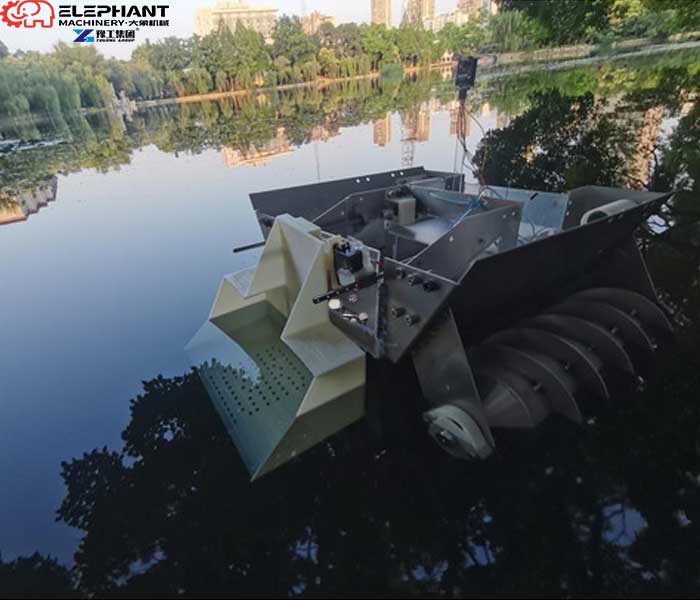
Project Background and Technical Selection
The goal of the project was to restore lake depth and improve water quality without causing large-scale environmental disruption.
After technical evaluation, engineers deployed a combination of YG600 and YG800 lake sludge removal robot systems, selected based on sediment density and working zone depth.
The key reasons for choosing this solution included:
- ability to perform precise lake sediment removal in sensitive ecological zones
- remote-controlled operation eliminating the need for human entry into water
- strong adaptability to soft sludge and semi-solid sediment layers
- continuous dredging capability for large-scale lake restoration
Lake Conditions and Engineering Challenges
The lake presented complex operational conditions.
Sediment depth ranged from 0.8 to 1.6 meters, with heavily compacted sludge zones reaching particle concentrations of up to 40 mm in certain areas. Water clarity was extremely low, and underwater visibility was severely limited.
Major challenges included:
- uneven sediment distribution across lakebed zones
- soft sludge mixed with organic decomposition materials
- restricted access points for mechanical equipment
- strict environmental protection requirements
These conditions made conventional dredging equipment unsuitable and reinforced the need for a lake sludge removal robot system with precision control capability.
Equipment Configuration and Working Principle
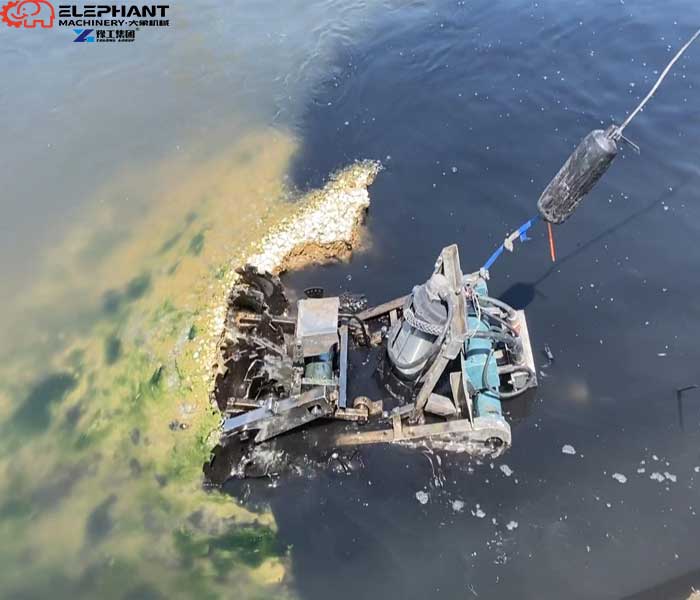
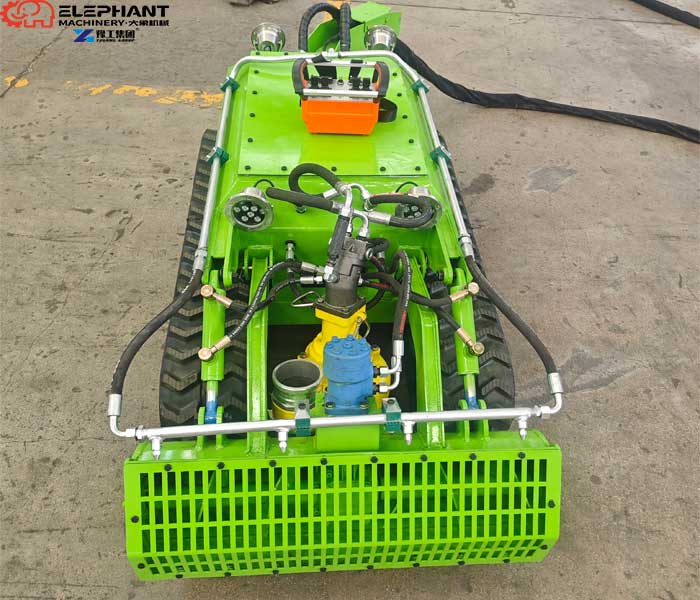
The project primarily used the YG600 lake sludge removal robot, supported by YG800 units for deeper sediment zones.
The YG600 model provides a dredging width of 600 mm and is designed for medium-scale lake cleaning projects, while the YG800 version expands dredging capacity to 800 mm with higher pump flow capability.
- The system operates using a hydraulic dredging mechanism with pressure stability up to 16 MPa, ensuring efficient sludge breakup and suction even in compact sediment layers.
- Depending on configuration, the system achieves a pump flow rate of up to 160–200 m³/h, enabling continuous sediment extraction without clogging interruptions.
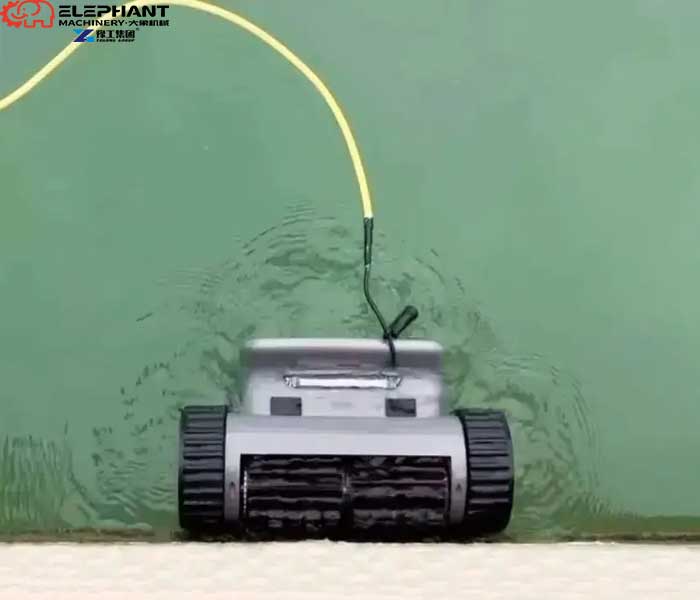
- The crawler-based design allows stable movement across soft lakebeds, while the wireless remote control system enables operators to manage the entire dredging process from the shore safely.
- Equipped with underwater LED lighting and real-time camera feedback, the system ensures precise navigation and targeted sludge removal even in low-visibility environments.
Lake Sludge Removal Process Overview
The project was executed in three structured phases:
Phase 1: Sediment Mapping and Environmental Assessment
Hydrological surveys were conducted to identify high-sediment zones and determine dredging priorities.
Phase 2: Robotic Deployment
The lake sludge removal robot units were deployed through designated ≥600 mm shoreline access points. Operators controlled the crawler movement remotely to reach targeted dredging zones.
Phase 3: Continuous Sludge Extraction
Using integrated auger and hydraulic suction systems, the robots broke down compacted sediment layers and transported sludge through high-pressure pipelines to onshore treatment areas.
This method ensured continuous dredging without interrupting lake ecology or requiring human entry into hazardous zones.


Project Results and Environmental Impact
After completion of the lake restoration operation, the project delivered measurable improvements:
- approximately 11,000–13,000 cubic meters of sludge removed
- average lake depth increased by 0.7–1.3 meters in key areas
- water turbidity reduced by 50%+
- visible improvement in oxygen concentration and aquatic life recovery
Operational efficiency improvements compared to traditional dredging methods included:
- up to 35% faster project execution
- significantly lower ecological disturbance
- reduced manpower requirement by more than 60%
- improved precision in sediment targeting
Key Advantages of Lake Sludge Removal Robot Technology
The success of this Ireland project highlights the advantages of modern robotic dredging systems.
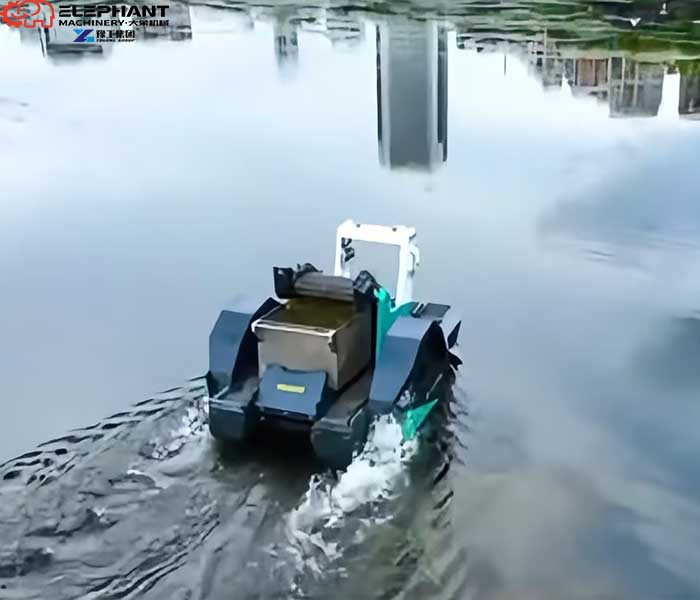
A lake sludge removal robot provides high-precision sediment control, making it ideal for environmentally sensitive lakes where traditional dredging equipment cannot operate effectively.
Its remote-control capability ensures operators remain safely onshore while the system performs continuous underwater sludge removal.
The modular design allows flexibility across different project scales:
- YG450 for narrow access and shallow zones
- YG600 for standard lake dredging operations
- YG800–YG1200 for large-scale sediment removal projects
This adaptability makes it suitable for municipal water restoration, environmental protection agencies, and large infrastructure rehabilitation projects.
Conclusion: Sustainable Lake Restoration in Ireland
This Ireland lake restoration project demonstrates how a lake sludge removal robot can deliver efficient, precise, and environmentally responsible sediment removal.
Compared to traditional dredging methods, robotic systems offer a safer and more controlled approach, significantly reducing ecological disruption while improving operational efficiency.
As environmental regulations in Europe continue to tighten, lake sludge removal robots are becoming an essential technology for sustainable water management and ecological restoration projects.
About Elephant Machinery
Elephant Machinery is a professional manufacturer of advanced dredging and sludge removal systems, specializing in lake sludge removal robot technology for global environmental and municipal applications.
Our equipment is widely used in lake restoration, reservoir dredging, wastewater treatment, and industrial sludge management projects across Europe, the Middle East, and Southeast Asia.
With a full product range from YG450 compact systems to high-capacity YG1200 models, we provide tailored solutions for different sediment conditions, water depths, and project requirements.