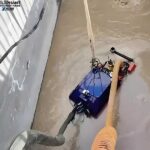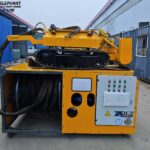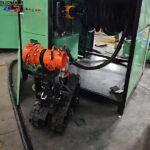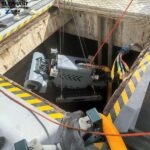
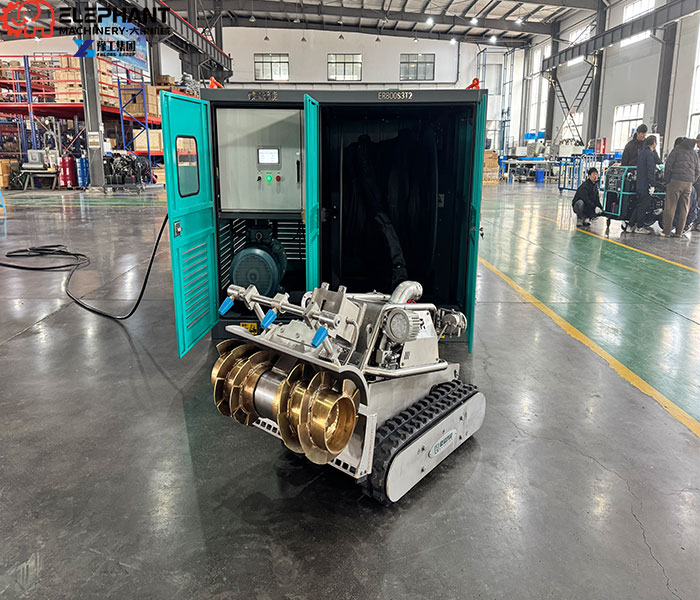
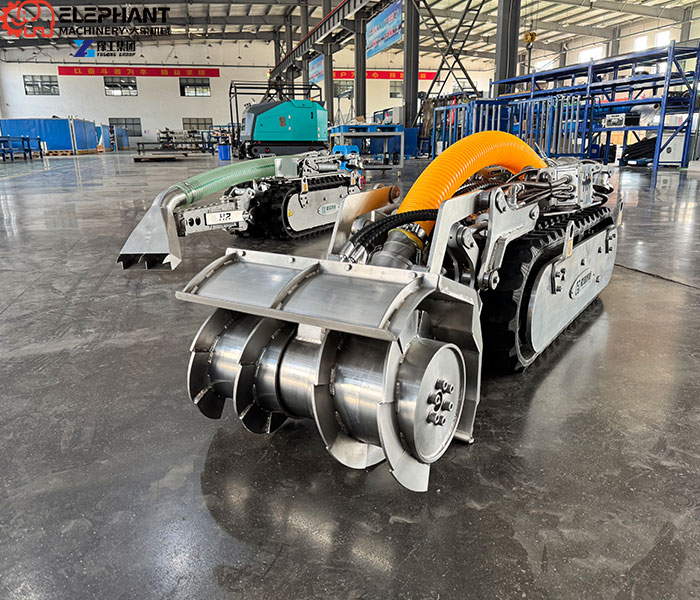
An intelligent dredging robot is an advanced robotic system designed to remove accumulated sludge, sediment, and underwater deposits with safer, smarter, and more efficient operation compared with traditional dredging methods.
By integrating remote control technology, intelligent operation systems, crawler mobility, sludge loosening, and pumping functions, the robot allows operators to complete difficult underwater cleaning tasks without entering hazardous working areas.
For wastewater plants, reservoirs, ponds, industrial tanks, and water infrastructure facilities, an intelligent dredging robot provides a practical solution for reducing manual labor, improving cleaning efficiency, and maintaining water facilities with less downtime.
Unlike conventional dredging equipment that often requires large working areas, heavy manpower, or complex site preparation, the robotic dredging system can enter narrow and challenging environments while providing more precise sediment removal.
Intelligent Dredging Robot Parameters
| Parameter | YG450 | YG500 | YG600 | YG700 | YG800 | YG900 | YG1200 |
| Robot Dimensions (mm) | ≤1700 × 450 × 450 | 1500 × 500 × 650 | 1500 × 600 × 650 | 1600 × 700 × 650 | 1600 × 850 × 700 | 1650 × 960 × 750 | 1900 × 1200 × 750 |
| Applicable Manhole / Access | ≥600 mm opening | ≥600 mm opening | ≥600 mm opening | ≥700 mm opening | ≥800 mm opening | ≥900 mm opening | Large culvert / open access |
| Dredging Width (mm) | 450 | 500 | 600 | 700 | 800 | 900 | Suitable for large culverts |
| Travel Speed (m/s) | 3–12 | 3–15 | 3–15 | 3–15 | 3–15 | 3–15 | 0–17 m/min |
| Pump Diameter (inch) | 3 | 3 | 3 | 4 | 4 | 4 | 4 or 6 |
| Pump Flow (m³/h) | 50 | 100 | 100 | 160 | 160 | 200 | 250 |
| Pump Head (m) | 0-30 | 0–30 | 0–30 | 0–25 | 0–25 | 0–25 | 0–30 (Horizontal: 100–150 m) |
| Hydraulic Station Dimensions (mm) | 2000 × 1100 × 1500 (recommended) | 2200 × 1200 × 1700 | 2200 × 1200 × 1700 | 2200 × 1200 × 1700 | 2200 × 1200 × 1700 | 2200 × 1200 × 1700 | 2120 × 1240 × 1200 |
| Main Motor Power (kW) | 11–15 kW | 18 | 18 | 22 | 22 | 22 | 45 kW (50 kW) / Diesel 76 kW (123 kW) |
| Hydraulic System Pressure (MPa) | 0–16 | 0–16 | 0–16 | 0–16 | 0–16 | 0–16 | Custom / high-pressure system |
| Particle Size Capacity (mm) | ≤10–20 mm (soft sludge) | 15 | 15 | 40 | 40 | 50 | 0–40 (customizable) |
| Winch Speed (r/min) | 0–10 | 0–10 | 0–10 | 0–10 | 0–10 | 0–10 | 0–10 |
| Pipe Length (m) | 20–30 optional | 30–50 optional | 30–50 optional | 30–50 optional | 30–50 optional | 30–50 optional | 30 m/pack, high-pressure resistant |
| Control System | Wireless Remote Control | Wireless Remote | Wireless Remote | Wireless Remote | Wireless Remote | Wireless Remote | Wireless Remote |
| Lighting System | Underwater LED ×2 | Underwater LED ×2 | Underwater LED ×2 | Underwater LED ×2 | Underwater LED ×2 | Underwater LED ×2 | Underwater LED ×2 |
Get the Right Model for Your Project
What Is an Intelligent Dredging Robot?
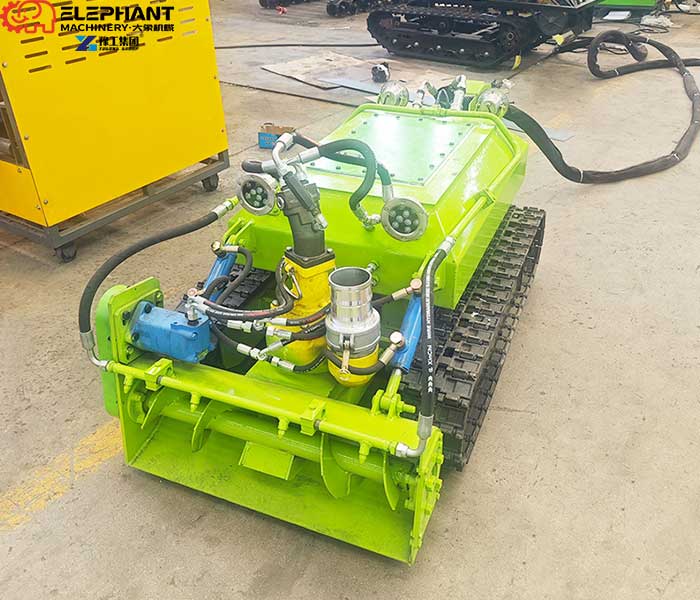
An intelligent dredging robot is a remote-controlled underwater cleaning machine equipped with intelligent control functions and an integrated sludge removal system.
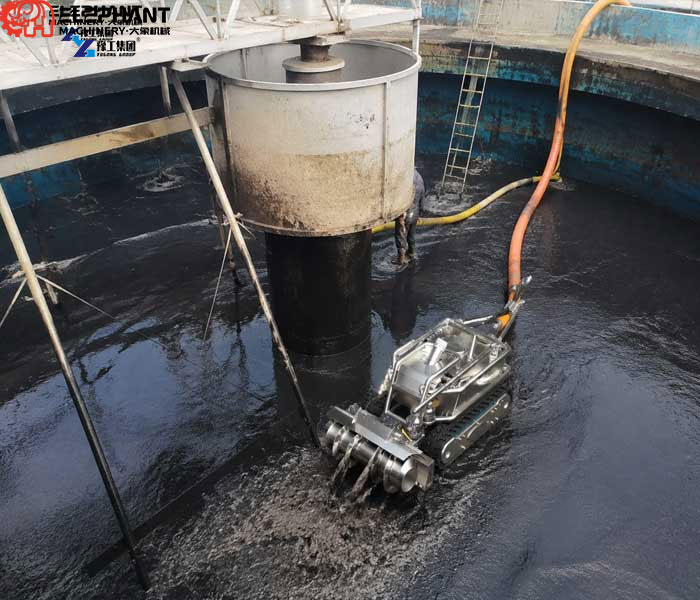
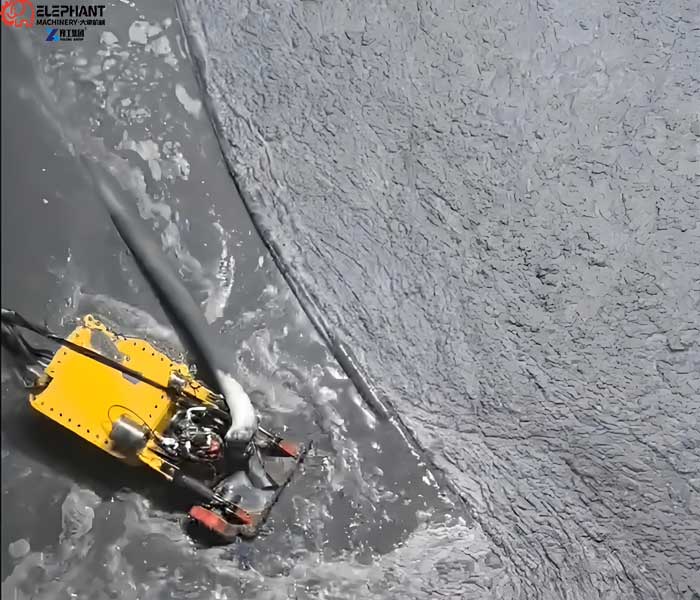
The robot operates on the bottom of water bodies or tanks through a crawler platform. The operator controls the machine from a safe location while monitoring the working process through cameras, sensors, and the control interface.
The intelligent system helps operators achieve:
- Accurate robot positioning
- Real-time operation monitoring
- More stable working control
- Reduced human exposure to dangerous environments
- Improved dredging efficiency
The working process combines:
- Intelligent movement control
- Mechanical sludge loosening
- Sediment collection
- Slurry pumping
- Pipeline transportation
This integrated design eliminates the need for multiple separate machines and simplifies underwater cleaning operations.
Why Choose an Intelligent Dredging Robot?
Traditional dredging and sludge cleaning methods often face several challenges:
- Workers need to enter tanks or confined spaces
- Manual cleaning requires high labor costs
- Heavy equipment may not access restricted areas
- Sediment accumulation reduces facility efficiency
- Cleaning operations may interrupt normal production
An intelligent dredging robot addresses these problems by moving the cleaning operation from manual labor to controlled robotic operation.
Safer No-Man-Entry Sludge Cleaning
Safety is one of the biggest reasons facilities choose robotic dredging systems.
Wastewater tanks, sedimentation basins, sludge ponds, and industrial reservoirs may contain:
- Toxic gases
- Oxygen-deficient environments
- Contaminated sludge
- Unstable sediment layers
The remote-controlled dredging robot allows operators to remain outside these hazardous areas while the machine performs underwater cleaning.
This reduces the need for confined-space entry and improves overall workplace safety.
Intelligent Control for More Precise Operation
The main advantage of an intelligent dredging robot is not only automation but also better control over the cleaning process.
The intelligent control system allows operators to:
- Control movement direction remotely
- Adjust working speed according to sludge conditions
- Monitor underwater operation through cameras
- Position the robot accurately in target areas
- Optimize dredging routes
Compared with traditional manual cleaning, robotic operation provides more consistent performance and reduces unnecessary repeated work.
For large facilities with regular sediment accumulation, intelligent control helps create a more predictable maintenance process.
How Does an Intelligent Dredging Robot Work?
The working principle combines intelligent movement, mechanical cleaning, and pumping technology.
1. Intelligent Positioning and Movement
The crawler platform enables the robot to move steadily on muddy, uneven, or sediment-covered surfaces.
The operator remotely guides the machine to areas with accumulated deposits.
The tracked design provides:
- Strong ground traction
- Stable underwater movement
- Better performance on soft sludge surfaces
- Access to difficult cleaning areas
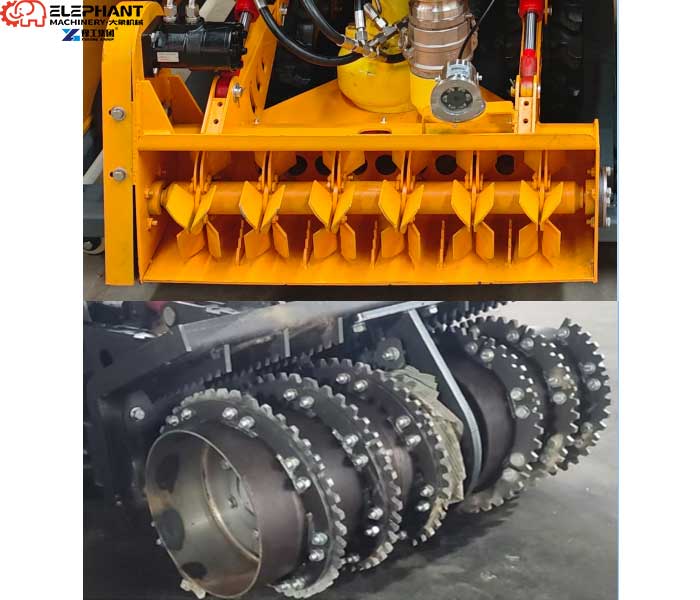
2. Sludge Loosening and Homogenization
Heavy sediment often becomes compacted over time and cannot be removed efficiently by suction alone.
The robot uses a front working mechanism to loosen and mix the sludge into a pumpable slurry.
This process helps:
- Reduce pipeline blockage risk
- Improve pumping efficiency
- Handle thicker sediment layers
- Increase cleaning consistency
3. Intelligent Sludge Pumping
After sludge is loosened, the integrated pumping system transfers the slurry through discharge pipelines.
The pumping configuration can be selected according to:
- Sludge concentration
- Transportation distance
- Required flow rate
- Facility conditions
This allows the same robotic platform to adapt to different dredging applications.
Key Features of Intelligent Dredging Robot
Remote-Controlled Intelligent Operation
The operator controls the robot without entering the working environment.
This is especially valuable for:
- Wastewater treatment facilities
- Underground tanks
- Industrial basins
- Confined spaces
- Contaminated water areas
Remote operation improves safety while maintaining effective cleaning performance.
Smart Monitoring System
An intelligent dredging robot can be equipped with monitoring functions to improve operational visibility.
Typical functions include:
- Underwater camera monitoring
- LED lighting for dark environments
- Real-time operation observation
- Working status feedback
These features help operators understand actual site conditions and make better cleaning decisions.
Crawler Design for Difficult Environments
Unlike floating cleaning equipment, a crawler dredging robot works directly on the sediment layer.
The tracked structure provides:
- Stable movement
- Better contact with the bottom surface
- Reduced slipping on soft sludge
- Access to uneven underwater terrain
This makes it suitable for ponds, tanks, reservoirs, and treatment facilities.
Integrated Sludge Removal System
The intelligent dredging robot combines multiple functions into one system:
- Moving
- Sludge cutting
- Sediment mixing
- Suction
- Pumping
This reduces dependence on additional equipment and improves project efficiency.
Applications of Intelligent Dredging Robot
An intelligent dredging robot can be used in various industries where sediment accumulation affects operation efficiency.
Wastewater Treatment Plants
Wastewater facilities often need regular sludge removal from:
- Sedimentation tanks
- Clarifiers
- Sludge tanks
- Treatment basins
The robot helps remove accumulated sludge while reducing manual cleaning requirements.
Reservoir and Lake Dredging
Sediment accumulation can reduce reservoir capacity and affect water management.
An underwater dredging robot provides a flexible solution for:
- Reservoir sediment removal
- Lake maintenance
- Waterway cleaning
- Ecological restoration projects
Industrial Tanks and Basins
Industrial facilities may accumulate:
- Process sludge
- Chemical residues
- Mineral sediment
- Production waste
A smart dredging robot helps clean these areas without completely stopping operations.
Aquaculture and Fish Ponds
Pond sediment can affect water quality and aquatic environments.
The robot can remove:
- Organic sludge
- Bottom sediment
- Accumulated waste
while reducing disturbance to pond structures.
Intelligent Dredging Robot vs Traditional Dredging Methods
| Operation method | Remote-controlled robotic operation | Manual or large equipment operation |
| Worker safety | Operators stay outside hazardous areas | Workers may enter difficult environments |
| Access ability | Suitable for narrow and restricted areas | Often requires larger working space |
| Cleaning process | Integrated loosening and pumping | Multiple separate processes |
| Precision | Controlled robotic movement | Depends heavily on manual operation |
| Labor requirement | Reduced manpower | Higher labor involvement |
| Maintenance efficiency | More predictable cleaning process | More difficult to standardize |
The biggest advantage of an intelligent dredging robot is that it transforms difficult manual cleaning tasks into controlled robotic maintenance operations.

How to Choose the Right Intelligent Dredging Robot?
Different projects require different configurations.
Before selecting a model, consider:
Sediment Characteristics
Important factors include:
- Sludge thickness
- Solid content
- Particle size
- Organic or industrial composition
Different sludge conditions require different cutting and pumping configurations.
Working Environment
Consider:
- Tank or pond dimensions
- Water depth
- Access opening size
- Underwater visibility
- Required cleaning area
These factors determine the suitable robot size and operation method.
Pumping Requirements
The pumping system should match:
- Required discharge distance
- Sludge concentration
- Cleaning speed requirements
- Pipeline length
A properly matched system improves efficiency and reduces operating problems.
FAQ about Intelligent Dredging Robot
1.What is an intelligent dredging robot used for?
An intelligent dredging robot is mainly used for removing sludge and sediment from wastewater tanks, reservoirs, ponds, industrial basins, and other underwater environments.
2.What Types of Sludge Can an Intelligent Dredging Robot Remove?
It can remove soft sludge, silt, sand, mud, organic sediment, and mixed deposits. A breaking head can be added for heavier or compacted material.
3.Can the Robot Handle Compacted Sludge?
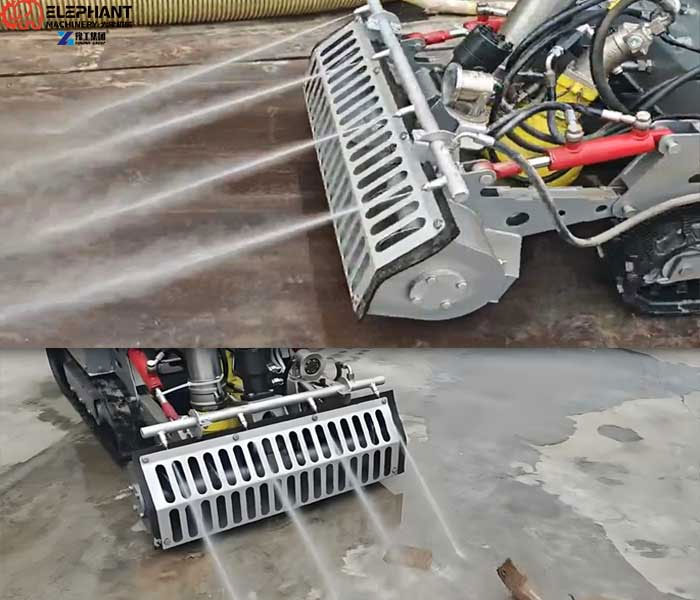
Yes. A mechanical breaking or cutting head loosens compacted sludge, while a high-pressure water jet can improve slurry flowability before pumping.
4.Can the Dredging Robot Pump Thick Sludge?
Yes, with a suitable pumping configuration. Sludge concentration, particle size, water content, and pumping distance should be considered when selecting the pump.
5.How Much Access Space Does the Robot Require?
Access requirements depend on the model. For example, the compact YG450 is approximately 450 mm wide and typically requires an access opening of 600 mm or larger.
6.How Far Can the Dredged Slurry Be Pumped?
Pumping distance depends on the pump, sludge properties, hose or pipe size, elevation, and site conditions. The system can be configured for different pumping requirements.
7.Can the Dredging Robot Be Customized?
Yes. The robot can be customized with different crawler sizes, breaking heads, water jets, slurry pumps, discharge hoses, cameras, and power configurations.
8.Can the Robot Operate in Tanks and Ponds?
Yes. It can be used in wastewater tanks, sedimentation tanks, industrial ponds, cooling water ponds, reservoirs, aquaculture ponds, and other water-filled facilities.
9.Can it be customized?
Yes. The robot configuration can be customized according to sludge type, tank size, access conditions, pumping distance, and required cleaning capacity.