Remote-Controlled Storm Drain Cleaning Robot for Efficient Sediment Removal and Flood Prevention in Municipal Drainage Networks
Project Overview
Rapid urban development and extreme weather conditions have increased the challenges of maintaining stormwater drainage systems in many Middle Eastern cities. In the UAE, short-duration heavy rainfall events can quickly create pressure on urban drainage infrastructure, especially when storm drains are affected by accumulated sand, silt, and debris.
A municipal drainage maintenance project in the UAE faced a common challenge: sediment buildup inside underground storm drains was reducing water flow capacity and increasing flood risks during heavy rainfall periods.
Traditional cleaning methods required road closures, large vacuum trucks, or manual cleaning operations in confined drainage environments. These methods were not only costly but also limited by accessibility and worker safety concerns.
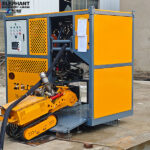
To improve drainage maintenance efficiency, the project introduced a storm drain cleaning robot — a remote-controlled sediment removal solution designed to clean underground drainage channels without requiring workers to enter hazardous areas.
Storm Drain Cleaning Robot Parameters
| Parameter | YG450 | YG500 | YG600 | YG700 | YG800 | YG900 | YG1200 |
| Robot Dimensions (mm) | ≤1700 × 450 × 450 | 1500 × 500 × 650 | 1500 × 600 × 650 | 1600 × 700 × 650 | 1600 × 850 × 700 | 1650 × 960 × 750 | 1900 × 1200 × 750 |
| Applicable Manhole / Access | ≥600 mm opening | ≥600 mm opening | ≥600 mm opening | ≥700 mm opening | ≥800 mm opening | ≥900 mm opening | Large culvert / open access |
| Dredging Width (mm) | 450 | 500 | 600 | 700 | 800 | 900 | Suitable for large culverts |
| Travel Speed (m/s) | 3–12 | 3–15 | 3–15 | 3–15 | 3–15 | 3–15 | 0–17 m/min |
| Pump Diameter (inch) | 3 | 3 | 3 | 4 | 4 | 4 | 4 or 6 |
| Pump Flow (m³/h) | 50 | 100 | 100 | 160 | 160 | 200 | 250 |
| Pump Head (m) | 0-30 | 0–30 | 0–30 | 0–25 | 0–25 | 0–25 | 0–30 (Horizontal: 100–150 m) |
| Hydraulic Station Dimensions (mm) | 2000 × 1100 × 1500 (recommended) | 2200 × 1200 × 1700 | 2200 × 1200 × 1700 | 2200 × 1200 × 1700 | 2200 × 1200 × 1700 | 2200 × 1200 × 1700 | 2120 × 1240 × 1200 |
| Main Motor Power (kW) | 11–15 kW | 18 | 18 | 22 | 22 | 22 | 45 kW (50 kW) / Diesel 76 kW (123 kW) |
| Hydraulic System Pressure (MPa) | 0–16 | 0–16 | 0–16 | 0–16 | 0–16 | 0–16 | Custom / high-pressure system |
| Particle Size Capacity (mm) | ≤10–20 mm (soft sludge) | 15 | 15 | 40 | 40 | 50 | 0–40 (customizable) |
| Winch Speed (r/min) | 0–10 | 0–10 | 0–10 | 0–10 | 0–10 | 0–10 | 0–10 |
| Pipe Length (m) | 20–30 optional | 30–50 optional | 30–50 optional | 30–50 optional | 30–50 optional | 30–50 optional | 30 m/pack, high-pressure resistant |
| Control System | Wireless Remote Control | Wireless Remote | Wireless Remote | Wireless Remote | Wireless Remote | Wireless Remote | Wireless Remote |
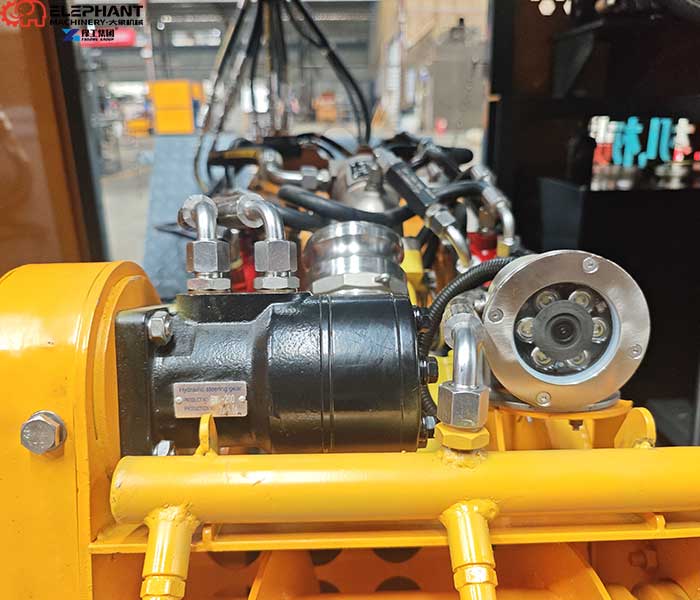
| Lighting System | Underwater LED ×2 | Underwater LED ×2 | Underwater LED ×2 | Underwater LED ×2 | Underwater LED ×2 | Underwater LED ×2 | Underwater LED ×2 |
Get the Right Model for Your Project
The Challenge: Sediment Accumulation in Storm Drain Systems
Storm drainage networks play a critical role in preventing urban flooding. However, in desert environments such as the UAE, storm drains face unique maintenance challenges.
Heavy Sand and Silt Deposition
Unlike many regions where organic debris is the main concern, drainage systems in desert climates often accumulate:
- Fine sand
- Dust particles
- Road sediment
- Construction debris
- Mud deposits after rainfall
Over time, these materials settle at the bottom of storm drains, reducing effective drainage capacity.
When heavy rainfall occurs, blocked or partially restricted drainage channels may cause:
- Water accumulation on roads
- Traffic disruption
- Increased maintenance costs
- Pressure on municipal drainage systems
Limited Access Inside Underground Drainage Channels
Many storm drains and culverts have:
- Narrow entrances
- Confined working spaces
- Long underground sections
Using traditional excavation equipment is often impossible, while manual cleaning requires workers to enter potentially unsafe environments.
For municipal maintenance teams, finding a safer and more efficient underground drain cleaning solution has become increasingly important.
Solution: Remote-Controlled Storm Drain Cleaning Robot
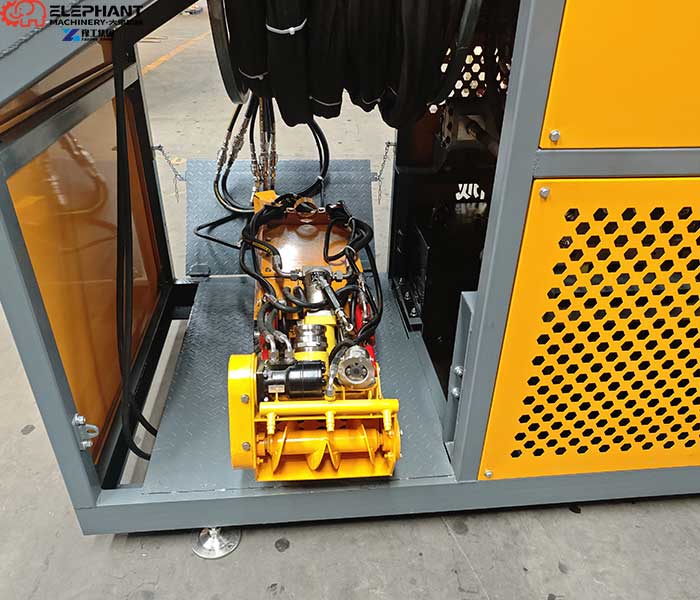
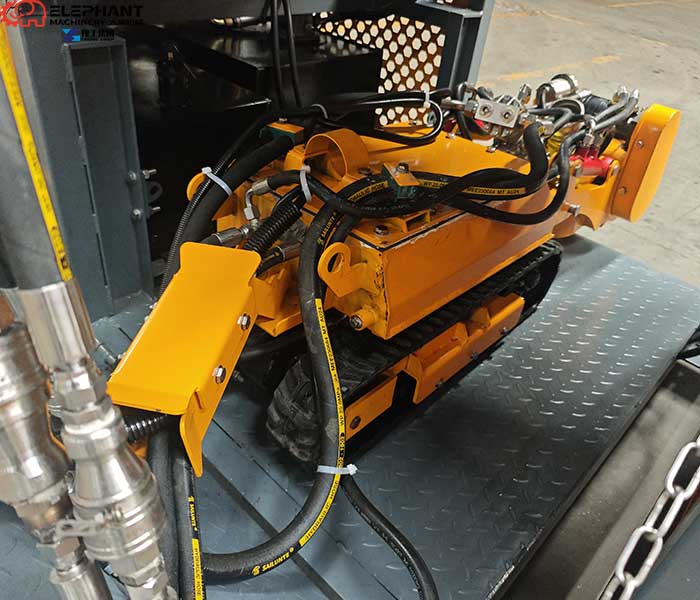
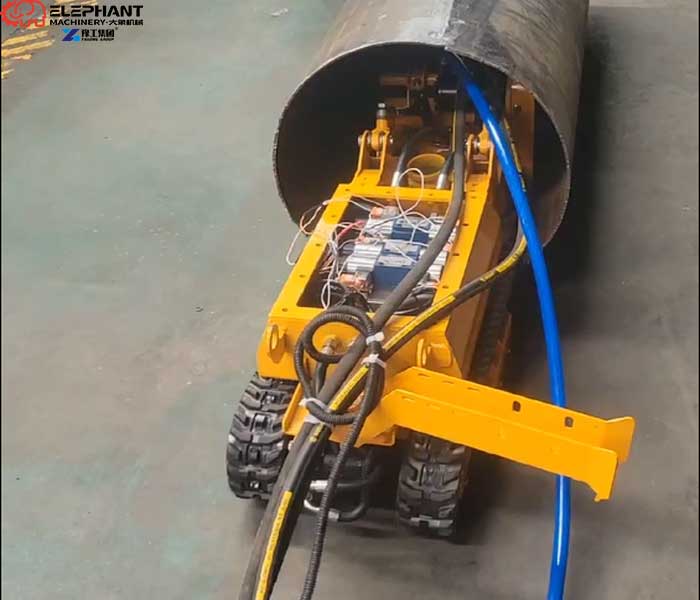
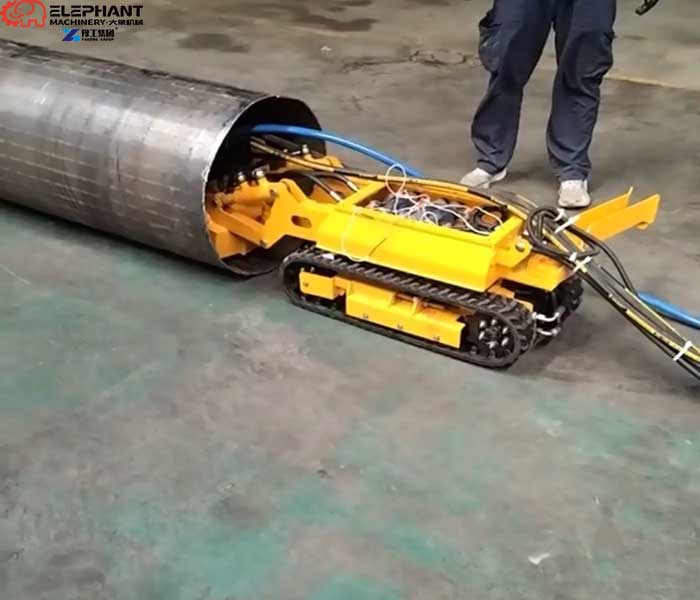
The UAE project utilized a remote-controlled dredging robot specially designed for confined drainage cleaning applications.
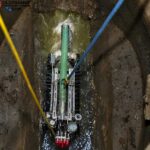
Unlike traditional methods that depend heavily on manual labor or large machinery, the robot can enter narrow drainage areas and remove accumulated sediment through a combination of crawler movement, sludge loosening, and powerful suction.
The system provides an efficient solution for:
- Storm drain sediment removal
- Underground drainage cleaning
- Culvert maintenance
- Flood prevention dredging
How Does the Storm Drain Cleaning Robot Work?
1. Remote Operation for Safer Drain Maintenance
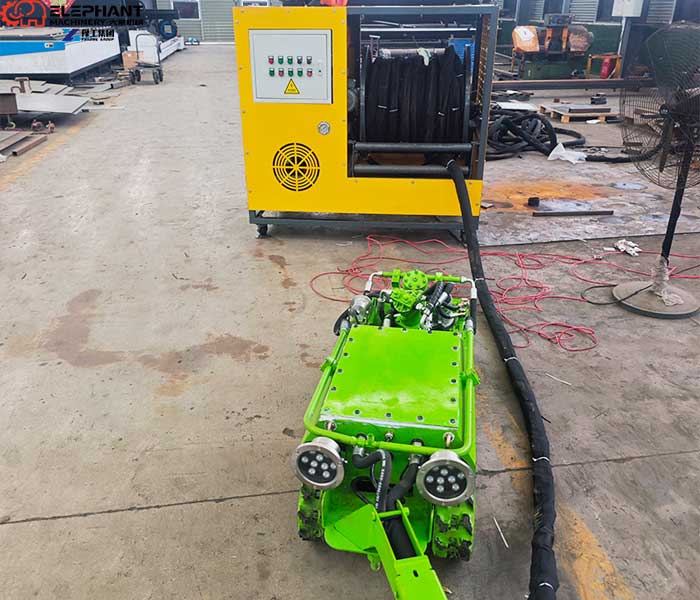
The operator controls the robot from outside the drainage area through a remote-control system.
This eliminates the need for workers to enter underground drainage channels where risks may include:
- Poor ventilation
- Toxic gases
- Sudden water flow
- Unstable sediment layers
Remote operation improves both safety and cleaning efficiency.
2. Crawler System for Difficult Underground Conditions
The robot uses a tracked crawler structure to move steadily through muddy and uneven surfaces.
Compared with traditional cleaning equipment, the crawler design provides:
- Strong traction on soft sediment
- Stable movement inside drainage channels
- Better adaptability to uneven bottoms
- Reduced ground pressure
This makes it suitable for storm drains, culverts, and other confined environments.
3. Sediment Breaking and Suction Removal
Storm drain deposits are often compacted after long periods of accumulation. Simply pumping water may not effectively remove hardened sediment.
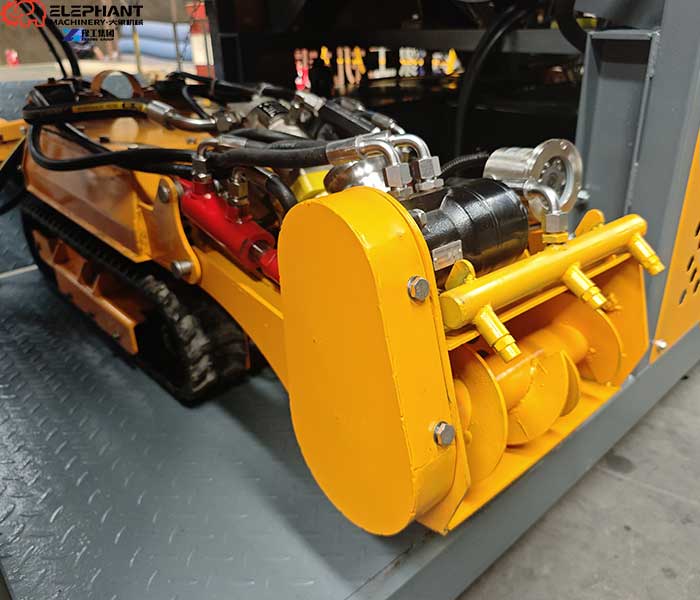
The cleaning robot combines:
- Mechanical sediment loosening
- High-efficiency suction
- Sludge transportation pipelines
to remove:
- Sand deposits
- Mud
- Silt
- Organic sediment
- Mixed drainage debris
The removed material can then be transported to a designated disposal or treatment location.
Key Benefits of Using a Storm Drain Cleaning Robot
No Need for Excavation or Drain Shutdown
One of the biggest advantages of robotic drainage cleaning is that maintenance can often be performed without major infrastructure disruption.
Compared with traditional methods, the robot helps reduce:
- Road closures
- Heavy equipment requirements
- Manual labor
- Cleaning downtime
This is especially valuable for busy urban areas where drainage maintenance must minimize public impact.
Improved Flood Prevention Capability
Regular storm drain cleaning is essential for maintaining drainage capacity.
By removing accumulated sediment before extreme weather events, municipalities can improve:
- Stormwater flow efficiency
- Drainage reliability
- Flood response capability
The robot provides a proactive maintenance approach rather than waiting until drainage problems occur.
Safer Alternative for Confined Space Cleaning
Confined drainage systems present safety challenges for workers.
The remote-controlled cleaning robot allows operators to complete underground maintenance tasks without direct entry, creating a safer working environment.
This is particularly suitable for:
- Municipal drainage departments
- Infrastructure contractors
- Environmental maintenance companies
Application Areas of Storm Drain Cleaning Robots
Although this UAE project focused on storm drainage maintenance, the same technology can be applied to various underground water management systems.
Municipal Stormwater Drainage Systems
Used for removing sediment buildup in:
- Urban storm drains
- Underground drainage channels
- Rainwater collection systems
Culvert Cleaning Projects
Road and highway culverts often collect sediment and debris that reduce water passage capacity.
A compact drainage cleaning robot can help maintain culvert performance without extensive excavation.
Industrial Drainage Channels
Factories and industrial facilities may require regular removal of sediment from:
- Wastewater channels
- Process drainage systems
- Collection ponds
Why Choose a Storm Drain Cleaning Robot Instead of Traditional Methods?
Traditional storm drain maintenance often relies on:
- Manual workers
- Vacuum trucks
- Excavation equipment
- Temporary drainage shutdowns
While these methods can work in certain situations, they have limitations in underground and confined environments.
A remote-controlled storm drain cleaning robot offers advantages including:
| Requires worker entry in some cases | Remote operation from a safe area |
| Difficult in narrow spaces | Designed for confined environments |
| Higher safety risks | Reduced human exposure |
| Requires more site preparation | Flexible deployment |
| Limited access areas | Suitable for underground channels |
Customized Storm Drain Cleaning Solutions
Every drainage system has different requirements. The robot configuration can be customized according to:
Drain Size and Access Conditions
Different crawler sizes can be selected based on entrance dimensions and working space.
Sediment Characteristics
Equipment can be adjusted for:
- Loose sand
- Thick sludge
- Mixed sediment
- Construction debris
Transportation Distance
Pump capacity and discharge pipeline length can be customized according to the required cleaning distance.
Project Results and Customer Value
After implementing the storm drain cleaning robot solution, the drainage maintenance process achieved several improvements:
- Reduced dependence on manual cleaning operations
- Improved sediment removal efficiency
- Enhanced worker safety
- Reduced disruption to urban infrastructure
- Provided a more sustainable drainage maintenance method
The project demonstrates how intelligent robotic equipment can support modern urban flood prevention and infrastructure maintenance.
Conclusion
The UAE storm drain cleaning robot project shows how remote-controlled dredging technology can solve common challenges in urban drainage maintenance.
For cities facing sediment accumulation, limited access, and flood prevention requirements, a storm drain cleaning robot provides a safer, more efficient, and more flexible alternative to traditional cleaning methods.
By combining crawler mobility, powerful suction, and remote operation, the solution helps municipalities, infrastructure contractors, and environmental service providers maintain drainage systems with lower risk and higher efficiency.
Elephant Dredging provides customized storm drain sediment removal solutions, supporting municipal drainage cleaning, culvert maintenance, and underground water infrastructure projects worldwide.